The Seabed Retaliation Doctrine: Why Gulf Internet Cables Are Becoming the Next Strategic Hostage
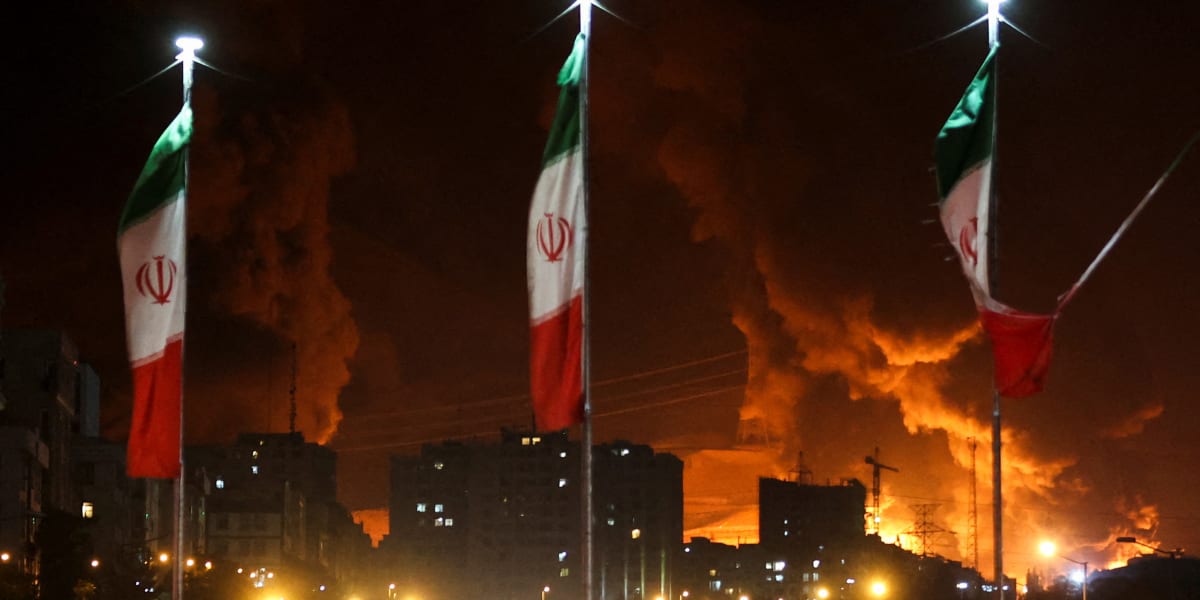
Iran’s threat to attack undersea communications cables if the United States and Israel strike again marks an important expansion of coercion in the Gulf. Tehran is no longer signalling only against military bases, oil facilities and commercial shipping. It is identifying the digital infrastructure that supports banking, cloud computing, government services and the Gulf states’ ambitions to become global centres for artificial intelligence. The intended audience includes Washington, but the immediate pressure falls on Gulf governments and international technology companies whose investments could become collateral in another war.
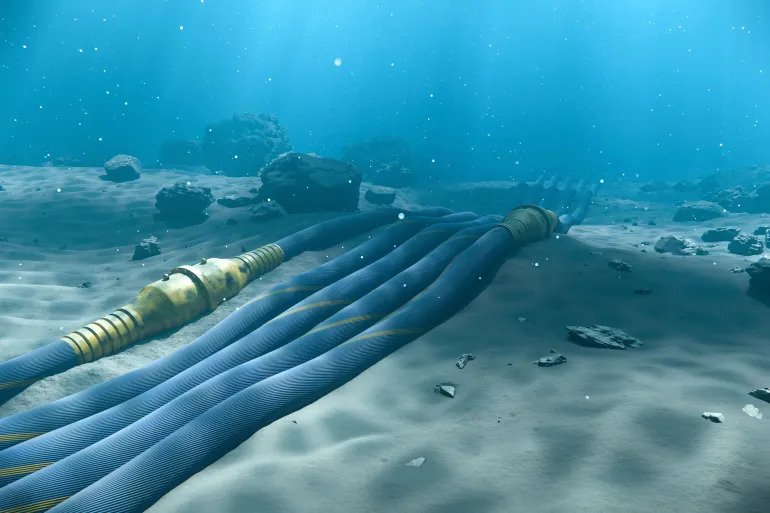
The threat should be taken seriously without accepting exaggerated claims about a global internet catastrophe. Industry analysis indicates that less than one per cent of international bandwidth passes through the Strait of Hormuz. The International Cable Protection Committee identifies five active cable system segments crossing the strait, alongside planned systems, while Iranian officials have referred to seven major cables. Most Gulf networks also have terrestrial links, branching routes and the ability to reroute traffic. Cutting one cable would normally produce congestion and disruption rather than regional isolation.
The danger lies in coordinated damage, constrained alternative capacity and delayed repair during conflict. Internet traffic can move around a fault only if surviving routes have enough capacity and the landing stations, power supplies, data centres and terrestrial backhaul remain available. Repair vessels would need insurance, permits and secure access to contested waters. A campaign that damaged several systems and then obstructed repair could turn a technically manageable outage into a prolonged economic emergency.
This makes cables suitable for strategic hostage-taking. They are valuable, difficult to guard continuously and used by civilian and military networks at the same time. Damage can be calibrated and its origin disputed. The attacker can impose costs on states that did not initiate the conflict while claiming that their support for Washington made them responsible. The March 2026 strikes on Amazon Web Services facilities in the United Arab Emirates and Bahrain already showed that digital infrastructure is part of the regional target set.
The Gulf states should respond with resilience rather than a promise to patrol every kilometre of seabed. They need genuinely diverse routes through the Gulf of Oman, Red Sea and overland corridors; spare capacity that can absorb simultaneous failures; hardened landing stations and terrestrial backhaul; pre arranged repair vessels, permits, spares and war-risk cover; and cloud-continuity plans that keep essential services available outside a damaged zone. New cable projects should be judged by the independence of their routes, not only the number of systems announced.
The political response must be collective. A GCC cable-security mechanism should join telecom regulators, cable operators, navies, coast guards, intelligence services and cloud providers. It should maintain a shared risk picture, conduct regional stress tests and define how evidence will be assessed and released after an incident. Gulf states should also seek a regional commitment, including Iran, against deliberate attacks on civilian communications infrastructure and interference with repair operations. Clear diplomatic consequences should support that commitment.
The seabed threat exposes a broader change in Gulf security. Economic diversification has created new centres of gravity alongside oil and shipping. Data centres, cable landings and cloud regions now support national revenue, foreign investment and public administration. Protecting them is not a technical task delegated to telecom companies. It is part of deterrence, crisis management and the credibility of the Gulf as a place to build the digital economy.
Digital infrastructure has entered the regional target set
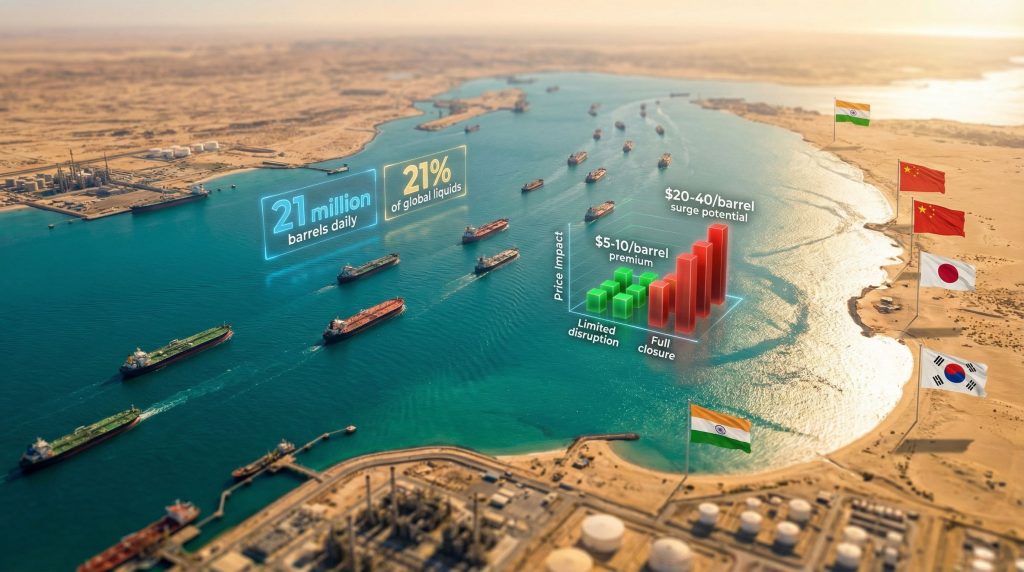
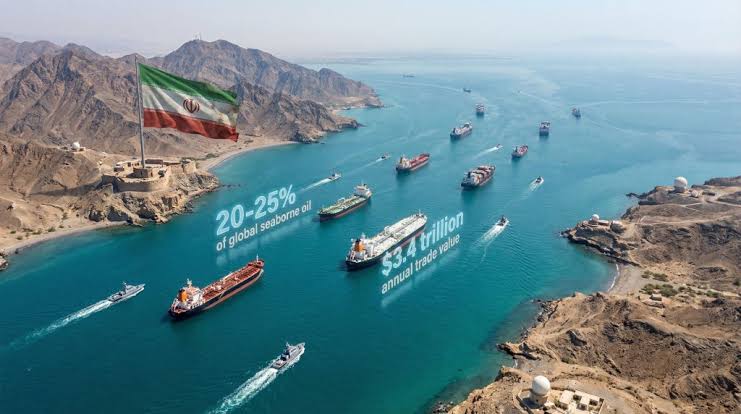
The Strait of Hormuz has long given Iran leverage over energy markets. Geography allows Tehran to threaten tankers, ports and the movement of oil and liquefied natural gas without matching American conventional power. The 2026 war demonstrated the economic reach of that strategy as attacks and restrictions disrupted shipping and pushed Gulf governments to seek new bypasses and security arrangements.
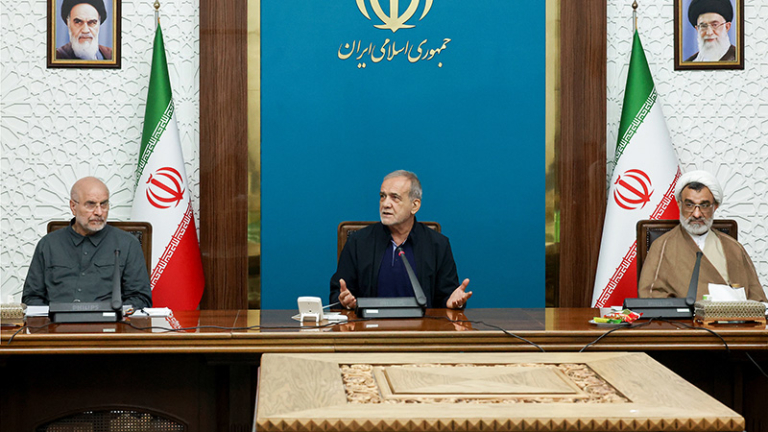
The October warning applies the same logic to data. Reuters reported that Iranian security officials had developed plans to attack undersea communications cables if the United States and Israel renewed military action. One official said the objective would include preventing repair so that disruption lasted longer. A senior Revolutionary Guards figure publicly identified cables beneath Hormuz as potential targets, while another Iranian security official argued that Gulf states should blame Washington for any resulting damage.
The message is designed to travel through several audiences. Washington is warned that a new campaign would carry wider economic costs. Gulf governments are encouraged to restrain the United States because infrastructure on their territory would be exposed. Technology companies are given a reason to question investment in American-aligned regional hubs. The threat therefore works as political pressure before any cable is damaged.
Iran has already demonstrated that it considers digital infrastructure strategically relevant. In March, drone strikes damaged Amazon Web Services facilities in the UAE and infrastructure near a facility in Bahrain, disrupting cloud services and affecting financial institutions. In April, the Revolutionary Guards said they had deliberately targeted an Amazon cloud-computing centre in Bahrain. Iranian officials also named major American technology companies as potential targets during the conflict. Undersea cables complete this target set. Data centres hold and process information, but cables connect them to users, other cloud regions and global networks. Landing stations link the wet segment to terrestrial fibre. Electricity, cooling and local networks keep the system working. An attacker does not need to destroy the entire chain. Pressure on one part can reduce the usefulness of the others, and simultaneous disruption can make redundancy less effective than it appears on a network diagram.
The Gulf’s economic strategy increases the political value of these assets. Saudi Arabia, the UAE, Qatar and Kuwait are investing in artificial intelligence, cloud services and data centres as part of diversification beyond hydrocarbons. Microsoft announced plans in September to invest more than $400 million in subsea and terrestrial connectivity across the Middle East by 2030, alongside larger cloud and AI commitments. New systems are being promoted as the infrastructure for hyperscalers, financial services and low-latency regional computing.
This investment does not make digital development a mistake. It changes what national security must protect. The region has spent decades hardening oil installations, creating pipeline alternatives and defending ports. Equivalent attention is now required for cable landings, terrestrial backhaul, cloud availability and the power systems that support them. A national development plan that depends on reliable computing also depends on the less visible routes that carry its data.
Hormuz is a regional chokepoint rather than a global off switch
Public debate about undersea cables often begins with the statement that they carry about 99 per cent of global internet traffic. The figure describes the importance of the global cable network, not the share that passes through every maritime chokepoint. It can produce misleading claims that cutting cables in Hormuz would switch off the world.
The International Cable Protection Committee has provided a more measured assessment. It states that bandwidth traversing the strait accounts for less than one per cent of international bandwidth worldwide. It identifies five active cable-system segments crossing Hormuz, with additional projects planned. Many regional systems use branching architectures, and Gulf networks can also draw on terrestrial routes. The likely first-order impact is therefore regional, not global.
That correction should not become complacency. Global share is a poor measure of local dependence. A route can carry a small fraction of worldwide capacity while remaining important to particular states, cloud zones or financial systems. Bahrain, Kuwait and Qatar have terrestrial connections through Saudi Arabia, while the UAE has external land links and significant cable landings at Fujairah outside the Gulf. Saudi Arabia has access to both Gulf and Red Sea corridors. These alternatives improve resilience, but their usable capacity, ownership and physical separation matter more than their presence on a list.
Rerouting is not unlimited. When a cable fails, operators shift traffic to surviving systems. Customers may notice little if spare capacity is ample and routes remain uncongested. Several failures can change that calculation quickly. Traffic may slow, latency may rise and lower-priority services may be constrained. A second attack on a landing station, power supply or shared terrestrial corridor can remove alternatives that appeared independent at sea. Repair is the decisive variable. Cable faults occur regularly in peacetime, most often because of fishing, anchoring or natural hazards. The industry is built to locate damage, dispatch a specialist vessel, recover the cable and splice in a replacement section. The International Telecommunication Union reported more than 170 cable repairs worldwide in 2025, almost four per week. Routine failure is manageable because operators can plan access and work in relatively safe waters.
War changes those assumptions. A repair ship may be unable to enter territorial waters without a permit or naval protection. Crews and owners may refuse a voyage when missiles, drones or mines threaten shipping. Insurance may become unavailable or prohibitively expensive. Ports may be closed, and spare cable or specialised equipment may be elsewhere. If an adversary threatens the repair effort, restoration time becomes a strategic variable rather than a technical estimate.
This distinction explains the logic behind Iran’s reported intention to prevent repairs. A single cut may be absorbed. Repeated damage combined with intimidation of repair crews could convert redundancy into attrition. Operators would reroute traffic, use spare capacity and repair one fault, only to face another. The campaign’s effect would accumulate through uncertainty, cost and declining confidence even if no single strike created a complete outage.
Satellite communications cannot replace the lost volume at scale. They can preserve selected government, emergency and military links, but they do not provide a like-for-like substitute for high-capacity fibre supporting cloud platforms and financial systems. Their role is continuity for priority users, not restoration of the regional digital economy.
Resilience must extend from the seabed to the cloud
The Gulf states cannot protect every cable continuously. Naval patrols and surveillance can deter some activity near critical areas, but deep-water infrastructure is extensive and legitimate shipping is dense. The better objective is to make an attack difficult to sustain and unable to produce decisive political leverage.
The first requirement is route diversity. New systems should leave the Gulf through genuinely separate corridors and connect to independent landing stations, terrestrial backhaul and power supplies. Gulf of Oman and Red Sea routes can reduce dependence on Hormuz, while overland links can provide additional options. Projects such as SeaMeWe-6, Fibre in the Gulf and planned Saudi-Omani terrestrial connections can add capacity, but authorities should test whether they share ducts, exchange points or data-centre dependencies with existing systems. Capacity matters as much as geography. A backup route that cannot carry priority traffic during a multi cable failure offers limited strategic value. Regulators should require operators to demonstrate spare capacity under realistic peak conditions and agree which services receive priority during congestion. Stress tests should cover simultaneous cable loss, a cloud-region outage and damage to power or backhaul rather than treating each failure separately.
The second requirement is faster repair. Gulf governments should pre-authorise emergency permits, identify suitable ports, stock critical components and conclude agreements with cable-repair operators before a crisis. War-risk insurance and naval escort arrangements should be negotiated in advance. A GCC repair compact could allow a vessel approved in one member state to move rapidly across the region under common security procedures.
The third requirement is protection of the full network. Landing stations, beach manholes, terrestrial fibre, internet exchange points, data centres and electricity supplies can be easier to reach than cable segments at sea. Physical security, access controls, backup power and geographically separated network operations are necessary. Governments should avoid publishing unnecessary detail about dependencies while ensuring that trusted operators and security agencies share enough information to coordinate.
The fourth requirement is cloud continuity. Essential government, banking, healthcare, aviation and port services should be able to operate through another regional or international cloud zone when one site loses power or connectivity. Data replication is useful only if applications, identity systems and staff can fail over under pressure. The March AWS disruption showed why continuity plans must be tested during realistic regional outages rather than assumed from contractual service levels.
The UAE’s 2026 telecommunications licensing requirements point in the right direction by requiring geographic diversity, backup capacity, disaster recovery and regular testing. Similar standards across the GCC would reduce the chance that the weakest national link becomes a regional bottleneck. Common reporting would also show whether announced investment is producing independent resilience or simply more capacity along familiar routes.
The fifth requirement is a shared operating picture. Cable owners possess technical telemetry, telecom regulators understand national dependencies, and security agencies track suspicious maritime behaviour. No single organisation sees the full incident. A GCC cable-security centre should fuse alerts, coordinate attribution and maintain protected channels with private operators, cloud providers and repair companies. It should connect with partners in Oman, the Red Sea, Europe and Asia because regional traffic depends on infrastructure beyond GCC waters.
Finally, resilience needs a diplomatic framework. Gulf states should propose a regional commitment against deliberate interference with civilian communications cables, landing stations and repair operations. Iran should be included because a rule negotiated without the principal source of the threat would have limited value. The commitment would not remove military risk, but it would create a standard against which conduct can be attributed and punished. Deterrence should combine that rule with clear consequences. A suspected incident should trigger joint investigation and consultation. Confirmed state-directed damage could lead to coordinated diplomatic action, sanctions, compensation claims, maritime restrictions or other lawful countermeasures. The response need not mirror the method of attack. Its purpose should be to end the campaign, protect repair and deny the attacker political advantage.