
Space Resilience: Hardening the Final Frontier
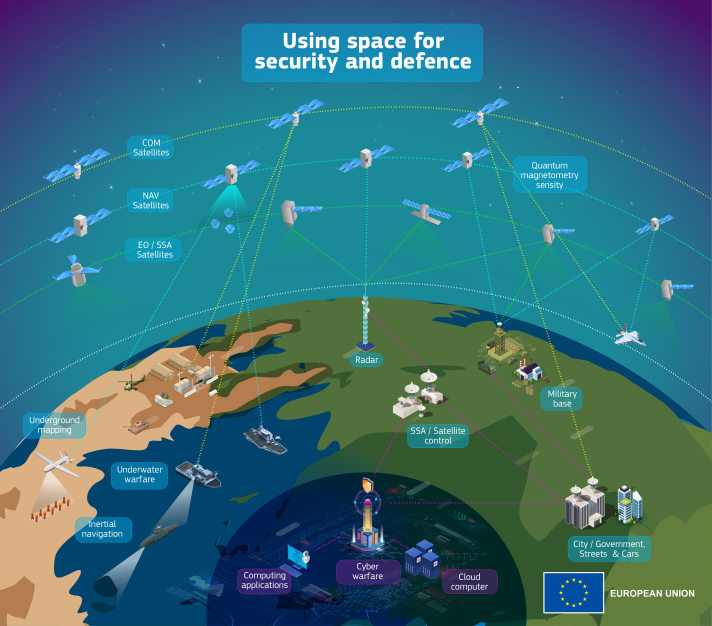
In 2026 space security surged in prominence. The EU’s draft Space Act (2025) and NASA’s renewed strategy have made sovereign space resilience a priority. Congested Low Earth Orbit – teeming with commercial and military satellites – raises the spectre of “orbital sabotage.” Europe and its partners are responding on multiple fronts: protecting satellite links from cyber intrusion, integrating ground and space networks securely (e.g. Direct-to-Device communications), and avoiding accidental or deliberate space collisions through debris management and traffic rules. The European Space Agency (ESA) has launched new initiatives under its General Support Technology Programme (GSTP) to develop space-hardened cybersecurity products – for example, protecting communication links and detecting intrusions. These products will be modular and mission-ready, aligning with the upcoming EU Space Act requirements. Meanwhile, policymakers are realizing that space debris is not just a debris problem but a security problem: large constellations and anti satellite tests mean that even a routine orbit change by one country can be seen as a threat by another. Efforts like the EU Space Act, NASA’s Artemis Security Framework, and new Space Traffic Management (STM) guidelines aim to bring order. In sum, 2026 marks a turning point – space is now treated like any other critical domain, needing cyber defences, diplomatic norms, and rapid innovation to keep the final frontier secure.
ESA’s Cybersecurity Push for Satellites
ESA’s 2026–2028 work plan explicitly targets space cyberdefence. In January 2026, ESA published its “(Cyber)security Products for Space Systems Protection” list. This GSTP initiative prioritizes technologies like protection of communication links, intrusion detection, and recovery mechanisms. These focus on Low-Earth Orbit (LEO) and “New Space” (small-sat) constellations, where threats are growing. Crucially, these products are to be integrated into a modular security architecture on satellites. That means satellites will be built with interchangeable cybersecurity modules, so that an upgrade to link encryption or anomaly detection can be added without redesigning the whole bus.
ESA is emphasizing cybersecurity compliance: the new products are meant to ensure future missions meet European security standards. The notice specifically ties these developments to the EU’s upcoming Space Act, stating that meeting the latest ECSS (European space standards) and EU Space Act rules will be critical for all future spacecraft. In practice, this means that satellite manufacturers in Europe (and even globally) will soon need to implement rigorous cyber protections or they can’t operate in EU jurisdiction. ESA has opened the door for European companies to express interest in the R&D call, signaling that national space agencies and industry must align quickly to deliver hardened space links and systems.
The New Space Race and Direct to Device Threats
As the satellite revolution proceeds, ground and space networks are converging – with potential security downsides. The rise of Direct-to-Device (D2D) communications (satellites beaming signals directly to smartphones or IoT devices) exemplifies this. D2D promises ubiquitous coverage, but also means satellites become part of terrestrial telecom networks. Security experts warn that this blurs the line between space and ground vulnerabilities. For instance, a compromised satellite downlink could inject malicious data directly into phone networks, or a hacked ground station could commandeer a satellite payload. The legal/regulatory draft EU Space Act and national policies are starting to address spectrum and licensing for D2D, but technical solutions lag.
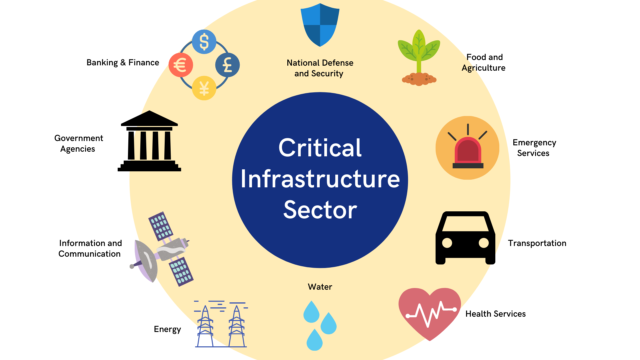
Meanwhile, the proliferation of satellites makes LEO itself contested. The satellite ecosystem is increasingly “aggressive and militarized” – as one analysis notes, satellites are now “software defined, cloud-integrated and commercially manufactured”, giving adversaries new cyber targets. States are practicing proximity operations and even deploying robotic servicing arms – maneuvers that could be mistaken for hostile acts. In 2025–26, both China and the US performed high-risk orbital experiments (sensor tests, satellite releases) that others have watched nervously. The net effect is that national communication infrastructure now includes space assets, and so a successful attack on a satellite link could undermine critical services (GPS, banking, emergency alerts). D2D plans only widen the attack surface: regulators and military planners cite D2D as a case where telecom and satcom security must be unified.
Space Debris and Traffic Management: Preventing Accidents
Sustainability is security in orbit. LEO congestion and debris create risks of accidental escalation. Tens of thousands of fragments whiz by at >15,000 mph. Even small debris can destroy satellites, cascading into more debris (“Kessler syndrome”). In the past two decades alone, trackable debris has increased by ~80%. The Atlantic Council rightly observes that traditional passive tracking is no longer enough; we need active traffic management to “have a common understanding of and management over maneuver in a congested environment”.
Without such coordination, a routine collision or close pass could spark a diplomatic crisis. Experts warn that debris might be “a shared vulnerability” that even Russia or China might cooperate on, since an explosion in orbit endangers all spacefarers. Recent proposals reflect this: the U.S. Senate’s 2025 ORBITS Act would create a national program for debris remediation and set uniform debris standards. The EU Space Act draft similarly envisions requiring mitigation plans and facilitating orbit traffic management across nations. Companies and militaries are also exploring real-time collision warning systems and licensed “geo-fencing” of high-use orbits. These efforts aim to reduce accidents that could be misinterpreted as hostile.
Crucially, debris management is treated as a security measure: ensuring sustainable orbits can reduce the chances of inadvertent escalation. For example, if a satellite malfunctions and drifts, an effective STM regime would immediately alert operators and guide safe maneuvers. Conversely, a surprise satellite fragmentation could be taken as a weapon test unless norms allow transparent sharing of who did what. Hence, stabilizing orbits through better debris tracking, deorbiting old satellites, and international “rules of the road” is now seen as vital to space stability.
Policy and Future Outlook
The EU Space Act and international initiatives reflect 2026’s framing of space as a sovereign security domain. The Space Act proposal (COM(2025)335) covers aspects like orbit traffic management, protection of critical space infrastructure (including cyber measures), and harmonized licensing. It explicitly complements EU cyber and critical infrastructure laws, making space systems part of EU resilience strategy. In parallel, NASA and the US Space Force have emphasized a contested vision of space: while Earth sees diplomatic struggle, space agencies now plan for “resilience” in orbit and integration of military ops (e.g. NASA’s space traffic initiative, Space Force’s updated doctrine).
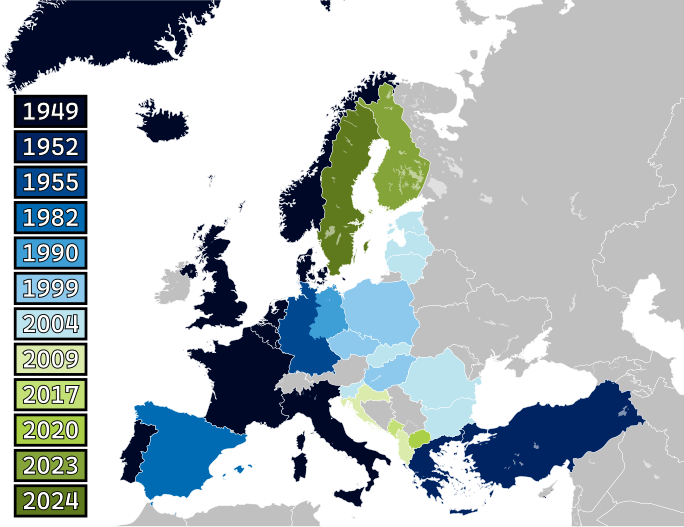
Key recommendations include: strengthening satellite cybersecurity (as ESA is doing), expanding international debris mitigation standards, and accelerating STM implementation. For instance, EU and NATO countries should share collision-avoidance data and develop trusted “space situational awareness” networks. Private companies should be required to register orbit changes (as military commanders file flight plans). In cybersecurity, ESA’s modular approach should be adopted by all major manufacturers. Governments should also invest in space-resilient communications (hardened ground stations, anti-jam signals) given the D2D push.
In summary, 2026 has seen space become an explicit security domain. The “final frontier” is no longer far away; it is interwoven with terrestrial security. The convergence of satellite networks and ground networks (e.g. D2D), together with escalating debris and adversarial maneuvers, demands robust international policy responses and resilient technology. By integrating these threads – cybersecurity, traffic management, and sustained diplomacy – space can remain an enabler of security rather than a source of crisis.