The Airspace Threshold: When Russian Drone Incursions Become an Article 5 Test
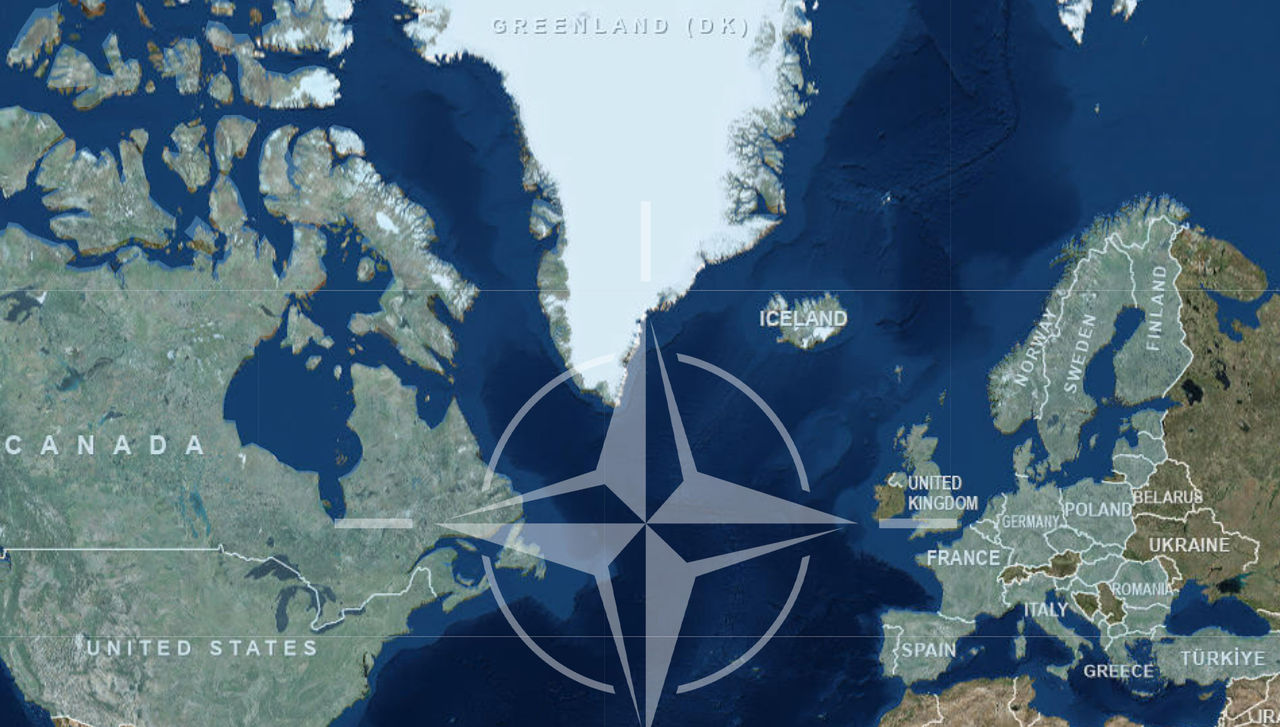
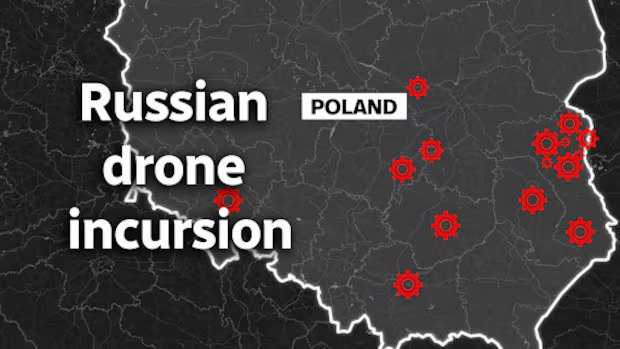
By August 2026, Russian air activity around NATO's eastern flank had moved beyond the category of occasional wartime spillover. A Russian cruise missile crossed into Poland at the end of July and exploded near Tarnawa-Kolonia. NATO's North Atlantic Council met on 12 August to address recent violations involving Poland and Romania and said Russia bore full responsibility for dangerous and unacceptable breaches. Four days later, a Spanish F-18 flying NATO air-policing duties shot down a drone inside Romanian airspace. On 20 August, another drone crossed into Romania and crashed near Grindu. The pattern does not prove that every object was deliberately sent to attack NATO territory. It does show that the Alliance is now managing repeated armed intrusions, uncertain attribution and compressed decision times as a normal feature of security from the Baltic to the Black Sea.
The legal and political threshold remains important. An airspace violation is a breach of sovereignty, but it is not automatically an "armed attack" under Article 5. NATO assesses that question case by case. Scale, effects, intent, attribution, target and whether an incident forms part of a wider campaign all matter. Article 4 is therefore not a weak substitute for Article 5; it is the mechanism through which Allies compare evidence, align their risk assessment and decide on defensive action before a crisis becomes war.
The strategic danger lies in waiting for a single unmistakable strike before treating the pattern seriously. Russia can gain intelligence, impose costs and test Allied cohesion through incidents that remain individually ambiguous. NATO's answer should be a visible response ladder below Article 5: automatic evidence sharing, common rules for engaging unmanned threats, layered low-cost counter-drone systems, rapid attribution and proportionate political or military consequences for repeated violations. The Article 5 guarantee will be credible only if the Alliance can defend its airspace decisively without making every interception a referendum on war.
August crossed an operational threshold
The most important change in August was not that a drone entered NATO airspace. Such incidents had already occurred repeatedly since Russia's full-scale invasion of Ukraine. The change was that intrusion, interception and political consultation began to form a recurring operational cycle.
The Polish case demonstrated the destructive potential. During a major Russian strike against western Ukraine on 30 July, a cruise missile entered Polish airspace and fell near Tarnawa-Kolonia in Lublin province. Poland summoned the Russian representative and condemned an action that threatened civilian life and aviation safety. Subsequent Polish and G7 statements identified the object as a Russian manufactured cruise missile and described a coordinated information operation that exploited the initial uncertainty to deflect responsibility and weaken trust in Polish institutions and NATO. The episode combined three pressure points in one event: a physical breach, a public-warning failure and an attempt to manipulate the information environment before the investigation was complete.
The North Atlantic Council met on 12 August to consider violations affecting Poland and Romania. Its language was calibrated but unusually direct: Russia bore full responsibility, the incidents were dangerous and unacceptable, and Moscow was displaying a growing tolerance for risk. NATO did not describe the events as an armed attack. It did, however, place them within the Alliance's collective political machinery and connect the response to stronger integrated air and missile defence across the eastern flank.
Romania then supplied the clearest operational example. At 04:44 on 16 August, Romanian surveillance systems detected an aerial target entering from the direction of Moldova, north of Galati. A Spanish F-18 assigned to NATO air policing established radar contact, received authorisation to engage and destroyed the drone at 05:01 over an uninhabited area. On 20 August, Romanian radars detected another group of targets close to the Ukrainian border. Spanish F-18s and a Romanian helicopter were launched; one drone entered Romanian airspace and crashed near Grindu without causing casualties or damage.
These episodes matter because they compress the space between peacetime policing and wartime defence. The intercepting pilot cannot wait for a full intelligence assessment of origin and intent. National commanders must decide whether the object threatens a town, airport, energy facility or military base. Political leaders then have to determine whether the event was accidental spillover, reckless targeting near a border, a deliberate probe or one element of a broader coercive campaign. Each decision has to be made with incomplete evidence and under the knowledge that both passivity and overreaction carry strategic costs.
What Article 5 actually requires
Article 5 is often described as an automatic switch: an attack on one Ally becomes a war involving all. The treaty is more deliberate. It states that an armed attack against one or more Allies is considered an attack against all, after which each Ally assists by taking "such action as it deems necessary", including the possible use of armed force. The obligation is real, but the form of assistance is not mechanically identical for every member.
The critical term is "armed attack". NATO's own guidance says the assessment is made case by case and is not confined to a conventional invasion. A sufficiently serious terrorist, cyber, space or hybrid attack can qualify. The same logic applies to unmanned aircraft: the platform does not determine the threshold. A small drone conducting surveillance, an explosive drone that crashes harmlessly and a coordinated swarm striking an air base are all unmanned systems, but their scale, effects and strategic meaning are fundamentally different.
International law reinforces this distinction. The International Court of Justice has treated scale and effects as central to whether a use of force rises to the level of an armed attack. That does not give NATO a mathematical formula. It does provide an analytical discipline. Decision-makers should ask what happened, what damage was caused or intended, who was responsible, whether the event was isolated or repeated, and whether it formed part of a campaign designed to coerce or disable an Ally.
Article 4 sits immediately below this threshold. It allows any Ally to request consultations when its territorial integrity, political independence or security is threatened. Poland used Article 4 after multiple Russian drones violated its airspace in September 2025. Those consultations helped produce Eastern Sentry, a multinational effort that added aircraft, air-defence systems, surveillance assets and other capabilities along the eastern flank. Article 4 therefore should not be understood as hesitation. It is NATO's mechanism for turning uncertainty into a shared assessment and, when necessary, collective preventive action.
The distinction can be stated plainly:A violation of airspace establishes a sovereignty problem.
A credible threat to Allied security supports consultation and defensive measures under Article.
An armed attack of sufficient scale and effect creates the basis for Article 5 collective defence.
The difficulty is that a campaign may cross these categories gradually rather than in one spectacular moment.
The grey zone is cumulative
Russia benefits from treating each incident as separate. One drone can be blamed on navigation failure. A second may be described as electronic interference. A missile that falls in an empty field can be presented as an unfortunate by-product of combat across the border. Suspicious drones near an airport or military facility can be dismissed as criminal activity or public misidentification. Examined individually, each explanation may preserve plausible doubt. Examined together, the events can reveal a strategy of pressure below the level expected to produce a unified military response.
This is the cumulative problem. NATO's legal threshold is normally discussed incident by incident, while a grey-zone campaign creates strategic effects across a series of incidents. Repeated incursions can map radar coverage, reveal fighter response times, test national rules of engagement, expose gaps between civilian and military authorities and force expensive aircraft to respond to cheap unmanned systems. They can also normalise risk. If every breach is absorbed without visible consequence, the exceptional becomes routine and the aggressor learns that the Alliance's political threshold is higher than its physical border.
Attribution makes the problem harder. A platform may be Russian-made without proving who launched it. Its route may have been altered by jamming. Debris can take days to recover and analyse. Electronic signatures, radar tracks and intelligence reporting may be classified or incomplete. Russia can exploit the time between detection and public attribution with competing narratives, as the information activity following the Polish missile incident illustrated.
Intent is similarly difficult to infer. A weapon aimed at a Ukrainian facility close to NATO territory may cross the border because of malfunction or navigational error. That is different from a drone programmed to survey a NATO air base. Yet repeated reckless launches near Allied territory can still create foreseeable danger even if a specific incursion was not ordered as an attack on NATO. Strategic responsibility therefore cannot be reduced to the final seconds of a flight path.
The Alliance needs to assess both the incident and the pattern. A single low-impact breach may remain below the armed-attack threshold. A coordinated series of armed intrusions, especially if directed at military or critical infrastructure, could acquire a scale and effect greater than any one event. Article 5 credibility depends on NATO being able to recognise that accumulation before an adversary turns ambiguity into strategic permission.
A practical threshold ladder
NATO should not publish a rigid checklist that allows an adversary to operate safely just below a declared line. It should, however, establish a shared internal framework so that similar events produce coherent responses across different Allies.
Level one: isolated violationAn unidentified or apparently errant object briefly enters Allied airspace, causes no damage and presents no clear hostile behaviour. The immediate response is national and operational: track, warn, intercept if necessary, protect civilians and preserve evidence. The political response may include a diplomatic protest and a briefing to Allies. This is a sovereignty violation, but not normally an Article 5 case.
Level two: attributable or repeated armed intrusionAn explosive drone or missile enters Allied airspace, or similar incidents recur in a way that suggests recklessness or probing. Even without casualties, the appropriate response rises: formal North Atlantic Council consultation, reinforcement of the affected sector, coordinated attribution, sanctions or other costs, and a review of rules of engagement. Article 4 becomes increasingly relevant because the threat is no longer episodic.
Level three: damaging strike or deliberate targetingAn attributable weapon kills or injures people, damages property, or targets a military installation, airport, energy facility or command node. The question is no longer whether sovereignty was violated but whether an armed attack occurred. Scale and effects still matter, and leaders would examine intent and campaign context, but a deliberate damaging strike creates a strong basis for an Article 5 determination.
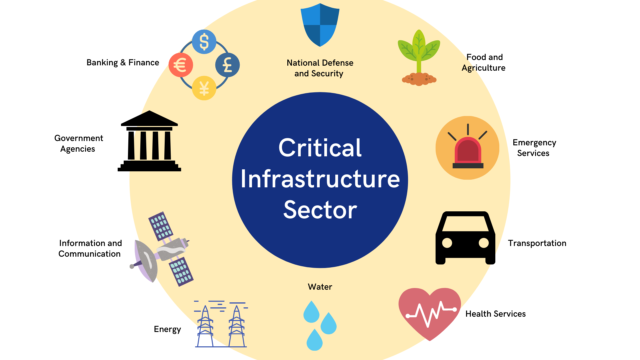
Level four: coordinated campaignMultiple weapons attack one or more Allies, or drone incursions are synchronised with cyberattacks, sabotage or electronic warfare to degrade defence and critical infrastructure. The cumulative scale and effects would make the collective-defence question unavoidable even if some individual components remained deniable. At this level, ambiguity about one platform should not obscure the character of the campaign as a whole.
This ladder is not a public red line. It is a decision-support tool. Its purpose is to prevent the Alliance from improvising its doctrine during the minutes after a drone crosses a border.
The cost of defending every kilometre
The Article 5 debate can distract from the immediate military problem: NATO must be able to detect and defeat an intruder whether or not political leaders later classify the event as an armed attack.
Traditional air policing was designed principally around crewed aircraft. Fast jets remain essential for identification, command presence and engagement of high-end threats, but they are an expensive answer to small unmanned systems. Long-range missile defences are even more scarce and should be preserved for aircraft, cruise missiles and ballistic threats that cheaper layers cannot defeat. A strategy that uses premium interceptors against every low-cost drone may succeed tactically while failing economically.
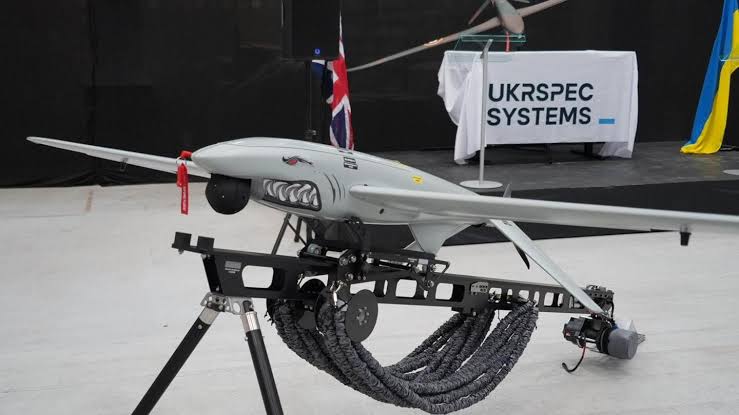
NATO has recognised the gap. Eastern Sentry now combines traditional assets with newer technologies intended to address drones. In July 2026, Allies announced more than USD 40 billion in counter-drone investment over five years and plans for a NATO-tested procurement marketplace. In August, NATO Allied Command Transformation conducted a layered counter-uncrewed-aircraft activity in Latvia that brought operators and industry together to integrate emerging systems under realistic eastern-flank conditions.
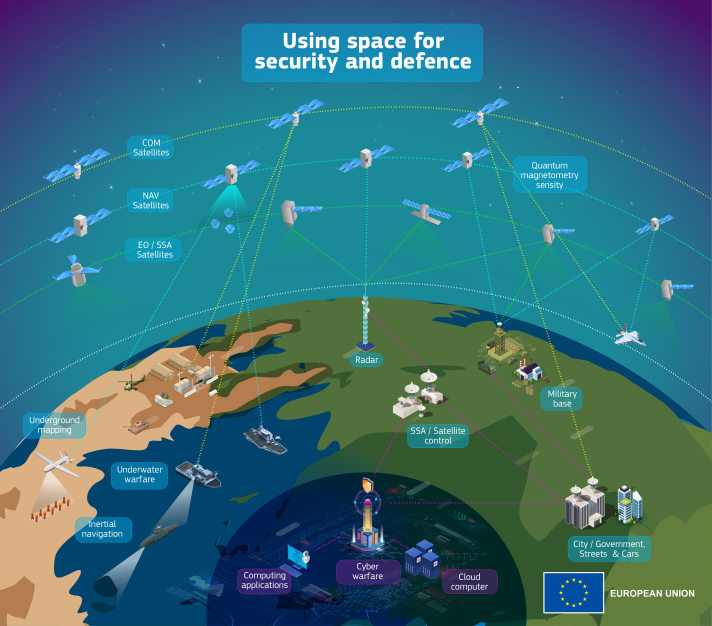
The required architecture is layered:Wide-area radar, passive radio-frequency detection, acoustic sensors and electro-optical systems must build a common track picture for small, low-flying targets.
Electronic warfare should disrupt links and navigation when that can be done without unacceptable risk to civilian systems.
Low-cost interceptor drones, guns and short-range missiles should handle the mass threat.
Fighter aircraft and higher-end missiles should remain available for fast, complex or heavily armed targets.
Civil aviation authorities, police, border services and military commands need shared procedures because an intruder may cross several legal jurisdictions in minutes.
This is also a command-and-control problem. The 16 August Romanian interception worked because surveillance, Allied aircraft, national authorisation and NATO reporting connected fast enough to produce a safe engagement. That should become routine across the eastern flank, not an exceptional success dependent on local arrangements.