Ukraine’s Drone Deal: Can Battlefield Innovation Break Europe’s Procurement Cycle?
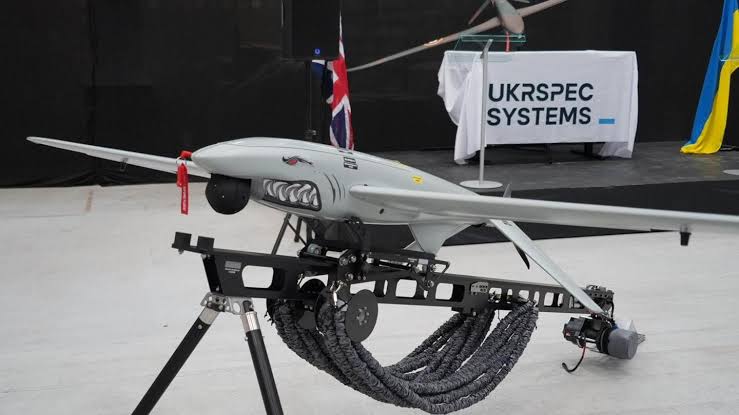
Ukraine’s rapid drone innovation is reshaping procurement norms. In mid 2026 Ukraine struck major deals with the UK loaning £752m to buy 150,000 drones (due by end 2026), Germany funding 50,000 “Shrike” FPV attack drones (€90m), and the EU launching a joint production pact (via a €1bn pledge). These arrangements bypass slow national buy processes, leaning on joint ventures and even offshore factories to accelerate output. Ukraine’s defense industry already churns out millions of FPV loitering munitions annually, inflicting the majority of recent battlefield casualties. In response, European nations are adjusting regulations (e.g. Ukraine’s new 30 day export permits under the “Drone Deal” framework) and funding local production. The imperative of near term combat needs shown by Ukraine’s two week fielding of new tech contrasts sharply with Europe’s multi year acquisition cycles. This makes Ukraine’s drones a case study in “military procurement 2.0”: lessons for NATO/EU on streamlining approvals, diversifying suppliers, and leveraging battlefield proven kit. Bold reforms (rapid contracting, flexible budgets, cross border ventures) are needed if Europe’s defense industry is to keep pace with this new, high speed battlefield demand.
Recent Ukraine Drone Deals and Production Surge
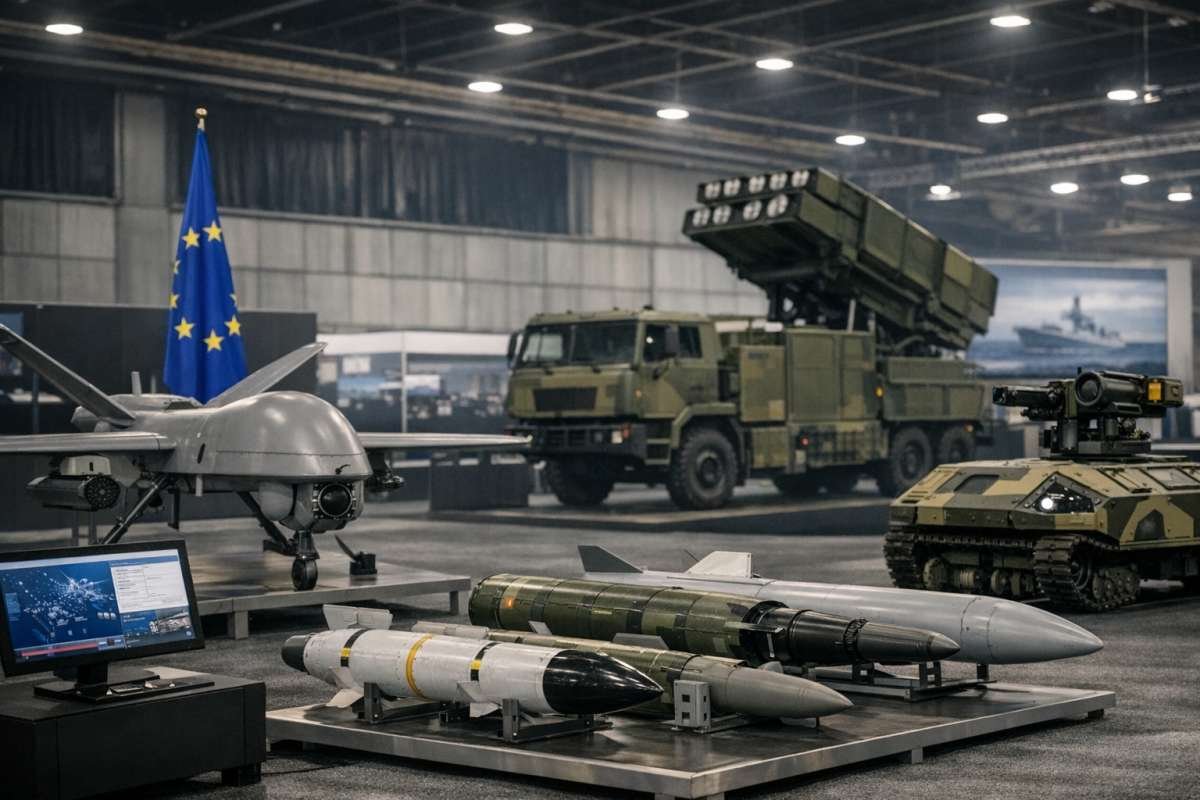
Ukraine and its allies have concluded several large scale drone procurement and production agreements in June July 2026. For example, the UK announced a £752 million military aid package that will provide 150,000 attack drones to Ukraine by the end of 2026. These small FPV strike drones (built by Ukrainian firms with Western tech) are being financed by Britain’s frozen Russia asset backed loan to Kyiv. Germany likewise committed funding for 50,000 “Shrike” FPV attack drones, a contract reported at about €90 million. The drones are made by SkyFall Industries with U.S. Auterion software, and many units have already reached Ukraine with the rest scheduled for delivery later in 2026. In parallel, the European Commission and Kyiv signed a continent wide “drone deal” in July 2026: 19 EU and Ukrainian companies will form joint ventures to scale up production of combat and counter drone systems. EU President von der Leyen noted that Ukraine produces roughly 10 million drones annually and aims to double that with EU help. The European budget has earmarked €1 billion (from a €90bn Ukraine support package) to support Kyiv’s drone programs.
These deals reflect battlefield demand. Ukraine’s military has endorsed rapid procurement: presidential approval now lets commanders deploy experimental weaponry within weeks. Dozens of such “drone deal” agreements have been signed with NATO and EU members (Netherlands, Lithuania, Latvia, Denmark, etc.) and others to produce Ukrainian UAVs on allied soil. Meanwhile Ukraine’s own defense procurements are shifting towards domestic industry: according to a Kyiv think tank, Ukrainian MoD spending on local industry jumped from 44% to 71% of budgets by mid 2025, with 95% of drone buys going to national firms. In practice, production is accelerating: Ukrainian manufacturers alone will build an estimated 6 7 million FPV drones in 2026 (about 500,000 per month). By contrast, U.S. and European government contracts (once piled into long lead time buys) are being retooled for speed. For example, U.S. Pentagon’s fast track “Drone Dominance” program has funded ~33,000 drones (using Auterion/SkyFall units) for Ukraine in one tranche.
Battlefield Impact and Operational Performance
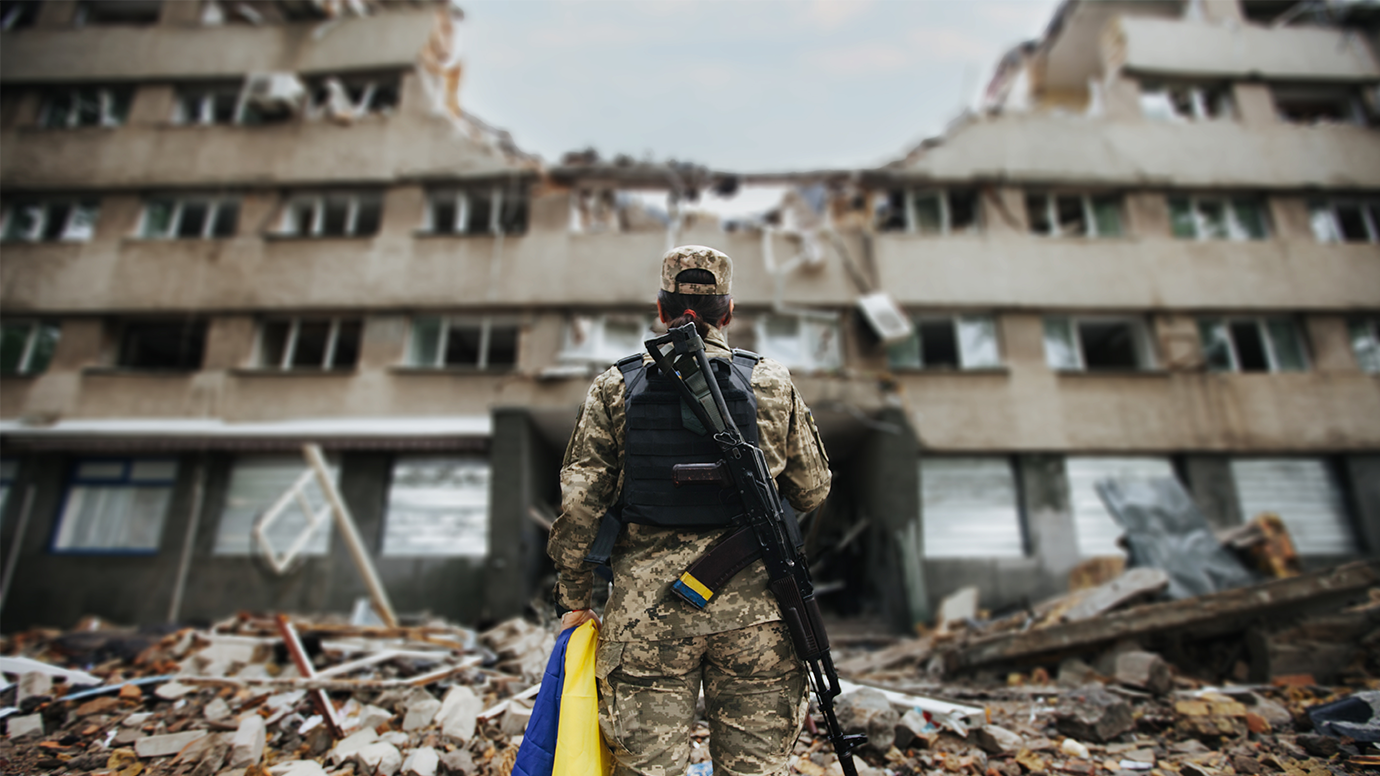
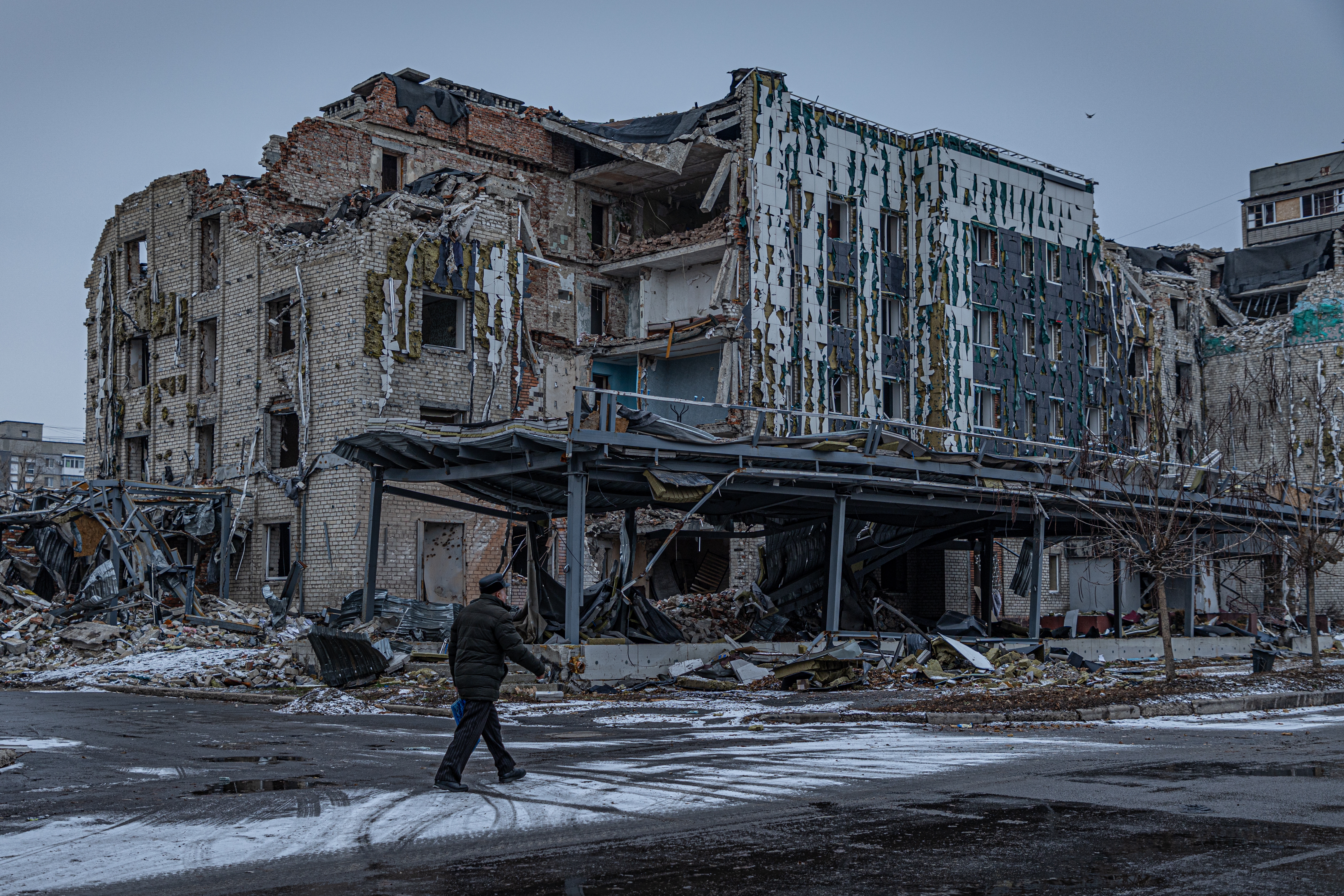
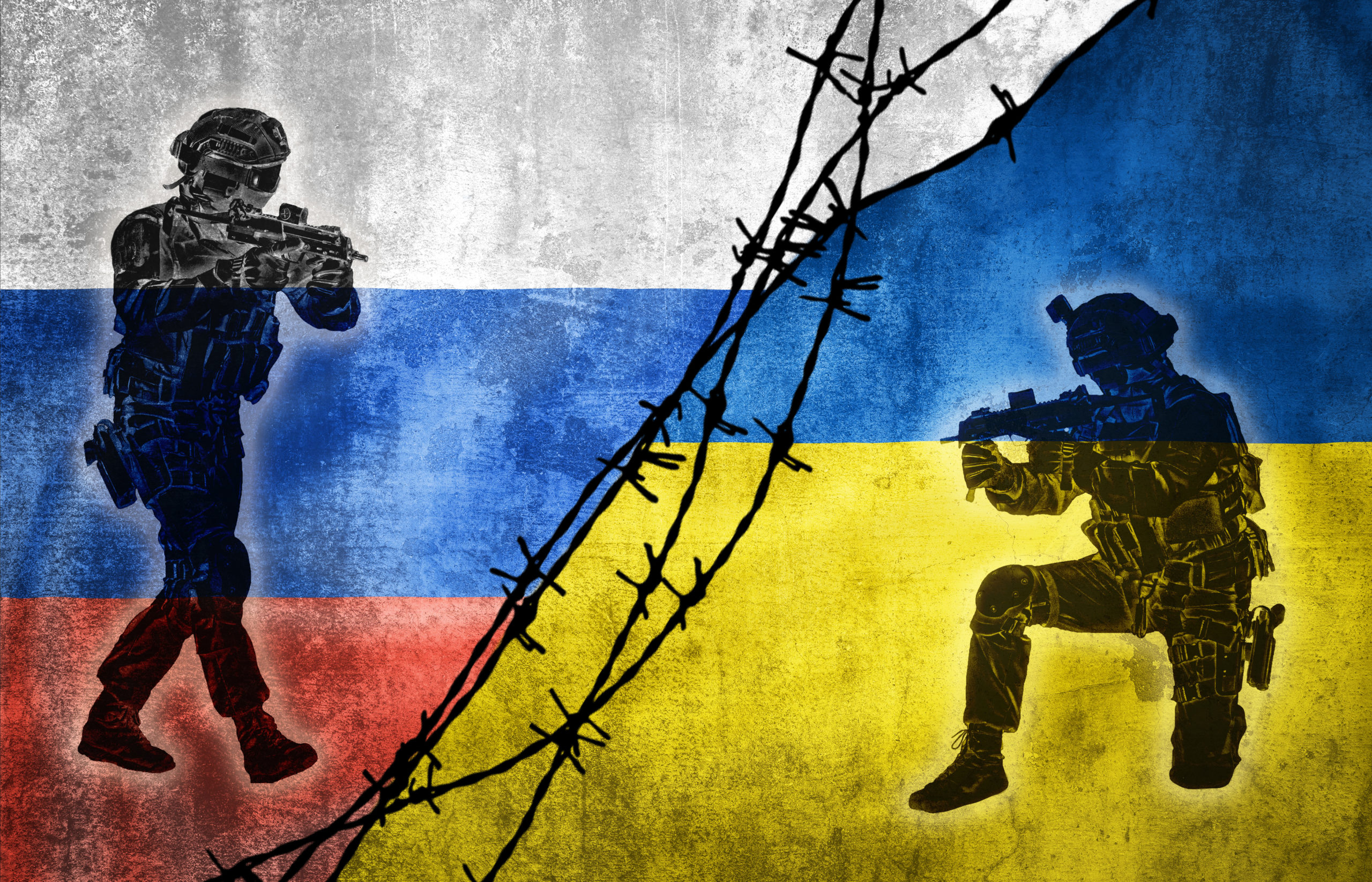
Ukraine’s drones have proven transformational on the battlefield. Field reports document thousands of low cost FPV drones striking Russian positions daily. A Reuters frontline account describes the war as an “air battle of mutual denial,” with precision drone strikes rising from under 10% of casualties in 2022 to some 80% by 2025. One Ukrainian tank commander noted he can no longer risk moving armor in the open, fearing swarms of kamikaze drones targeting every vehicle. These FPVs cost only a few hundred dollars each yet can carry shaped charges or explosives to destroy even heavily armored targets. Dozens of drones can attack a single target in concert, and “drones are in the air all the time” above the front.
Ukraine has also developed heavier and longer range UAVs. Indigenous models (e.g. Dornier, Leleka, etc.) serve reconnaissance and even deep strike roles, extending Ukraine’s reach several hundred kilometers into occupied territory. Zelenskiy recently highlighted that Ukraine’s newest drones can fly over 3,000 km (1,800 miles) a capability made possible by battlefield led innovation and open export of know how. These successes have drawn global attention: six Ukrainian firms were granted permission to export about 100 drones each to the U.S. for its “Drone Dominance” program, and Ukraine intends to share battlefield honed software and tactics with allies.
Despite heavy usage, Ukrainian drones face attrition and countermeasures. Russia fields many kamikazes (Shahed and Orion) and electronic warfare against UAVs. Ukraine copes by fielding mobile drone hunter teams with nets and jammers, and by equipping its own ground drones for logistics. Still, each Ukrainian drone strike forces Russia to spend expensive air defenses and armor on countering cheap threats. Analysts note this upends traditional war logic: we now see “new warfare defined by speed of innovation, rapid adaptation, and seamless tech integration,” including AI support.
Procurement Processes: Ukraine vs. Europe
A key lesson is how differently Ukraine and Europe approach procurement. In wartime Kyiv has repeatedly slashed red tape. A 2024 decree lets commanders field new systems in weeks (instead of months/years). The Brave1 marketplace, launched in 2023 25, lets units order tech (drones, electronics, etc.) directly from developers. Ukraine’s arms export bureaucracy has likewise been revamped: as of July 2026 any Drone Deal partner country gets export licenses issued within 30 days. The only limits are (legitimate) safeguards Ukraine retains first call on any system needed for its own defense, and re exports require Kyiv’s approval (with 20% re sale fees to Ukraine). These policies ensure Ukraine’s hundreds of indigenous drone makers can export and joint produce rapidly while preserving Ukrainian strategic control.
Europe’s procurement, by contrast, is traditionally slow. Multi year competitions, strict tender rules and long development programs dominate EU/NATO practice. For example, major Eurofighter or UAV programs often take a decade from concept to delivery. Only in 2026 did NATO and EU leaders pledge to invest more (e.g. the NATO 5% GDP target and new defence funds), but the underlying acquisition processes are mostly unchanged. The result: European orders often go to large incumbents, and many European defense projects stall or are subcontracted abroad. One recent study notes 75% of Europe’s defense procurement spend still flows to non European suppliers under battlefield urgency, illustrating Europe’s reliance on foreign systems even as it rearms.
In drone terms, Ukraine’s model of contracting fast and locally stands in sharp contrast. By mid 2026 Ukraine had negotiated nine separate drone cooperation agreements with individual allies (Bulgaria, Korea, etc. included) and now a bloc wide deal with the EU. Many are structured not as purchase orders, but as defense industrial partnerships joint ventures that mix Ukrainian R&D with foreign manufacturing lines. This approach leaps past ordinary export contracts: European firms (Orqa, Indra, Fincantieri, etc.) are being teamed with Kyiv startups so that Ukraine’s battle proven designs can be made at safe, high capacity plants in Europe. In effect, Ukraine is offloading its innovation into allied factories, while allies finance and integrate production. It’s a hybrid “procure and produce” scheme unheard of in peace time EU procurement.
Industrial Capacity and Supply Chain Issues
Scaling drone production at war speed has stressed supply chains. Ukrainian companies have churned out millions of small UAVs (Ukraine forecasts 6 7 million FPVs in 2026). But this depends on components (batteries, motors, chips) many of which come from abroad. Recent U.S. procurement rules now demand “wholly domestic” parts, complicating allied builds. The Pentagon’s drone chief notes many first phase drones contained Chinese motors, which are now barred. Europe faces similar tech gaps: key components (sensors, communications chips) are often U.S. or Asian made. Re equipping production lines thus requires coordination.
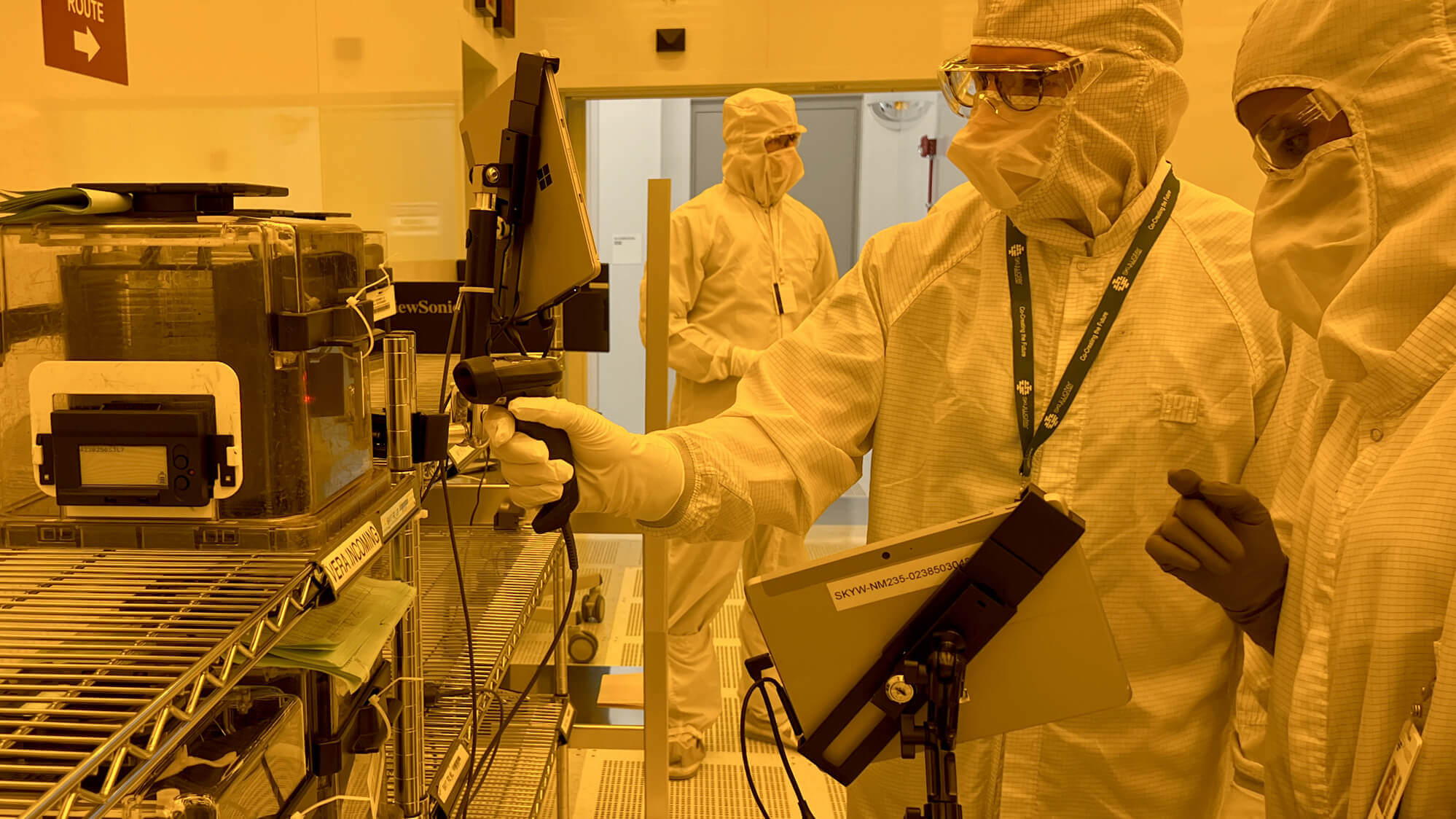
Defence firms and governments are scrambling. Auterion (software maker) says it’s helping supply 100,000 drones to Ukraine this year via multiple contracts, funded by various governments. Similarly, across Europe companies like Qatar’s Axiom may license build Ukrainian designs to boost output. But some limitations persist: manpower and machine tooling can’t expand overnight, and raw materials (motors, semiconductors) are in demand worldwide. The rapid scaling effort will likely run into bottlenecks without new investment in parts manufacturing. This underscores a European industrial lesson: multiple vendor frameworks and shared sourcing are needed. Relying on one factory or supplier would choke off surge capacity. European leaders have already responded by funding ammunition plants and encouraging joint ventures (e.g. Rheinmetall expanding propellant capacity, Fincantieri/UForce working on marine drones). But more is needed specifically in UAV components if production targets are to be met.
Legal, Export Control and Ethical Dimensions
Ukraine’s new “Drone Deal” mechanisms explicitly balance openness with safeguards. As of July 2026, any Drone Deal signatory with mutual agreements gets prioritized licensing: exports of Ukrainian systems or tech are approved within 30 days. This speed is exceptional compared to normal export processes. Nonetheless, critical checks remain in place: foreign partners must not be linked to Russia, and transferred technology is for “use only” no IP transfer without Ukraine’s consent. Crucially, Ukraine keeps a priority right to any hardware it exports: if Kyiv needs the equipment first, exports can be temporarily suspended.
Ukraine has also eased its domestic rules under martial law, lifting many wartime restrictions on arms trade to allies. That is how private firms could sign export contracts (subject to the 30 day permit rule). Allies must adhere to end user terms: for example, any third party re export of Ukrainian systems requires Kyiv’s ok and a 20% fee. Ethically, these measures aim to ensure battlefield tested systems don’t proliferate irresponsibly. Given tensions with Russia and complex geopolitics, Ukraine is cautious about technology leakage. The “Drone Deal” structure itself (being built on mutual investment rather than one way aid) also reflects an ethical shift: partners are co investors in Ukraine’s defense industry, not mere donors.
Financing and Burden Sharing
The massive drone support illustrates a new model of burden sharing. NATO allies are not giving away jets or missiles one by one, but funding whole fleets of drones and factories. The UK’s 150k drone loan is backed by seized Russian assets, showcasing an innovative financing tool. Germany’s €90m buy came from its defense budget, reflecting growing EU consensus that Ukraine must be industrially empowered. The EU’s €1bn outlay (under its €90bn loan programme) signals willingness to finance large scale capability “on Ukraine’s terms.”
Yet this raises questions: How sustainable is it for Europe to invest billions to equip Kyiv? So far allies seem committed, given the existential threat posed by Russia. But they will want accountability: thus joint production and clear budgets. Ukraine is effectively leveraging allied money to upgrade not only its own forces but European industrial capacity (the EU deal ensures some production happens on EU soil). This shared pay/shared benefit approach may become a template for future crises.
Implications for European Procurement Reform
Ukraine’s experience suggests several reforms for European defense procurement:Speed and Flexibility: EU nations should institutionalize faster acquisition paths for urgent needs. Ukraine’s decree on “battlefield authorization” is extreme, but partial measures (like simplified procedures for COTS defense tech, or rapid prototyping contracts) could be adopted.
Multiple Sourcing: Contracts should be awarded to several suppliers simultaneously. Europe has begun doing this in niche projects; it must become standard for anything in high demand (so that no single factory becomes a bottleneck).
Decentralized Buying: Empower commanders or alliances to purchase directly from a vetted marketplace (analogous to Ukraine’s Brave1 platform). For instance, NATO or EU could maintain a pre approved defence tech catalog accessible to member armies, bypassing slower national procurement.
Joint Ventures and Tech Transfer: Institutionalize arrangements like the Ukraine EU drone pact. Rather than technology stagnating within national labs, Europe should co invest in innovative start ups and share intellectual capital cross border. Pan European R&D partnerships (beyond PESCO’s stalled projects) are needed to translate battlefield lessons into industry wide know how.
Funding Local Industry: Allies should follow NATO’s example by channeling aid through defence contracts (as Kiel Institute notes, €4.6bn of €10.5bn Ukraine aid in 2025 went to European suppliers). This strengthens the EU industrial base and reduces reliance on foreign vendors.
In summary, the Ukraine drone boom is a stress test and a catalyst. It proves that procurement can be turbocharged under crisis. Europe must decide whether to incorporate these lessons to avoid returning to the old “years long” cycle once the emergency subsides. Failing that, future conflicts could similarly catch major powers flat footed.
Policy Recommendations: European defence planners should: (1) streamline national procurement rules (e.g. fast track approvals, modular contracts); (2) fund joint Ukrainian European production initiatives as permanent programs; (3) build dedicated supply chains for high demand items (drones, electronics, munitions); (4) mandate multi supplier contracts for critical items; and (5) invest in integrating Ukrainian industrial players into EU defence networks. In short, emulating Kyiv’s agile, mission driven procurement will be key to sustaining deterrence and innovation across Europe.