Middle Corridor Under Pressure: Can Central Asia Secure Europe’s New Lifeline?
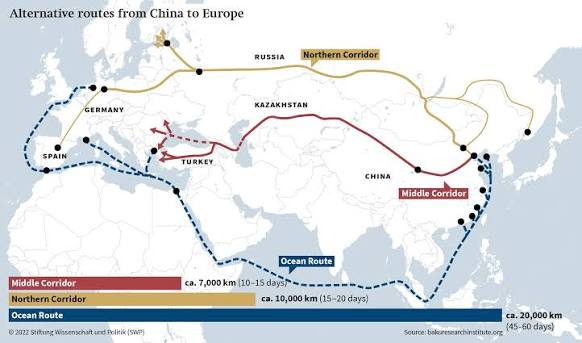
Europe’s Middle Corridor (the Trans-Caspian International Transport Route) has emerged as a strategic alternative to transit via Russia and the Suez Canal, connecting Western China to Europe via Kazakhstan, the Caspian Sea, Azerbaijan, Georgia, and Turkey. After the Ukraine war and Red Sea conflicts, traffic has surged (a Kazakh roadshow reported 2.76 Mt in 2023, 4.48 Mt in 2024). Delivery times have roughly halved (now ~13–17 days China–EU), boosting competitiveness. Yet the route remains tiny – roughly 4–5 Mt per year vs. ~100 Mt on Russia’s Northern Corridor – and chokepoints are severe. Georgian ports (Poti/Batumi) are nearing capacity, the deepwater Anaklia terminal is stalled, and Caspian crossings (Aktau/Kuryk) must expand. Security risks (Russian pressure, Caspian storms, and border bureaucracy) compound structural barriers. The EU, China, Turkey, and Central Asian governments have pledged investments (e.g. ~€10 bn under the EU’s Global Gateway). The trajectory to Triple-Corridor volumes by 2030 (per World Bank modeling) hinges on massive upgrades and coordination. This report analyzes the corridor’s nodes and partners, recent throughput and modal shifts, bottlenecks (political, infrastructure and regulatory), financing gaps, and security dimensions. We outline scenarios and propose policy and commercial measures (from “single window” customs and digital tracking to new port projects) to bolster resilience. Metrics to track progress include annual tonnage/TEUs, transit days, and capacity utilizations along each segment.
Strategic Context: Diversifying Away from Russia
Europe’s renewed focus on the Middle Corridor is first and foremost a geopolitical diversification story. Before 2022 most China–Europe overland trade ran via Russia; the Ukraine war made that route politically fraught. At the same time, Houthi attacks on Red Sea shipping have periodically disrupted the Suez route. The Middle Corridor thus offers an alternative not only for general East West trade but also for Europe’s critical inputs (energy and minerals). EU strategy documents and summit declarations explicitly frame the corridor as a means to “protect Europe’s economic resilience” by reducing dependence on Russia. The September 2022 EU-Asia Connectivity Strategy and the 2019 EU Central Asia Strategy further enshrine the corridor in a “connectivity” agenda, linking it to European rules, sustainability and regional integration.
At the same time, Central Asian countries view the route less as a guarantee of new trade flows and more as a window of opportunity. For landlocked Kazakhstan, Uzbekistan, etc., the Middle Corridor offers access to EU markets and seaports; for Azerbaijan and Georgia it is a way to cement their roles as transit hubs. But in all these states Russia remains a near-peer power. Moscow exerts political and economic pressure (e.g. via tariffs or diplomatic channels) to discourage traffic shift. Moreover, only part of the corridor is under full EU (and Chinese) influence – Central Asian segments involve non-EU states that coordinate via multilateral roadmaps.
Key Context: The Middle Corridor is the shortest China–Europe overland route, but also the most geopolitically complex. It is explicitly promoted by the EU/US as a strategic alternative, yet it must traverse multiple non-EU governments. Security (against seizures or illicit trans-shipment) is a concern: interviewees told RUSI researchers that Western-sanctioned goods often route secretly through the corridor but get seized by Russia if discovered. In short, for Europe this corridor promises diversification; for corridor states it is as much a development platform (jobs, infrastructure) as a transit project. The ultimate viability hinges on overcoming that political friction as much as fixing rail tracks.
Corridor Definition and Infrastructure
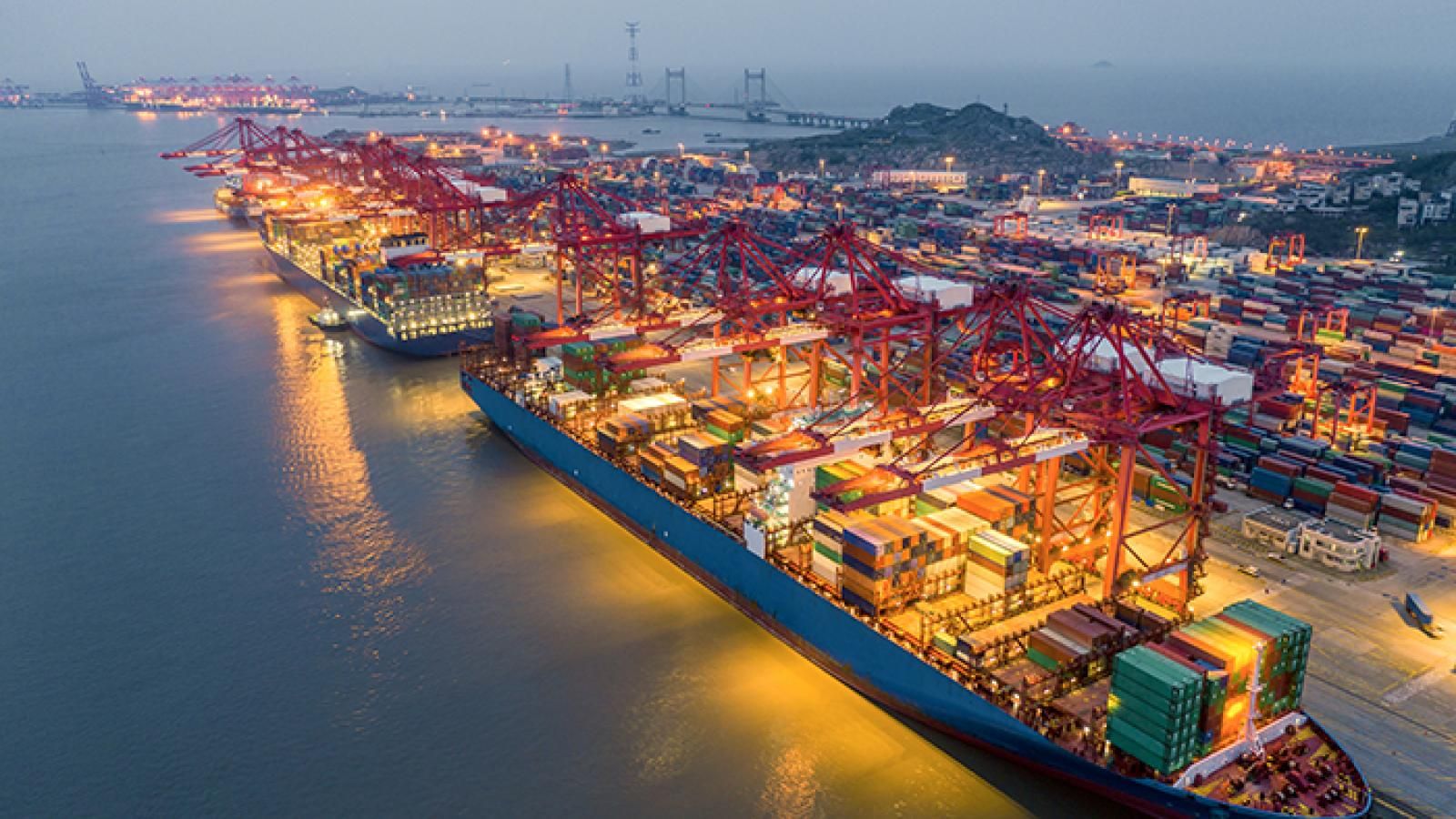
The Middle Corridor (often called the Trans-Caspian International Transport Route, TITR) is a multimodal chain of rail and sea segments spanning ~4,000 km. It begins in western China (e.g. Xi’an, Chengdu) and proceeds overland to the Kazakhstan border (Dostyk/Alashankou). From Dostyk it follows the Trans-Kazakhstan railway westward to the Caspian Sea, with key Kazakh nodes at Aktau and Kuryk (both Caspian ports). Across the Caspian, rail ferries or ships carry containers and cargo to Azerbaijan’s Alat (Baku) Sea Port, currently ~15 Mt capacity (with plans to 25 Mt). Through Azerbaijan, the Baku–Tbilisi–Kars (BTK) railway connects Baku to Turkey via Georgia. Georgia provides two Black Sea outlets: the ports of Poti and Batumi (both recently upgraded). From there goods transit by ship (short sea) to Romanian/Bulgarian ports or by rail across Turkey (to Europe via Istanbul).
Nodes and Operators: Kazakhstan’s KTZ Temir Zholy operates the Kazakh rail, including new double-track lines (Dostyk–Moiynty). Kazakh ports Aktau and Kuryk (on the Caspian) have combined capacity ~21 Mt; both are expanding (e.g. Aktau got an EU-funded berth upgrade, Kuryk a new terminal with Abu Dhabi Ports). In Azerbaijan, Baku’s new Alat port (opened 2018) has capacity 15 Mt/yr and a 150,000 TEU container terminal – it handled ~100,000 TEU in 2025. BTK Railway LLC (joint AZ/GE) manages the Baku–Tbilisi–Kars line; after a 2024 rebuild its capacity is ~5 Mt/yr. Georgian Railways links Tbilisi to Poti/Batumi; those ports (operated by P&O, Global Ports, etc.) currently handle ~13 Mt (Poti) and 5 Mt (Batumi) annually. Future linkages include the planned Zangezur Corridor (Azerbaijan–Armenia–Turkey) which could bypass Georgia, and Iran links (North–South Corridor via Azerbaijan).
Recent Trends (2022–mid-2026)
After being a minor channel, the Middle Corridor has rebounded sharply since 2022. Kazakhstan reports corridor volume (crossing the Caspian) of ~2.76 Mt in 2023, 4.48 Mt in 2024, and ~4.1 Mt in 2025 – roughly five times the 2018 baseline. An RUSI analysis similarly cites 4.1 Mt in the first 11 months of 2024 (63% growth). These reflect a mix of energy products (fuel, ores) and rising container traffic – Astana Times notes 77,000 TEU via the route in 2025, with a 2030 goal of 300,000 TEU. In raw tonnage terms the volumes are still tiny: e.g. 4.5 Mt is only ~6% of Russia’s ~100 Mt yearly Trans-Siberian capacity.
Part of the surge is due to modal shifts around geopolitical shocks. Flexible rail shipments surged as the Suez route was temporarily curtailed by Red Sea attacks. Kazakhstan’s export of metals, grain and minerals by rail has boomed (Kazakhstan–China rail was 18.7 Mt in H1 2026), and some of that flows onward westward via the Middle Corridor. New cargoes (gold/copper concentrates, machinery, solar panels, EVs) are also appearing en route. Georgia’s ports saw their strongest half year in a decade: 9.7 Mt in H1 2026 (up 22%). Georgian Railways hauled 6.9 Mt (10% up) in the same period. This broad-based growth (across bulk, container, import/export) suggests regional integration is rising, not just temporary rerouting.
Transit Times & Costs: Efficiencies have improved. Joint KZ-AZ-GE roadmaps (2022, 2025) and one-stop customs are cutting delays. Kazakh sources say transit fell from ~28–32 days to 13–17 days (China–Europe via Alat/Balkans). Azerbaijan reports block trains now reach Alat in 8–10 days and Black Sea ports in 12–14 days. Cost-wise, rail is still pricier per container than sea (estimates vary, but roughly €4–6k/FEU via Middle vs €1–2k by ocean). However, when factoring security detours (e.g. +$1M per Suez voyage due to war-risk), the gap narrows for high-value freight.
Table: Throughput along the Middle Corridor and related routes. TITR cargo is cargo crossing the Caspian (Kazakh figures). Georgian port figures are total cargo (mostly transit). China–Kazakh rail shown for context (broad Asia–Europe flows).
Modal shifts: The corridor is gradually tilting toward containers. Historically dominated by oil, ore and grain, it now carries electronics, chemicals and finished goods. The EU’s Global Gateway calls for digitalization and logistics hubs, and indeed Georgia just opened a 120,000-TEU container terminal at Poti. Sea-rail transshipment (Caspian ferries and Black Sea feeder) is improving: two new container ferries (Baku Shipyard orders) and modernization of Kuryk–Aktau docks aim to reduce delays.
Security and Bottlenecks
Despite growth, the Middle Corridor faces acute risks. Political risk: Russia remains a wildcard. Tbilisi’s postponement of the Anaklia deepwater port (downgraded to a $50m government project in 2026) coincided with alleged Russian pressure to weaken Georgian transit. The renewed Armenia–Azerbaijan linkage (the Trump-supported “Crossroads of Peace” railway) could help bypass Georgia, but may also provoke Russian or Iranian reactions. Taliban instability in Afghanistan indirectly affects Turkmen/Kazakh exports; sanctions or shifts in China’s strategy could re-route goods away from Central Asia.
Military/security risks: While no major conflict is centered on the corridor itself, it traverses volatile neighbors. Cybersecurity threats loom for digital customs and logistics systems (see “No ceasefire in cyberspace”). Houthi missiles don’t directly threaten the Caspian route, but their success in the Red Sea highlights global spillover risk. Moreover, China’s increased stakes in the corridor (signing MoUs on BTK, stationing liaison at Xi’an port) could draw Beijing into regional friction.
Natural hazards: The Caspian Sea is prone to sudden storms and the two Kazakh ports can freeze in winter (modern ice-breakers mitigate this). Coastal erosion and river silting require constant dredging – Aktau recently deepened its berths. On land, Kazakhstan and Central Asia see summers of extreme heat and floods, which can damage rail tracks and power lines (Kazakhstan is building a flood/drought warning network).
Infrastructure bottlenecks: Port and rail capacity are tight. Poti (~13 Mt capacity) and Batumi (~5 Mt) have been upgraded but currently run near limits due to surge demand. Georgia’s controversial Anaklia project (deep-sea port for 15,000–20,000 TEU ships) is delayed amid political wrangling. Azerbaijan’s BTK rail, even at 5 Mt, is a single-track line in parts and may bottleneck if volumes triple (the country is investing in double-tracking and has invited 1,000 block trains per year). On each border, gauge breaks (China/ Kazakhstan, plus Georgia/Turkey) require transshipment. Customs paperwork and tariffs remain semi-disparate – no single-window system exists across all five Central Asian republics.
Cyber and hybrid threats: The corridor’s reliance on coordinated logistics systems makes it vulnerable to digital disruption. A cyberattack on KTZ, Georgian Rail, or port authorities could stall shipments. There are few public references yet, but the EU’s emphasis on “digitalization” implicitly targets these vulnerabilities. Cross-border smuggling and sanctions evasion (already reported on goods transiting to Russia) also pose legal and security headaches, likely prompting higher insurance/war-risk surcharges (especially on Caspian voyages).
Governance, Customs and Legal Issues
Multiple jurisdictions on the corridor complicate “corridor management.” Customs regimes still differ: e.g., each border crossing may require separate inspections. Kazakhstan reports simplifications (joint railway customs windows) which helped halve transit times. The September 2025 Action Plan (2024–26) among AZ–KZ–GE seeks “efficient utilization” of transit. Yet an SWP analysis warns there is “no unified tariff structure or single operator” and calls for regional tariff harmonization. The EU-funded digital “TransitCorr” platform (a Customs single window) is pilot testing in Central Asia, but full roll-out is pending. Likely gaps: training (customs officials), mutual recognition of standards, and resolving CIS vs WTO rules mismatches (e.g. India–Turkey trade friction).
Legally, most transit is covered by TRACECA/TITR agreements. Insurance premiums remain a wildcard. Carriers may pay extra for “political risk” on the Caspian or Azerbaijan–Armenia routes if tensions flare. The ongoing Armenia–Azerbaijan normalization (2025–26) includes reopening the Zangezur link; transit via Armenia could cut AZ–TR distance by ~500km, but new routes require negotiated rail agreements. All corridor states except Turkmenistan are WTO members (Turkmen ports like Turkmenbashi aren’t in the main route but if included, different rules apply). The North South corridor (via Iran) is an alternative but Iran remains under some trade sanctions – a risk buffer for EU (if integrated) or vice versa.
Track Policy Changes: A key development: On 30 Sep 2025 AZ–KZ–GE signed a joint bottleneck elimination agreement. This is meant to streamline cross-border flow (harmonizing train schedules, infrastructure works). Also notable: Azerbaijan signed MoUs with China (July 2025) for BTK cooperation and opened a liaison office at Xian port. These hint at deeper China alignment (mirroring EU-Asia frameworks).
Financing and Investments
EU and Global Gateway: The EU has made major pledges. At the Samarkand Summit (Apr 2025) Europe announced ~€10 billion (public+private) for Central Asian transport/logistics. In the Global Gateway “Sustainable Transport” initiative, the EU states goals (50% transit-time cut, 3× trade flow by 2030). So far, grants target ports (e.g. Aktau berths), rail (Kazakh second tracks, Georgia’s 120k TEU hub) and soft measures (digital customs). EBRD/World Bank loans are also active (and co financing the Az–Ge–Kz roadmaps). A large tranche is reserved for the stalled Anaklia port, though Georgia’s commitment is unclear.
Chinese investment (BRI): China is a major cargo source but its funding moves are ambiguous. The Anaklia saga illustrates this: a Chinese-led consortium was picked for Anaklia but allegedly lost interest by 2026. However, China has invested in corridor rail: new locomotives, and a joint Chinese-Kazakh plan to finish the KTZ Moiynty–Dostyk (2nd track) in 2025. China’s Belt & Road also touches Azerbaijan (new Alat terminals, container ships) and Georgia (road reconstruction). In mid-2025, Azerbaijan–China signed multiple partnership declarations to expedite Middle Corridor trade and infrastructure. Nevertheless, some analysts (e.g. Sharifli 2024) note Beijing’s priorities have shifted towards digital overland corridors and Central Asia minerals more than ports.
Turkey and Regional: Turkey underwrites the BTK railway’s utility and is building the Dilucu Kars link (opening ~2030). Turkey also promotes Middle Corridor via the Organization of Turkic States. Central Asian governments have formed a Corridor Working Group (KZ, UZ, KG, TJ, TM, plus AZ, GE, TR) and convene transit summits (Almaty 2025, etc). This regional cooperation can unlock new co-financing (e.g. Turkmenistan desiring a Turkmenbashi–Iran branch).
Private/Commercial: Major port operators (DP World, Abu Dhabi Ports, Global Ports, Eurogate, etc.) are investing in terminals. For example, AD Ports is funding Kuryk’s expansion. Logistics giants (Maersk, CMA CGM) have trial shipments on the corridor. Insurance firms charge “war-risk” on Red Sea routes but not (yet) on Caspian routes. Banks (EBRD, EIB) have corridor-themed funds. Still, analysts estimate a €18–20 billion infrastructure gap remains (EY and EBRD forecasts). Without further capital, rails and ports cannot sustain a full-scale shift.
Legal/Insurance Issues
The corridor uses multiple legal frameworks: CIS transit treaties, EU customs codes (for goods arriving in EU), and protocols like the TRACECA Multilateral Agreement. Overland transit between non-EU countries is generally free-trade at customs; duties apply only at import. The absence of a single corridor operator (unlike in EU rail corridors) means traffic is subject to national norms at each segment.
Insurance: Compared to sea, overland freight often has lower war-risk surcharges. However, Caspian shipping firms do pay insurance for piracy/political risk (historically minor). If geopolitics worsen (e.g. a Caspian blockade scenario), insurers could raise premiums sharply. The recent example: Red Sea shippers now incur ~$1 M extra per trip. A Middle Corridor disruption (hypothetical) could similarly trigger surcharges. Companies should plan for an uptick in transit insurance costs if Russia or Iran actively threaten a segment.
Standards: The corridor stretches from Chinese gauge (1,435 mm) through Central Asian metre gauge or standard (Eurasian gauge 1,520 mm). Currently, containers are lifted at break-of-gauge points; over time, multi-system rolling stock or gauge-adjustable bogies could help, but none are widely in use yet. Cargo tracking is uneven: there is no unified digital manifest shared along the entire chain (though pilot projects in 2026 are promising). Overall, legal/regulatory work will involve incremental harmonization (digital customs, tariff alignment, scanning) rather than a single new treaty.
Scenarios and Timeline
Best Case (2030): With sustained investment and EU–China alignment, the corridor handles ~11 Mt/year (World Bank and Azeri forecasts). Delivery times fall below 10 days (fully streamlined rail+ferry), and container volume reaches ~300k TEU. Ports (Aktau/Kuryk, Poti, Alat) have added capacity; Anaklia is built and contributes 5 Mt. Russia’s share of EU–Asia trade drops as more goods reroute. We see robust East–Europe trade (Ukrainian recovery, S. Caucasus exports). Governance barriers (single window, e-billing) are largely resolved. China designates the corridor a priority (co investing, guaranteeing cargo contracts). Ukraine’s north-south TIP line remains limited, so Middle Corridor consolidates its niche.
Likely Case (mid-2020s): Moderate growth (6–8%/yr). By 2030, corridor carries ~5–8 Mt (50 80% higher than now) with ca. 200k TEU. Global demand for corridor (re-)diversification remains strong but is matched by incremental supply. Delays and cost remain higher than alternatives; some shippers still prefer North/Iran by then for cost. New projects (Alat expansion, Kuryk Port, Turkish Kars–Dilucu, Anaklia Phase 1) come online between 2027–2030. Customs reforms cut a few days per crossing. Russia grudgingly tolerates some Central Asian freight going West but retains dominance in bulk cargo. The corridor is secure but vulnerable to occasional disruptions (cold snap, political flare-ups).
Worst Case: Political or infrastructural breakdown. Example: Russia ramps up pressure, Azerbaijan–Georgia link stalls, and the Anaklia project is abandoned. Investment stalls (budget crises in KZ/AZ). Volumes plateau ~5 Mt and drop by mid-2030s as some shippers return to Northern routes (if sanctions ease) or switch to alternative maritime (if Red Sea calms). The corridor becomes mainly a niche for specific cargos (e.g. sensitive tech). Europe’s Global Gateway pulls back funding. Insurance/financing costs rise. In effect, it remains an underused “backup route,” with Central Asia remaining transit-dependent on Russia.
Timelines: Many projects are 2025–30. The Azerbaijani government aims to integrate the Zangezur Corridor by 2026, which would add ~15 Mt capacity regionally. The Turkish–Azeri rail link (through Armenia) is slated by 2030. EU infrastructure grants are often 2025–31. Thus, the next 3–5 years are critical: if Middle Corridor traffic cannot double again by 2030, its strategic momentum may fade. The World Bank and EBRD note that up to 11 Mt is feasible by 2030 with all investments; failure to start these projects on schedule risks falling behind this goal.
Recommendations
To make the Middle Corridor a resilient lifeline, we suggest:Expand Port/Rail Capacity: Prioritize Anaklia deep port (revive funding agreements) to relieve Poti/Batumi. Continue dredging Aktau/Kuryk (already begun) and fast-track Kuryk’s Sarzha terminal with AD Ports. Double-track key rail sections (e.g. Altynkol–Korgas, Kars–Dilucu in Turkey).
Customs and Digitalization: Implement an EU-backed “one-stop transit authority” for the corridor. Extend railway single-window systems beyond KZ–CN to KZ–AZ–GE. Adopt electronic cargo tracking (CIM/SMGS e-docs) and align tariffs (CIS vs EU rules). The EU–Central Asia Transport Lab (ACTL) could pilot a Corridor Data Platform.
Coordination Mechanisms: Convene a permanent Middle Corridor Secretariat (or use TRACECA bodies) for joint planning, dispute mediation, and crisis response. Joint “corridor security task force” to handle cybersecurity and supply chain integrity. Regular rail timetabling meetings to smooth block-train schedules.
Strategic Energy/Trade Use: Prioritize moves of “dual-use” goods (e.g. critical minerals, defense supplies) on this route to harden economies. Public–private consortia (e.g. China–EU groups, Shirzodi etc.) can guarantee minimum traffic.
Risk Mitigation: Develop alternative mini-shuttles (e.g. Khorgos–Karakorum links, or a pipeline by-ferry for fuel) to absorb disruptions. Encourage insurance pools or multilateral guarantee funds for “orphan” segments.
Finance Leveraging: Use Global Gateway and ADB/AIIB to blend loans for corridor bonds, attracting private investors (like battery raw materials firms, electronics shippers). Carbon-credit programs (since rail is greener than ships) could subsidize rates.
Scalable Projects: Ensure modularity: every new terminal (e.g. Khorgos-Lianyungang) is interoperable. Maintain “optionality” in hubs: enable cargo to divert to Iran (Chahbahar) or Russia (Arkhangelsk port) if needed.
Monitoring Metrics: Track annual corridor tonnage, container share, ship wait times, freight rates vs alternatives, and specific throughput (Alat, Aktau, Poti). For example, Georgia’s ports and rail should report Middle Corridor vs domestic. An early-warning index (days lost in customs, etc.) would signal breakdowns.