The Black Sea Spillover: When Attacks on Commercial Shipping Cross into NATO Waters
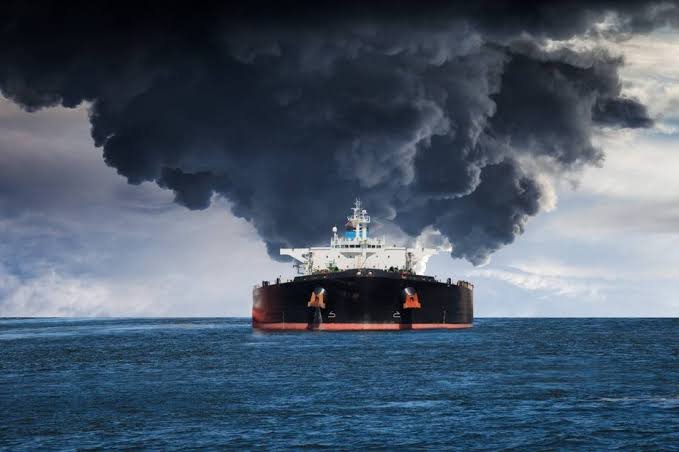
The war at sea has moved west. During October 2026, drones and uncrewed surface vessels struck a succession of merchant ships near Romania and Bulgaria. The first attacks occurred in the two NATO members’ exclusive economic zones. Later incidents reached Romanian territorial waters, including the strike on the Comoros-flagged tanker Yara J eight to ten nautical miles from Sulina. At least five other cargo vessels were hit near the two countries during the preceding ten days, leaving at least 23 seafarers reported dead or missing.
This is a material escalation, but the phrase “NATO waters” can conceal more than it explains. A coastal state is sovereign in its territorial sea, which may extend 12 nautical miles from its baseline. Its exclusive economic zone extends farther, but it is not sovereign territory; other states retain freedom of navigation there. An attack on a foreign merchant ship in Romania’s or Bulgaria’s exclusive economic zone is therefore not automatically an attack on NATO territory.
Even a strike inside territorial waters does not mechanically activate Article 5. The vessel’s flag, the attacker’s intent, the scale and effects of the incident, attribution and the coastal state’s assessment all matter. NATO’s own guidance states that an armed attack must be assessed case by case and that the affected ally must request or consent to collective action. Article 4 offers the more immediate instrument when an ally’s security is threatened but the collective-defence threshold remains uncertain.
The danger lies in accumulation. Repeated strikes can make a vital route commercially unusable without one incident appearing large enough to justify a military response. Shipowners withdraw, war-risk insurance rises and crews refuse assignments. Congested anchorages near the Danube create predictable targets. The result can resemble a blockade produced by private risk decisions rather than an announced exclusion zone. Attribution is also becoming more difficult. Maritime drones, aerial drones, drifting mines, electronic interference and unexploded ordnance now share the same operating area. Ambrey assessed that Russia was highly likely responsible for three attacks on 5-6 October because all the vessels were linked to Ukrainian Danube trade. NATO has not attributed the wider series, and responsibility for the 28 October attack on a Greek-managed container ship in Bulgaria’s exclusive economic zone remained unclear. Turkey has consequently warned both Russia and Ukraine to keep civilian shipping out of the conflict.
NATO should resist two unhelpful choices: treating every incident as an Article 5 test or waiting for a catastrophic strike before acting. Romania, Bulgaria and Turkey need a layered shipping-protection mission built around surveillance, early warning, counter-drone defence near territorial waters, search and rescue, explosive forensics and rapid sharing with commercial operators. Selective accompaniment through the highest-risk approaches may become necessary, but a blanket convoy guarantee would create obligations that the allies may be unable to sustain.
The existing Mine Countermeasures Black Sea Task Group provides a regional foundation. Its mission has already expanded from drifting mines to critical undersea infrastructure. It should now support a common maritime picture and defensive protection of the Danube approaches while remaining under the control of the three littoral allies. This fits the Montreux Convention better than importing a large non-littoral NATO fleet, whose access and duration in the Black Sea would be restricted.
The alliance also needs a public escalation ladder. A suspicious drone in an exclusive economic zone, an attack inside territorial waters, a deliberate strike on a Romanian or Bulgarian naval vessel and an attack on a port cannot be treated as equivalent. Clear thresholds, evidence standards and response options would reduce the chance that Moscow or Kyiv misreads restraint as indifference, or that a local commander must improvise under pressure.
The objective is to keep commercial navigation viable while preventing the maritime spillover from becoming a direct NATO-Russia confrontation. That requires visible defence of allied territory, disciplined attribution and a regional mechanism able to protect shipping before the next incident determines policy in the middle of a crisis.
The western Black Sea is no longer a sanctuary
The Danube route became more important after Russia’s attacks on Ukraine’s ports and the collapse of the UN-brokered Black Sea Grain Initiative in 2023. Ships approaching Sulina can reach Ukrainian river ports such as Izmail and Reni while remaining close to Romanian waters. The route helped Ukraine continue exporting grain, but it also concentrated vessels within range of systems operating from the northern and north-western Black Sea.
The October attacks changed the commercial risk map. Ambrey reported that three merchant vessels were struck by aerial or surface drones in Romanian and Bulgarian exclusive economic zones within 24 hours on 5-6 October and that two sank. All three had called at, or were travelling to or from, Danube ports. The firm assessed that they were targeted because of their links to Ukrainian grain exports rather than selected at random. That distinction offers limited reassurance. A targeting profile can widen, intelligence can be wrong and an uncrewed weapon can lose guidance. The United States Maritime Administration had already warned that electronic warfare could interfere with missile and drone navigation, increasing the risk of miscalculation or accidental strikes. Drifting mines and unexploded weapons add threats whose origin may be hard to establish after detonation.
On 15 October, the crisis moved closer to the treaty line. The San Marino-flagged Wine Trader was hit 13 nautical miles south-east of the Sulina Canal, one mile beyond Romania’s territorial sea. The Comoros flagged Yara J was hit eight to ten nautical miles from Sulina, inside Romanian waters. A NATO military source told Reuters that the drones were Russian, although Romania’s president initially confirmed the drone strikes without assigning responsibility. NATO also reported attacks that night on the Marshall Islands-flagged Sea Destiny inside Romanian waters and the Tanzanian-flagged Dania J at the Ukrainian port of Izmail.
The incidents continued. Romania said it shot down two drones that entered national airspace over its territorial waters on 17 October. On 23 October, the Comoros-flagged Khoryv sank about 13 nautical miles from Constan a after a reported drone strike, killing at least one sailor and leaving three missing. Five days later, three maritime drones struck the Liberian-flagged, Greek-managed Contship Jet in Bulgaria’s exclusive economic zone. The ship later sank, although its crew was rescued. Responsibility for that attack remained unconfirmed.
The immediate human cost falls on crews who have little control over the cargo’s strategic meaning. International humanitarian law treats merchant vessels as civilian objects unless their use makes them military objectives. The San Remo Manual identifies activities such as carrying troops, laying mines, gathering military intelligence or sailing under military convoy as circumstances that can change a ship’s status. Calling at a Ukrainian grain port does not by itself remove civilian protection.
The economic effect does not require every ship to be attacked. An anchorage filled with vessels waiting for access to the Danube creates a predictable concentration of hulls, crews and hazardous cargo. One successful strike can close an approach for rescue, firefighting and pollution control. Several incidents can persuade underwriters that the western route is no longer meaningfully safer than Ukrainian coastal waters. This is how military pressure acquires blockade effects without a formal blockade. The attacker can deny deliberate targeting of neutral trade, point to the fog of war and let insurance markets perform the restriction. Each vessel that turns away increases congestion elsewhere and raises the cost of the next voyage. The strategic measure is therefore not the number of ships sunk. It is whether reliable access to the Danube and Romanian and Bulgarian ports can be maintained.
NATO waters are not one legal category
The boundary between an exclusive economic zone and a territorial sea is central to the alliance response. Under the UN Convention on the Law of the Sea, coastal-state sovereignty extends to the territorial sea, the airspace above it and the seabed below it. States may claim up to 12 nautical miles. Foreign merchant ships retain a right of innocent passage, but they are operating within the coastal state’s sovereign maritime territory.
An exclusive economic zone begins beyond the territorial sea and may extend to 200 nautical miles. Romania and Bulgaria hold rights over resources, installations and environmental protection there. They do not possess full sovereignty over the water column. Foreign ships and aircraft retain navigation and overflight freedoms. Referring to an exclusive economic zone as “NATO waters” risks implying a territorial guarantee that the law does not create.
This does not make attacks in the zone lawful or strategically unimportant. Merchant vessels remain protected by the law of armed conflict unless they become military objectives. Indiscriminate attacks are prohibited. Coastal states also have legitimate interests in navigation, environmental protection, offshore energy and rescue. A pattern of attacks in their economic zones can threaten national security and justify NATO consultation even when it does not cross the Article 5 threshold.
Article 4 is designed for that situation. Any ally can request consultations when it believes its territorial integrity, political independence or security is threatened. Romania initiated the North Atlantic Council discussion on 20 October, after which allies announced additional maritime patrol aircraft, radar systems, drones, intelligence personnel and explosive-analysis teams. The response strengthened deterrence and evidence collection without declaring that NATO had entered the war.
Article 5 asks a harder question: has an ally sustained an armed attack? NATO states that the assessment is case-specific. The attacked ally must also request or consent to collective action, and each member decides what assistance it considers necessary. Armed force is available but not mandatory. There is no automatic switch activated by a coordinate on a nautical chart.
A strike on a foreign-flagged merchant ship inside Romanian territorial waters would violate Romania’s sovereignty if the weapon entered or operated there without consent. It could also amount to a use of force against Romania if the evidence showed deliberate action against the state or serious effects on its security. Yet the merchant vessel does not become Romanian territory merely because it is inside the 12-nautical mile limit. The flag state, ownership, crew and cargo create additional legal relationships that have to be considered. The case becomes clearer as the target and consequences move closer to the ally. A deliberate attack on a Romanian coastguard or naval vessel, an air-defence unit, a port or an offshore energy installation would bear more directly on Romania as a state. Repeated penetration of national airspace after warnings and interceptions could also alter the assessment. A single malfunctioning drone with limited damage belongs at the lower end of the scale; a coordinated strike that kills Romanian personnel and disables a port belongs much higher.
Attribution remains the hinge. NATO cannot build a stable deterrent policy on confidential impressions that change from one incident to the next. Wreckage, telemetry, radar tracks, satellite imagery, vessel data and intelligence on launch platforms must be combined quickly. Public statements should separate confirmed facts from assessments and state the level of confidence. That discipline can support action while reducing the risk of escalation on a mistaken premise.
A regional shipping shield should remain defensive
The first requirement is a shared maritime and air picture. Romania, Bulgaria and Turkey should integrate coastal radar, air-defence sensors, maritime patrol aircraft, naval drones, satellite reporting and commercial vessel data around the Danube approaches. The system should flag unusual aerial and surface tracks, navigation interference and gaps between a ship’s declared route and its actual movement. NATO’s additional patrol aircraft, radar and intelligence personnel should strengthen this regional network rather than create a separate reporting chain.
The second requirement is faster warning to ships. The NATO Shipping Centre already operates voluntary reporting and distributes advisories. A Black Sea protocol should provide route-specific threat levels, recommended waiting areas and immediate notification of drone or mine activity. Masters need one recognised channel rather than overlapping national warnings. Commercial operators should provide intended movements in return, allowing defenders to distinguish expected traffic from a suspicious surface contact.
The third requirement is defensive protection where national authority is clearest. Romania and Bulgaria should deploy counter-drone sensors and effectors around territorial anchorages, port approaches, offshore energy facilities and search-and-rescue areas. Rules should authorise interception of an imminent threat while accounting for debris, electronic interference and nearby vessels. NATO aircraft can extend detection beyond the 12-nautical-mile line, but decisions to use force should remain tied to national law and agreed rules of engagement.
The fourth requirement is an incident and attribution cell. Romanian, Bulgarian and Turkish specialists, supported by NATO intelligence and explosive-analysis teams, should collect wreckage, radar data, imagery and ship evidence under a common protocol. A preliminary factual report should be issued quickly, followed by a higher-confidence attribution when the evidence permits. Silence creates space for competing claims; premature certainty creates a different form of vulnerability.
The Mine Countermeasures Black Sea Task Group offers the best institutional base. Created by the three littoral allies in 2024, it began as a response to drifting mines and expanded in 2026 to protect critical undersea infrastructure. Its mandate could support surveillance, information sharing and protection of key approaches without converting every deployment into a NATO combat operation. Other allies can contribute aircraft, sensors, intelligence and specialist teams without forcing additional warships through the Turkish Straits. Selective accompaniment may still be needed. Littoral naval or coastguard vessels could accompany groups of merchant ships through the highest-risk segments during defined windows. The mission should not promise that no vessel will be hit. It should improve detection, rescue and the ability to defeat a clearly hostile system. Participation should be voluntary, routes should change and protection should be prioritised according to threat rather than cargo politics.
The allies also need a published escalation ladder. Activity in an exclusive economic zone should trigger monitoring, warnings, rescue readiness and investigation. A weapon entering territorial waters should permit national interception and immediate allied information sharing. A confirmed deliberate attack inside the territorial sea should trigger North Atlantic Council consultation and proportionate measures against the responsible capability. An attack on allied forces, ports or critical installations would require a separate Article 5 assessment based on intent, scale and effects.
Diplomacy should operate alongside defence. Turkey’s proposal for a halt to attacks on commercial shipping deserves support, with the International Maritime Organization involved in documenting incidents and protecting seafarers. Russia and Ukraine should be pressed to share safety notifications, avoid attacks near declared anchorages and protect rescue operations. A narrow maritime arrangement would not settle the war, but it could establish conduct whose violation is easier to attribute and punish.
Finally, governments should address the private risk market. Verified threat information, predictable protection windows and rapid claims evidence can help insurers price risk more accurately. Temporary public guarantees may be justified for essential grain shipments if the commercial market withdraws, but they should be conditional on compliance with reporting and route procedures. Subsidising voyages without improving security would transfer losses to taxpayers while leaving crews exposed.
This approach avoids a false choice between passivity and convoy warfare. It protects allied territory, supports lawful navigation and raises the cost of attacking merchant ships. At the same time, it preserves political control over escalation and recognises that the Black Sea’s legal geography, commercial traffic and wartime restrictions do not allow a simple copy of NATO’s standing maritime operations elsewhere.