The 2030 Readiness Mirage: Why Europe’s Defence Spending Surge Is Not Yet Combat Power
Europe is spending more on defence than at any point in the past three decades. European Union member states spent €418 billion in 2025 and are expected to reach about €454 billion in 2026, a rise of more than 75 percent since 2021. Investment and procurement are at record levels, while NATO Allies have adopted a path toward spending 5 percent of GDP on defence and wider security by 2035. These are material changes, not accounting tricks.
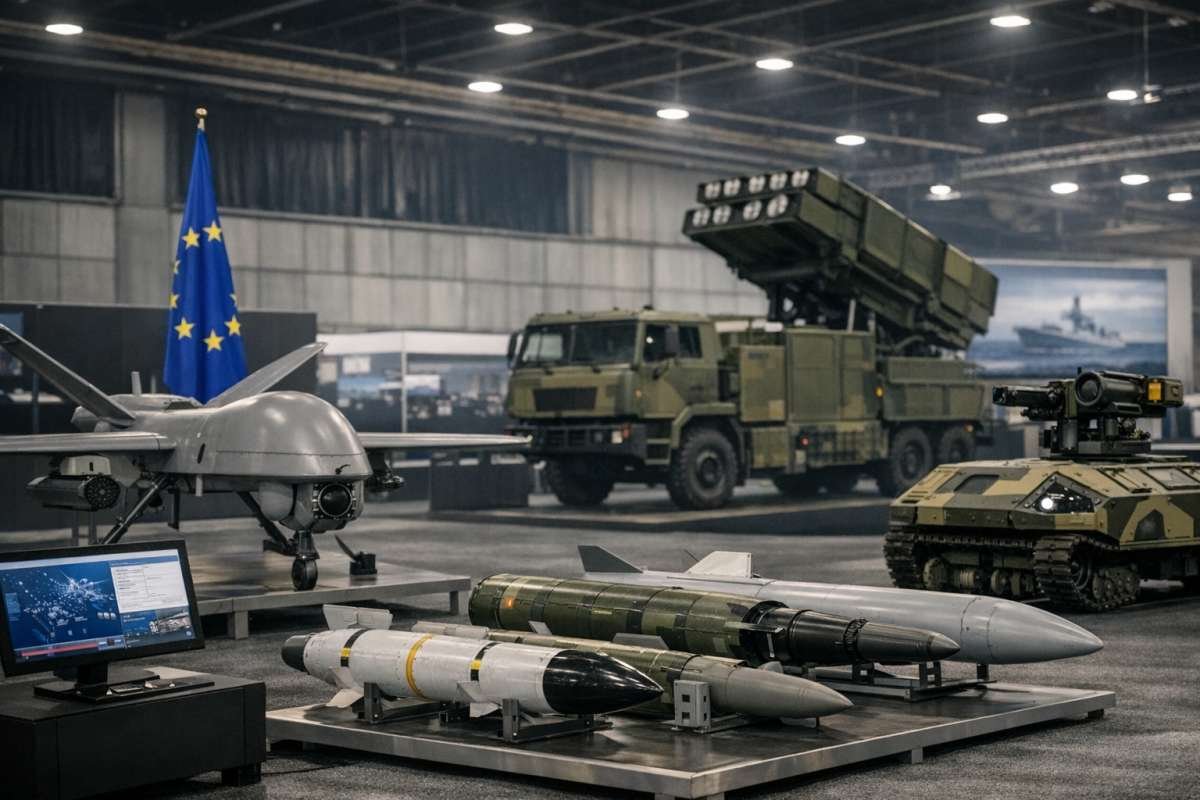
The mirage appears when higher expenditure is treated as proof of readiness. The European Defence Agency’s first Annual Defence Readiness Report concluded in September 2026 that current momentum has not yet produced sufficiently deployable, sustainable and interoperable forces. Gaps remain in air and missile defence, ammunition, drones, ground combat, maritime capabilities and strategic enablers. Europe can sign contracts faster than it can build factories, train crews, integrate systems or sustain combat.
The financial headlines also need discipline. The Commission’s Readiness 2030 framework aims to enable up to €800 billion in additional expenditure, but most of that figure is potential national fiscal space rather than a common European fund. SAFE provides €150 billion in loans that participating states must repay. Uptake, debt capacity and delivery schedules will determine how much of the headline becomes usable capability before 2030. Fragmented national buying can also multiply variants, training systems and maintenance chains instead of producing coherent NATO formations.
Europe therefore needs to measure the conversion of money into military effect: deployable brigades, mission-capable platforms, ammunition and interceptor stocks, trained crews, protected logistics, common command systems, repair capacity and industrial output. Readiness 2030 will be credible only if NATO capability targets guide national budgets, EU instruments aggregate demand, and governments protect personnel, operations and sustainment from being crowded out by high-profile procurement.
The spending surge is real
European defence has moved out of the era of managed decline. EU expenditure reached €418 billion in 2025, equal to 2.2 percent of the bloc’s GDP, and the EDA expects it to rise further in 2026. Defence investment increased to €134 billion in 2025 and is projected to approach €163 billion in 2026. Equipment procurement alone reached €115 billion in 2025, 26 percent higher in real terms than the previous year. These figures reflect a political change that would have been difficult to imagine before Russia’s full-scale invasion of Ukraine.
The institutional ambition has expanded with the budgets. The European Commission’s White Paper for European Defence established a Readiness 2030 objective and identified nine priority areas, including air and missile defence, artillery, ammunition, drones, military mobility, ground combat, maritime capabilities and strategic enablers. SAFE offers up to €150 billion in EU-backed loans for common procurement. NATO’s Hague commitment requires Allies to work toward at least 3.5 percent of GDP for core defence and up to 1.5 percent for wider security and resilience by 2035.
Industrial signals have also improved. European manufacturers are expanding ammunition, missile and vehicle production. NATO reported in July 2026 that Allies and industry had invested about €37 billion in defence production capacity, including the expansion of existing facilities and the opening of new production lines. Governments have begun placing larger orders, and EU programmes increasingly address specific bottlenecks in energetic materials, propulsion, warheads, electronics and filling plants.
The distinction matters because expenditure is an input. Combat power is an output produced by money, time, organisation and people. A budget can be approved within months. A missile factory, trained air defence battalion or heavy brigade requires years of sequential work. Equipment must be contracted, manufactured, accepted, assigned, maintained and integrated into a force with doctrine, communications, logistics and adequate stocks. Europe has accelerated the first step without yet completing the chain.
The headline numbers conceal different timelines
The €800 billion associated with Readiness 2030 is often presented as if the EU had created a common defence budget of that size. It has not. The figure combines the €150 billion SAFE loan instrument with an estimate of how much additional national expenditure could be enabled by temporary flexibility under EU fiscal rules, together with wider efforts to mobilise public and private finance. Most spending decisions remain national, and most liabilities remain with national governments.
This design can unlock investment, but it does not guarantee uptake. States with fiscal space, strong administrative capacity and urgent plans can borrow and contract quickly. Heavily indebted governments may hesitate to use loans even when the security need is recognised. Others may reclassify existing plans rather than add new ones. The EDA’s 2026 data warned that only a limited number of member states had made full use of available instruments and that the macroeconomic effect could remain below the €800 billion headline.
NATO’s spending commitment operates on a different calendar. The 5 percent goal is due by 2035, with a review in 2029. At least 3.5 percent is intended for core military requirements, while up to 1.5 percent can include critical infrastructure, civil preparedness, networks, innovation and the industrial base. These areas support deterrence, but they do not all produce deployable forces by 2030. A country may follow a credible 2035 spending path and still have a serious readiness gap at the end of this decade.
The procurement calendar is more restrictive. Complex air defence, aircraft, warships, long-range missiles and command systems have long lead times. Orders placed in 2026 may not generate complete operational units before 2030. A delivery of launchers without the required interceptors, radar coverage, trained crews or maintenance contract improves an inventory but not necessarily a war plan. The same applies to a new vehicle fleet that arrives before secure communications, recovery vehicles, spare parts and brigade-level training.
The result is a timing mismatch. Political leaders count annual expenditure and signed contracts. Military planners need usable formations on specified notice-to-move timelines. Industry needs predictable demand extending beyond one budget cycle. The 2030 objective sits in the middle, close enough to create urgency but too close for programmes that begin slowly, change requirements repeatedly or divide orders among small national batches.
National procurement can scale fragmentation
Europe’s defence market remains organised around national customers, national industrial interests and different operational requirements. That structure protected sovereignty and domestic employment during decades of low demand. Under rapid rearmament, it can turn additional money into duplicated development, short production runs and incompatible fleets.
The EDA’s latest data show the size of the problem. Collaborative defence expenditure, including cooperation with European and non-European partners, represented 24 percent of equipment procurement in 2025. European collaborative procurement reported by 19 member states represented only 11 percent of aggregate investment. Both figures sit below the political ambition to organise at least 40 percent of procurement collaboratively by 2030. Data coverage is incomplete, but the direction is clear: national acquisition still dominates.
Fragmentation creates costs across the capability life cycle. Different vehicles require different spares and mechanics. Different artillery systems may use ammunition that is technically standardised but not equally certified. Separate command systems may exchange data in exercises yet struggle under electronic attack. Small orders weaken the case for manufacturers to build additional capacity, while changing national requirements delay common programmes. The result is not merely a higher purchase price. It is a force that needs more depots, training pipelines, software support and supply contracts to generate the same military effect.
Urgency can make the problem worse. Governments facing immediate gaps often buy what is available from the United States, South Korea, Israel or other suppliers. These purchases can be operationally rational, especially when European alternatives do not exist or cannot be delivered soon enough. Yet a series of unrelated emergency acquisitions can lock in long-term dependence and reduce demand for a shared European solution. The choice is not simply “buy European” or “buy now”. Europe must meet immediate needs while managing the configuration, technology access and support arrangements that shape readiness for decades.
The most valuable form of collaboration is therefore not a ceremonial joint purchase. It is agreement on the military effect, configuration, delivery sequence, training system and sustainment model. A common air defence procurement should produce shared interceptors, data links, testing and replenishment arrangements. A multinational ammunition order should create interchangeable stock and guaranteed surge capacity. Cooperation must reduce the number of operational problems, not merely the number of signatures on the contract.
Factories convert orders into capacity only slowly
Europe’s defence industry spent decades adjusting to small peacetime orders. Production lines were optimised for efficiency rather than sustained high-volume war. Suppliers of explosives, propellant, rocket motors, castings, semiconductors and specialised machine tools reduced capacity or left the market. Skilled workers retired, environmental and safety approvals lengthened, and governments treated stockpiles as costs to be minimised.
The response since 2022 has been visible. Ammunition plants are expanding, missile production is increasing and new facilities are being financed. The European Defence Industry Programme and NATO’s updated Defence Production Action Plan focus on aggregated demand, supply chains, standardisation and industrial resilience. The Commission’s 2026 industrial calls specifically identify energetic materials, propulsion, electronics, warheads and filling plants as bottlenecks.
Capacity is nevertheless more than factory floor space. A new production hall does not raise output if explosives, seekers or qualified technicians remain scarce. A missile line may depend on components produced by a single supplier outside Europe. A manufacturer will not sustain a second shift or invest in an additional line if orders end after a short emergency batch. Governments must provide firm, multi-year demand rather than political forecasts of future spending.
This is particularly important for munitions. Europe must replenish national stocks, supply Ukraine and create reserves for NATO defence plans at the same time. Production targets often describe annual output, while military readiness depends on the quantity already stored, its geographic distribution and the rate at which it would be consumed in combat. A factory that produces more shells each year strengthens endurance, but it does not immediately replace a stockpile that took decades to accumulate.
Industrial scale also creates a tension between speed and sovereignty. Buying an available foreign system can close a near-term gap but may direct maintenance, software authority and future upgrades outside Europe. Waiting for a European programme can preserve industrial capacity but leave forces exposed. A workable approach separates horizons: purchase proven systems where the immediate risk requires them, negotiate local support and stock access, and use larger European orders to build a second source for sustained demand.
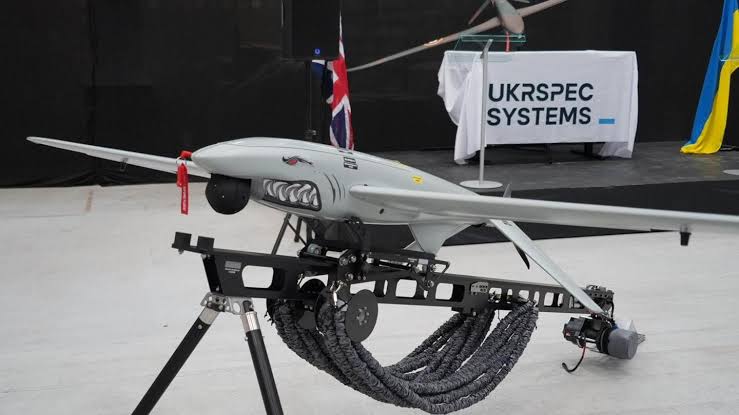
Ukraine offers another route to speed. Its defence sector has developed short design cycles, decentralised production and rapid battlefield feedback in drones, electronic warfare and software. Integrating Ukrainian companies into European programmes could shorten adaptation time and expose traditional acquisition systems to operational evidence. This requires security, financing and certification rules that can absorb innovation without reducing it to a slow demonstration project.
Equipment without people and sustainment is inventory
Europe’s personnel problem receives less attention than procurement because it cannot be solved by signing one large contract. The EDA reported that active military personnel across member states increased only about 1 percent in 2024 while spending rose much faster. Higher investment per soldier can indicate a better-equipped force. It can also create a widening gap between the number of complex systems purchased and the people available to operate and maintain them.
Modern forces require technicians, cyber specialists, logisticians, intelligence analysts and air-defence crews as well as combat troops. These skills compete with civilian labour markets. Recruitment does not immediately produce readiness: personnel must complete individual training, join units, exercise at scale and retain proficiency. Experienced non-commissioned officers and maintainers are especially difficult to replace. A platform delivered in 2028 may still lack a complete crew or maintenance team in 2030.
Operations and maintenance create a second hidden constraint. New procurement attracts political attention, while spare parts, depot repair, fuel, exercises and contractor support are easier to defer. Yet mission-capable rates determine how much of the inventory can be used. A force of 100 aircraft with half available may contribute less than a smaller fleet with reliable maintenance, trained crews and adequate weapons. The EDA stresses that equipment, personnel and operations and maintenance must remain balanced if investment is to meet capability timelines.
Training consumes stocks and equipment life. Large formations need ammunition for realistic exercises, vehicles for manoeuvre and access to congested ranges. Multinational units also need repeated practice with common command procedures, air support, electronic warfare and logistics. A brigade that exists on an organisational chart but has not exercised its combat and support elements under contested conditions is a mobilisation promise, not ready combat power.
Sustainment continues beyond the first battle. Europe needs dispersed depots, fuel, medical capacity, repair facilities, transport equipment and protected communications. Military mobility remains limited by incompatible rail gauges, bridge capacity, port access, border procedures and uncoordinated infrastructure projects. The European Court of Auditors found that earlier EU mobility spending lacked sufficient strategic focus and cross-border coordination. Moving forces to the eastern flank cannot depend on improvisation after a crisis begins.
Europe still depends on scarce strategic enablers
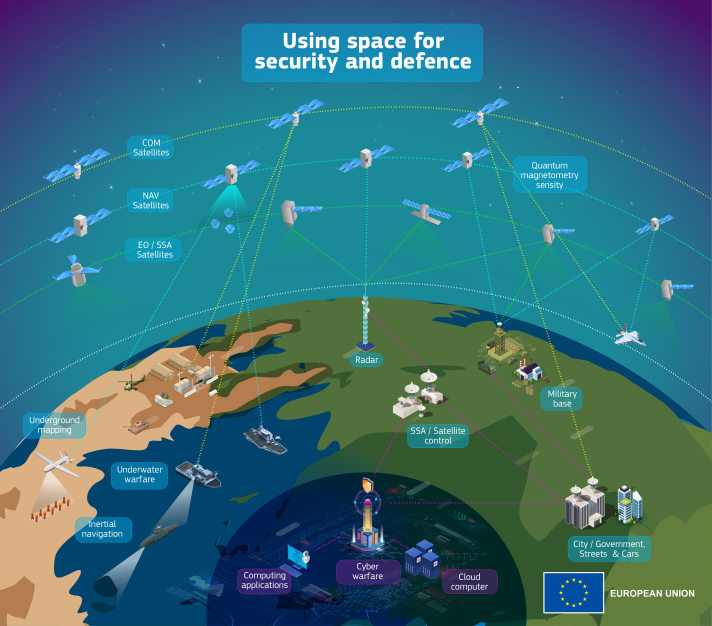
European militaries possess substantial combat forces, but high-intensity operations depend on capabilities that remain disproportionately American. Intelligence, surveillance and reconnaissance, secure communications, space services, aerial refuelling, strategic lift, integrated air and missile defence, suppression of enemy air defences and long-range precision strike are not supporting extras. They determine whether national forces can find targets, move, survive and operate as a theatre-wide formation.
The United States is unlikely to disappear from European defence, and NATO remains the central framework for collective defence. The risk is that American attention and assets may be divided across simultaneous crises. Europe’s planning standard should therefore not assume that every scarce US enabler will arrive immediately or in the desired quantity. A credible European pillar must be able to conduct the opening phase of defence, sustain reinforcement and absorb losses while transatlantic support scales.
Closing these gaps is harder than buying additional armoured vehicles. Satellite constellations, airlift fleets, integrated command networks and air-defence architectures require common governance, continuous funding and multinational access rules. They also deliver less visible national prestige than a domestic platform programme. No single medium-sized country has an incentive to provide enough capacity for the continent, yet all depend on the collective result.
Europe does not need a separate army to solve this. It needs named lead nations, binding access arrangements and shared funding for enablers that serve NATO plans. Strategic lift, refuelling, air defence, space support and logistics should be treated as operational networks rather than collections of national assets. The relevant test is whether a commander can use them at the required time, not whether they appear in a European inventory.
Readiness needs an output ledger
The 2 percent benchmark helped reverse political neglect because it was simple and comparable. The new NATO commitment can sustain that pressure. Spending ratios cannot show whether a force can execute its assigned mission, however, and they can encourage governments to maximise eligible expenditure instead of military effect. Europe now needs a second ledger focused on outputs. That ledger should begin with force availability. Governments should report how many formations can deploy within NATO timelines, with complete personnel, equipment and support. Aircraft and naval figures should distinguish total inventory from mission-capable platforms and trained crews. Air-defence reporting should include launcher, radar and interceptor availability as one system rather than separate procurement totals.
It should then measure endurance. Ammunition and missile stocks can be expressed against agreed operational scenarios without publishing sensitive absolute numbers. Maintenance data should show repair capacity, spare availability and the time needed to return damaged equipment to service. Logistics assessment should test whether fuel, medical support and transport can sustain units after deployment, not merely move them to an exercise.
Industrial reporting should focus on delivered output and surge time. Governments need to know monthly production of critical munitions, available second sources, dependence on single suppliers and the lead time for expanding output. Multi-year orders should be linked to production milestones and stockpile recovery. Announced factory capacity should not be counted as readiness until the line is qualified and supplied.
Finally, interoperability must be demonstrated. Common standards matter only when units exchange data, ammunition, maintenance support and command authority under realistic conditions. NATO exercises should test degraded communications, contested logistics and rapid replacement of losses. EU funding should reward common configurations and shared sustainment, not simply the participation of companies from several countries.
An output ledger would expose uncomfortable trade-offs. Some states would discover that their largest procurement programmes do little for near-term NATO targets. Others would have to redirect money from visible platforms to ammunition, people or infrastructure. That is precisely its value. A credible 2030 plan must identify what will be ready, when it will be ready and which gap remains if a programme slips.