The 5% Target: NATO’s High‑Tech Pivot
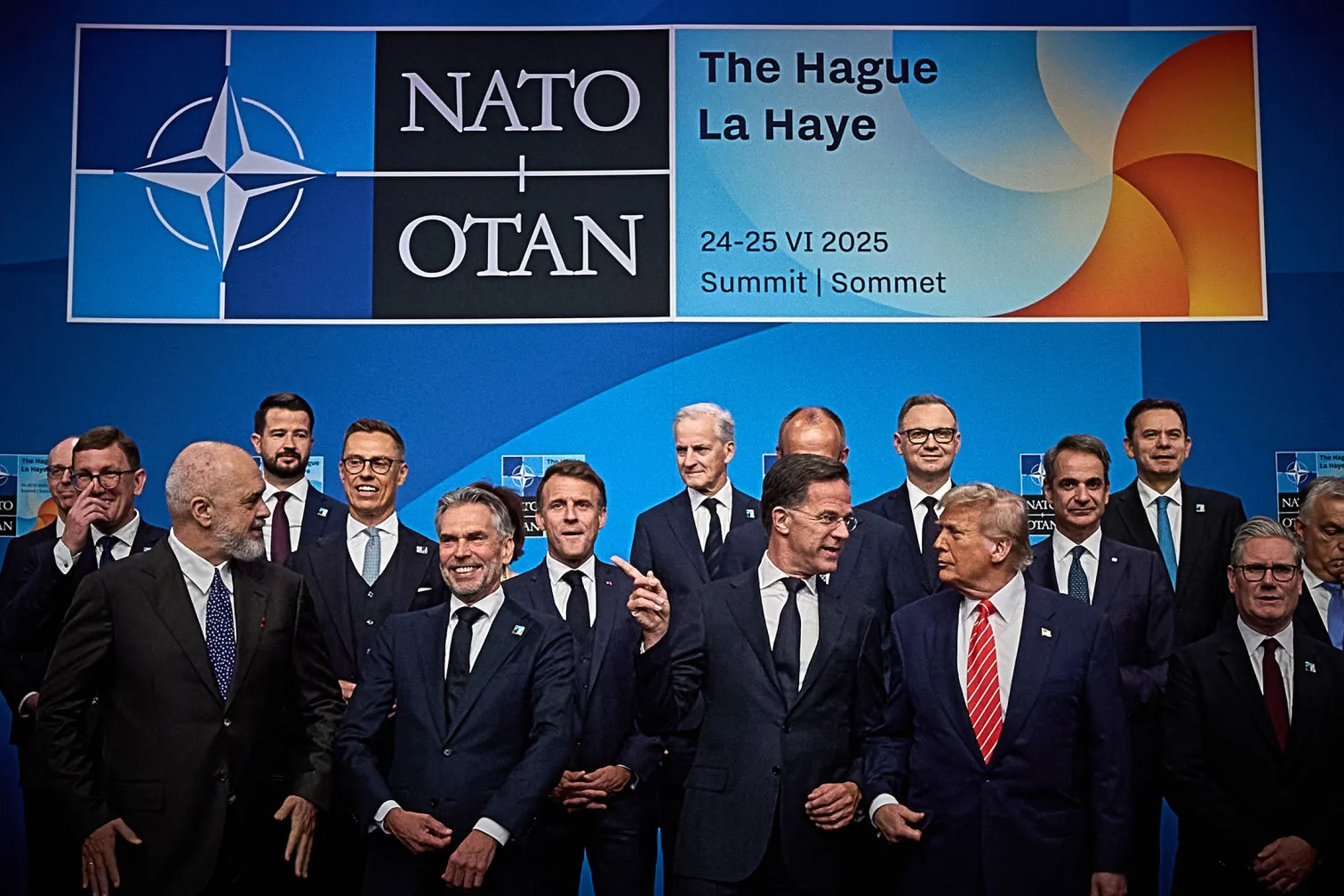
NATO allies have pledged to spend 5% of GDP on defence by 2035. This “Hague Investment Plan” (announced at the June 2025 summit) calls for at least 3.5% on core defence (new weapons, forces, C2) and up to 1.5% on related areas (cyber, infrastructure, resilience, defence R&D). The commitment is largely political – a signal to the US and adversaries that Europe will “burden-share” more. It crystallises two drivers: pressure from US President Trump’s demands (and possible US disengagement), and Europe’s own push for strategic autonomy and a stronger defence industry.
NATO allies have pledged to spend 5% of GDP on defence by 2035. This “Hague Investment Plan” (announced at the June 2025 summit) calls for at least 3.5% on core defence (new weapons, forces, C2) and up to 1.5% on related areas (cyber, infrastructure, resilience, defence R&D). The commitment is largely political – a signal to the US and adversaries that Europe will “burden-share” more. It crystallises two drivers: pressure from US President Trump’s demands (and possible US disengagement), and Europe’s own push for strategic autonomy and a stronger defence industry.
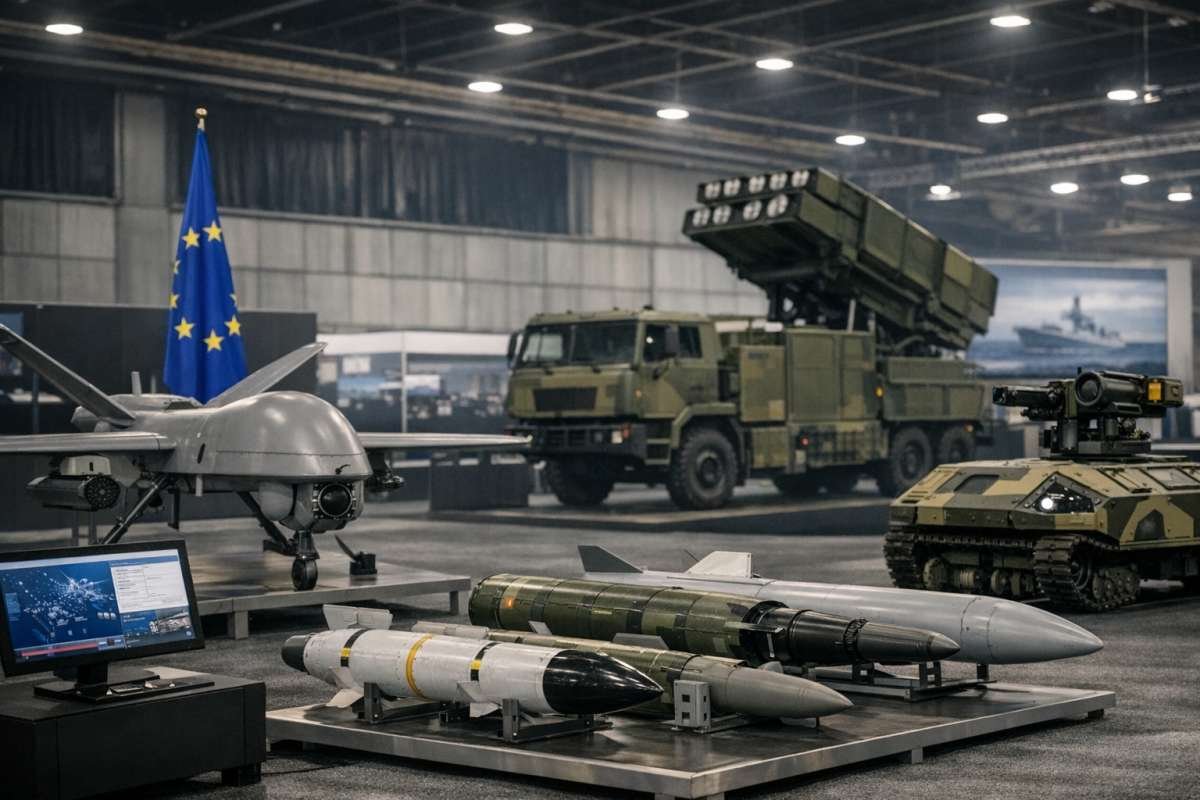
Crucially, both NATO and EU plan to spend much of this increase on high-technology capabilities rather than traditional hardware. As NATO officials put it, the 2026 summit will focus on “more efficient investments” in AI, autonomous drones and networked systems – “rather than primarily conventional defence hardware”. European budgets already reflect this shift: France’s 2024–30 defence plan (€413bn) explicitly prioritizes AI, drones, cybersecurity and space; Germany’s new strategy similarly highlights AI, missiles and unmanned systems. The rationale is that software‑defined warfare (AI-enabled C2, logistics, ISR) offers a qualitative edge and partly compensates for manpower constraints. At the same time, Allies still need heavy equipment (tanks, subs, missile systems) to meet traditional threats.
These demands have triggered political friction. Poland and the Baltics strongly support the 5% goal (having already surged spending past 3.5%). France backs the principle but must win domestic support for budgets above 3%. Germany — after scrapping its debt brake and launching a €100bn fund — is now on a rapid increase path (planning ~€152bn by 2029). Italy and Spain, with higher debt loads, are more wary; Italy has approved moderate rises but will struggle to reach 3–4%. “Smaller” allies argue for flexibility (e.g. counting civil resilience investments or EU contributions towards the target). All parties face the challenge of actually absorbing this money: can Europe’s defence industry and armed forces scale up effectively?
Another consequence is that NATO/EU are prioritizing AI and autonomous systems. Allies have adopted “responsible AI” principles to guide development, but ethical and legal challenges remain (e.g. autonomous weapons, data privacy). Cybersecurity and supply chains are major vulnerabilities: advanced weapons rely on secure software and chips, and on rare materials. A disruption (e.g. an advanced chip export ban) could cripple programmes. NATO/EU thus emphasize cyber-resilience and chip supply chains alongside procurement.
Funding models are evolving. National budgets and parliamentary approvals remain primary, but Europe is beefing up joint mechanisms. The EU’s European Defence Fund and joint procurement instruments will co-finance key projects. NATO is considering pooled R&D and a possible NATO “AI accelerator.” The below flowchart outlines how a joint NATO/EU office might contract industry to develop shared AI/drone capabilities, funded by both NATO and EU.
Finally, analysts warn of two futures: if allies truly invest wisely, Europe could emerge with interoperable, high-tech forces and greater autonomy. If spending is unfocused or cut short by politics, the risk is wasted resources and a hollow “5%” that doesn’t improve security. Concrete recommendations include locking in common standards, accelerating joint tech projects (e.g. a European drone program), strengthening training in digital warfare, and maintaining democratic oversight of AI. Above all, NATO must ensure that 5% of GDP translates into capabilities, not just accounting.
NATO’s 5% Pledge: Background
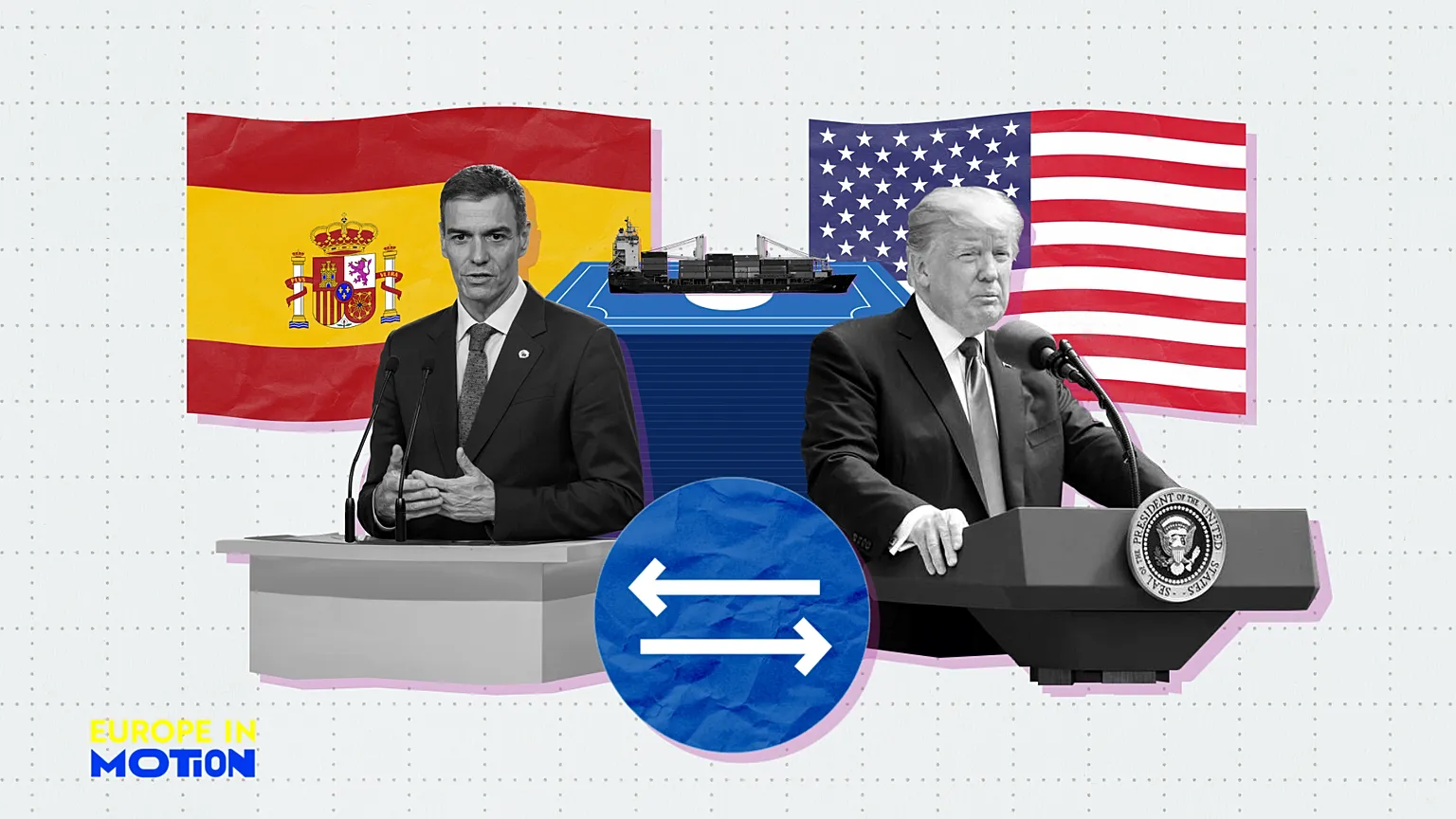
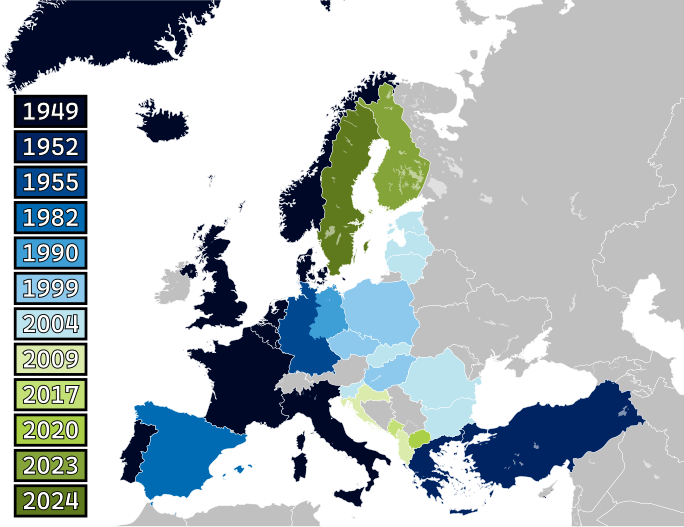
Since the 2014 Wales Summit, NATO urged members to spend 2% of GDP on defence. By 2024 Europe/Canada averaged about 2.02%, up from 1.43% in 2014. In June 2025 at The Hague Summit, Allies dramatically raised the bar: all 32 members (except Spain, which negotiated an exemption) agreed to 5% by 2035. Specifically, each will aim for ≥3.5% on “core defence requirements” (forces, equipment, R&D) and can count an additional 1.5% on related security spending (cyber defence, critical infrastructure, industry innovation, civil resilience). This was framed as giving a “credible, incremental path” to the goal.
NATO emphasizes this is a forward-looking plan: allies will submit annual national plans and review progress (the summit declaration tasks defence ministers to do this). In practice, the 1.5% flexibility allows governments to include non-traditional items in the count (for example, critical infrastructure or some dual-use R&D) which may help countries with weaker economies. The underlying aim is deterrence: the Alliance explicitly linked this spending pledge to bolstering readiness against adversaries, especially after Russia’s 2014 actions.
Political Drivers: US Pressure and European Autonomy
The US factor was central. President Trump repeatedly demanded 4–5% from allies and threatened NATO withdrawal if requirements weren’t met. The 5% pledge is largely seen as a concession to those US demands. The SIPRI analysis notes that “the 5% target is above all a political statement” designed to signal unity to the US and to deter adversaries. A clear audience was President Trump, who had called NATO allies “suckers” for under-spending. Trump himself “first proposed” the 5% goal, and allied governments moved to assuage his concerns. As one European official put it, “increasing spending is the only play that we have: burden sharing and shifting the dial away from US reliance”. In other words, Europe felt it had to answer the US pressure with this ambitious target, even if parts of it are symbolic.
Parallel to this external pressure is an internal drive for autonomy. Within NATO/EU circles, there is a strong desire to develop Europe’s own defence capabilities independent of US control. Leaders like French President Macron argue that Europe needs its “own armed forces” and cannot depend on the US for high‑tech weaponry. NATO’s own documents highlight building the European defence industrial base and innovation capacity as objectives. European states see joint investment in AI, drones and cyber as both a way to enhance deterrence and to ensure European companies lead in key technologies (rather than ceding them to the US or China). This narrative dovetails with the 5% pledge: higher budgets and focus on emerging tech are meant to bolster both European security and sovereignty in defence.
Thus, the 5% plan sits at the intersection of these politics. It mollifies US allies by “getting the numbers up,” while also serving Europe’s long-stated goal of stronger self-reliance. Both France and Germany have publicly stressed that higher defence spending is now a top priority, and that budgets must invest in future tech.
High-Tech Focus: AI, Drones and Software-Defined Warfare
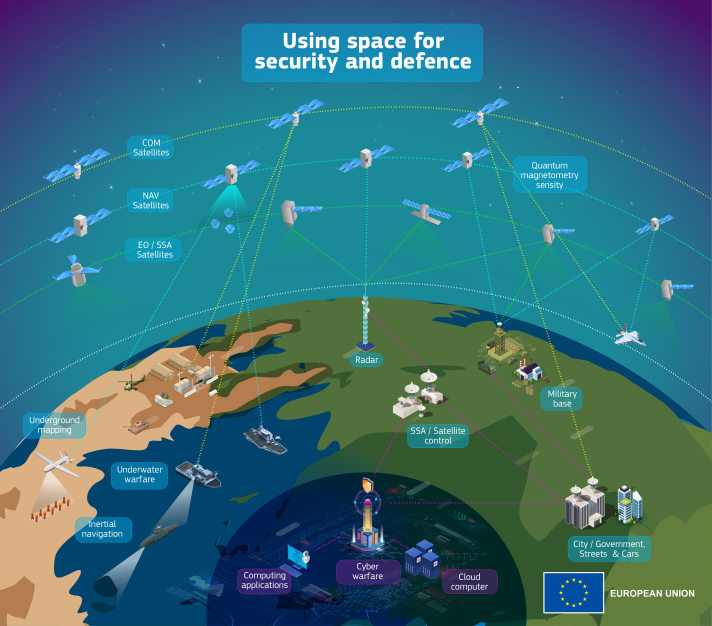
A striking feature of the new strategy is the emphasis on “software‑defined” warfare. NATO plans to invest much of the extra funds in advanced technologies rather than more conventional platforms. Secretary-General Rutte and others have indicated the 2026 summit will highlight AI, cyber, space and autonomous systems. Leaked reports say NATO will encourage allies to direct new money into drone fleets, artificial intelligence, AI-enabled logistics and integrated command-and-control, instead of just tanks and ships.
European defence plans echo this shift. France’s 2024–2030 military programming law (LPM) includes €413 b, with explicit corners for next-gen tech. It calls for developing a French/German next-gen fighter (FCAS) with an AI core, boosting air/missile defence, cyber defenses, and space capabilities. It also emphasizes drones and unmanned vehicles as force multipliers. Germany’s recent strategy similarly envisions prioritized spending on “information technology, quantum tech, missiles and uncrewed systems”. Notably, German planners have said future military advantage will derive more from networks and innovation than sheer numbers of tanks.
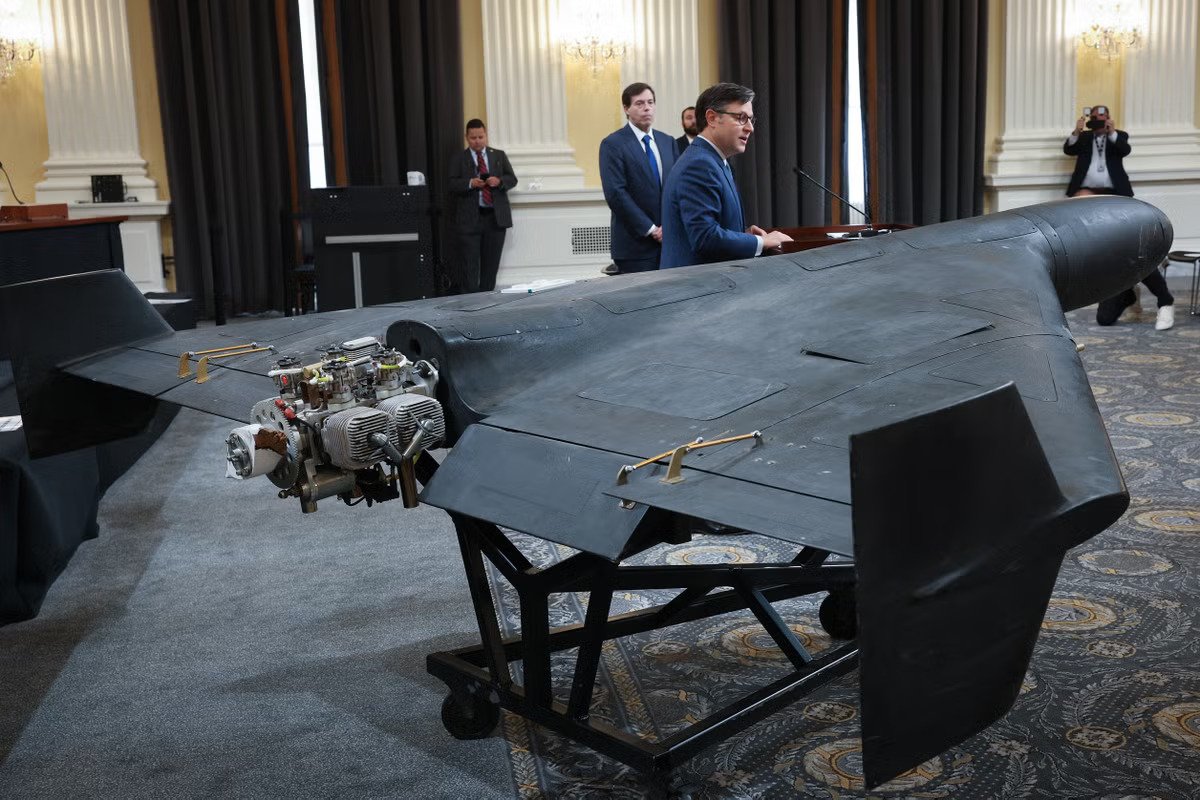
NATO’s official revised AI strategy (July 2024) encapsulates this worldview, describing AI as a “general-purpose” accelerator of military capabilities. It highlights applications like autonomous ISR, predictive maintenance, logistics optimization, and decision-support. For example, fleets of loitering drones can provide real-time reconnaissance, AI algorithms can streamline complex supply chains, and automated C2 systems can fuse data faster than human staff. These software driven systems promise to offset some manpower and cost pressures, especially given many European armies are strained by demographics.
At the same time, heavy hardware isn’t entirely ignored. NATO still counts major equipment (30s warplanes, tanks, artillery) as essential for deterrence. Under the old 2% pledge, 20% of budgets were supposed to go to equipment and R&D. The new pledge implicitly supports modernization: by raising total budgets, the absolute amount spent on new ships, subs and vehicles will increase even if the proportion shifts towards tech. Allies envision, for instance, cutting-edge MBTs and armored vehicles with AI-driven systems onboard, and using part of the budget for long-range missiles and sensor platforms. But the momentum is towards digitalization: one NATO official quipped that the future battlefield would have “less iron, more bits.”
Implications for Forces and Industry
This strategic pivot has broad impacts:
Force Structure: European armies will become leaner and more automated. We can expect more unmanned ground vehicles (UGVs) and weaponized UAVs supplementing infantry. Air forces will operate fleets of MALE UAVs and develop a 6th-generation fighter with unmanned wingmen under AI control. Naval forces plan to deploy unmanned surface and underwater drones. Traditional divisions (tank/mech brigades) will be partially converted into “network-centric” brigades with mobile sensors and drones. Naval fleets might purchase fewer large carriers but invest in more missile-armed corvettes and drone swarms. Crucially, doctrines will emphasize joint C4ISR (command, control, communications, computers, intelligence, surveillance, reconnaissance) – meaning doctrines and training must change.
Procurement: The procurement lists will look very different by 2030. Many planned acquisitions now focus on robotics. Examples include: European fleet of combat drones (e.g. Franco-Italian FCAS unmanned drones), new AI-based air-defence radars, digital battle management systems, advanced jamming/defense missiles. In some cases, expensive legacy programs may be scaled back. For instance, if Europe fields large drone fleets, it might slow new main battle tank purchases. We’ve already seen reductions in some vehicle programs (e.g. Germany cut Leopard orders in the early 2020s). Analysts estimate the scale of spending required is truly massive. According to SIPRI, reaching 3.5% core defence means NATO partners would have to double or triple current spending levels. For example, Poland’s 4.2% spend (2024) is already above target, but countries like Germany (just 2% in 2024) would need a 2–3× increase. The additional annual budget needed is of the order of $1.4 trillion (to hit 3.5%) or $2.7 trillion (for 5%) by 2035. On a national scale, in 2035 Germany would need roughly $329 b, France $221 b, and Italy $158 b, per year (contrasting today’s roughly $283b, $225b, $126b education budgets respectively). Those comparisons help contextualize the challenge.
Industrial Base: European industry is being mobilized. Large prime contractors (Airbus, MBDA, Dassault, etc.) are preparing to meet bigger orders for missiles, drones and AI systems. But a surge of spending risks bottlenecks, especially in high-tech components (sensors, microelectronics, ML software). The EU has recognized this by investing in dual-use tech: for example, the European Chips Act partly aims to ensure supply of semiconductors. There’s also a push for closer civil-military R&D partnerships (sometimes called “dual use” hubs). However, scaling up defense production in Europe will also depend on the global market: too many simultaneous big orders could drive up costs or delay deliveries (the classic “boom-bust” problem). To mitigate this, NATO encourages multination procurement – allied states co-finance joint projects so that order volumes are guaranteed.
Interoperability: A worry is that if every country buys different AI systems or drones, NATO interoperability could suffer. Historically, incompatible gear has been a problem (e.g. separate standards for artillery shells or radios). The new orientation offers an opportunity: by jointly funding projects (e.g. a common European drone), allies can ensure shared standards from the outset. Indeed, NATO plans to standardize data links and pursue a common NATO “coalition cloud” for data sharing. The ultimate goal is that when NATO forces operate together, they can plug their autonomous units into a unified command network, regardless of which country built them. Achieving this will require rigorous collective oversight of procurement (the proposed NATO/EU procurement office in the Mermaid diagram is one idea).
Friction and Burden‑Sharing Politics
Not all allies are equally enthusiastic or able to meet the 5%. Some key fault-lines:
Eastern vs Western Allies: Poland, Lithuania and the Baltics have jumped ahead – Poland announced 4.7% by mid-2025 and Lithuania plans above 5%. These countries demand that Germany, France and others follow suit, especially in providing capabilities (anti-tank weapons, air defense) to bolster Eastern defence. Western countries point out that their armies have different missions too (e.g. global deployment or expeditionary duties).
Germany: Formerly the laggard (about 1.2–1.5% till 2022), Germany is now a case study in rapid change. In September 2023 it announced a €100bn fund and intends to reach 2% in the mid 2020s. By 2035, Berlin aims at 3–5%, pending its economy. Germany plans to use its fund to upgrade air/missile defences, purchase new troops and invest in R&D (notably AI and unmanned). It already elevated defence spending to over €60bn in 2025. France and Poland publicly welcomed this shift. However, Germany’s debt is high, so it may rely on using the 1.5% “innovation” flex to count some infrastructure projects.
France: Paris officially embraces the 5% ambition, but the political reality is mixed. President Macron has repeatedly said Europe must spend more and be prepared for a “war economy.” France’s official plans do show budget increases (+€6.5bn in 2026) and heavy emphasis on tech. Yet France often has struggled to pass large new defence budgets at home, and there is debate in parliament about social needs vs military. Nonetheless, France is pushing hard for European cooperation – e.g. urging Germany to join its joint UCAV and drone projects to build a European champions.
Italy and Southern Europe: Italy’s economy is under strain (debt ~135% GDP), limiting what Rome can promise. Italy has pledged gradual increases (to around 2%), and is heavily investing in one technology: F-35s and FCAS. It also seeks EU funds to help its naval projects. Spain, Hungary and others have been exempted or have no firm plans yet; Spain in particular has negotiated a delay/exemption. Smaller NATO members (Portugal, Greece, etc.) have historically spent around 1.5–2% and will have to raise that. They generally accept the idea but worry it will overshadow other policy issues.
Overall, negotiation revolves around burden-sharing definitions: countries with fiscal constraints will count as much “civ-mil” spending as possible in the 5%. Allies also expect the EU’s European Defence Fund and structural funds to help catalyse national spending without all of it coming from domestic budgets. In practice, peer pressure and political prestige are driving the process, not strict enforcement. As one Baltic defence minister put it ahead of the summit, “We [NATO] must work together to make this understanding clear among all allies,” reinforcing collective responsibility.
AI and Autonomy: Challenges and Risks
Shifting to AI and autonomous systems brings legal, ethical and operational challenges. NATO countries have adopted a set of “Principles for Responsible Use of AI” in defence. These include lawfulness, accountability, traceability, reliability and bias mitigation. In practice, this means Allies intend to keep a human in the loop on critical decisions (e.g. targeting) and ensure any autonomous system can be audited. However, international law (e.g. the Law of Armed Conflict) is not fully settled on autonomous weapons. NATO has so far avoided banning them, but each nation must balance efficacy with legal/ethical norms.
Operationally, integrating AI is non-trivial. Commanders will need new doctrines and training to use AI tools effectively. Software failures or adversary counter-AI tactics (like jamming or poisoning data) pose risks. For instance, a swarm of drones might be disabled by cyber-attack if not properly secured. Supply-chain vulnerabilities also matter: Europe currently relies on foreign chipmakers for advanced semiconductors, which are key to AI performance. A disruption or export control (like the US’s limitations on chip sales to adversaries) could slow down AI system production. NATO and the EU are responding by funding European microchip initiatives (e.g. the EU Chips Act) and requiring secure chips for military use.
Cybersecurity is another dimension. A high-tech military is only as secure as its networks. NATO warns that AI-driven systems will be prime targets for cyber intrusion. Thus, allies are increasing encryption, establishing secure cloud infrastructures and conducting joint cyber exercises. In addition, the complex software stacks in new weapons require robust testing and updates, introducing a continuous cybersecurity burden.
Financing and Procurement Pathways
To reach 5%, a blend of funding sources is emerging. All countries will boost national defence budgets. Some have created special funds (Germany’s €100bn, US-style; Poland and others have already passed major supplemental budgets). But Europe is also leveraging collective instruments:
EU Defence Fund and PESCO: The EU’s Multiannual Financial Framework 2021–27 included the European Defence Fund (EDF) to co-finance collaborative R&D and prototypes in key tech (including AI and drones). Future frameworks and PESCO projects are expected to expand this. For example, a pan-European drone initiative could be funded through EDF, reducing each nation’s share.
NATO Joint Programs: NATO Defence Ministers are exploring a joint procurement office for areas like ammunition and emerging tech. A proposed “Defence Innovation Accelerator” (DIANA) in Bucharest already channels NATO funds into dual-use tech start-ups. Such bodies could contract industry on behalf of groups of allies.
Public–Private Partnerships: Given the AI angle, there is increased investment from the private sector. Many European tech firms have military subsidiaries (e.g. drone companies, cybersecurity firms). Governments are encouraging joint ventures and co-investment (some national AI programs allow government seed funding of defence start-ups).
Multilateral Projects: Examples like Eurodrone (with Germany, France, Italy) and the planned European Sky Shield (IAMD) illustrate pooling of demand. These projects rely on either EDA negotiation or direct treaty arrangements. Future initiatives might even involve NATO’s multiservice procurement mechanism (NAPMO) to streamline lead-nation or consortium purchases.