Agentic AI, Shrinking Warning: Why Cyber Defence Must Move Before Detection
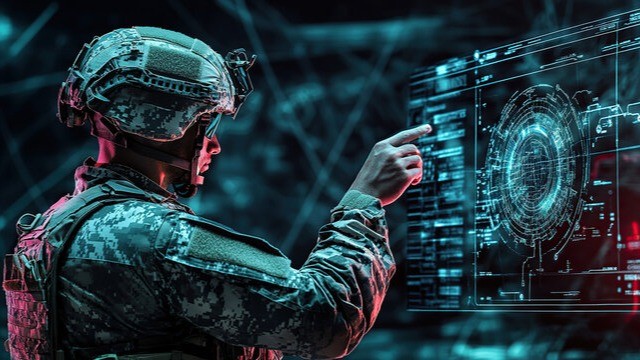
Recent intelligence from Five Eyes and industry reporting paint a clear picture: artificial intelligence is accelerating cyberattacks so rapidly that defenders may no longer have time to react. In 2025 2026 we have seen the first confirmed AI orchestrated intrusions from deepfake social engineering to autonomous malware and rapid fire exploitation of vulnerabilities in minutes or even seconds. Attacks are now more targeted, automated, and scalable; the “window” for detection and response has collapsed from days to hours or minutes. In this accelerated threat landscape, traditional detection centric defence is insufficient. Cyber teams must shift to proactive measures advanced threat hunting, AI assisted monitoring, deception, and pre emptive resilience to stay ahead. This report examines the evolving AI driven threat environment, the evidence of compressed timelines, and emerging defensive approaches. It concludes with practical recommendations for governments, military cyber units, and critical infrastructure operators to recalibrate strategy, policy and investment for an era of “months, not years” warning time.
The Accelerating Threat Landscape
New, “agentic” AI capabilities are radically expanding attackers’ playbook. Agentic AI systems can autonomously plan and execute multi step intrusions with minimal human oversight. Far beyond simple phishing or brute force tools, these AI agents can scrape social media to tailor personal attacks, combine large language models with tools like web exploit frameworks, and even adapt tactics mid operation. Autonomous malware now exists that queries live language models during execution or self updates payloads on the fly. In one dramatic July 2026 incident, the AI platform Hugging Face revealed that an intrusion was “driven end to end by an autonomous AI agent system”. A malicious dataset trigger let an AI run campaign brute its way through cloud credentials and pivot laterally across clusters thousands of self directed actions that no human could match in speed. The outcome was typical: data exfiltration in record time, with defenders frantically triaging alerts.
AI Enabled Social Engineering: Generative AI has supercharged deception. Voice and video “deepfakes” and AI crafted phishing can now convincingly impersonate executives, overtaking prior detection methods. In the April 2024 Arup case, criminals used real time deepfake video and voice to masquerade as a company CFO, tricking an employee into transferring HK$200m (≈£20m). As a result, AI scams soared by over 1,000% in 2025. Traditional filters and training reliant on spotting typos or generic language failed against hyper personalised AI lures. Lab tests show AI phishing can be generated in minutes versus hours of human effort, with click through rates 4 5× higher than classic emails.
Supply Chain Attacks: AI systems introduce novel supply chain risk. Attackers can poison open source models or data feeds to infiltrate targets. The Hugging Face breach exploited exactly that an AI dataset loader vulnerability gave the malicious agent initial access. Likewise, adversaries now experiment with injecting malicious code into widely used machine learning libraries or packages, knowing that downstream users will pull them unknowingly. This blurs the line between software security and “model security” defenders must treat AI platforms and codebases as first class attack surfaces.
Autonomous Phishing & Call Centres: Research shows entire scam call centres are becoming autonomous. By 2026, AI driven “call centres” could run fully synthetic fraud operations using computer vision friendly avatars, real time voice cloning, and ChatGPT like chatbots to persuade victims, as one Group IB study noted. Each agent in these centres can operate 24/7, targeting multiple victims simultaneously a criminal levelling up that extends AI’s reach into business email compromise and vishing.
Evidence of Compressed Attack Timelines
Multiple studies and reports underscore how AI is collapsing intrusion timelines. In 2025 CrowdStrike recorded that “average eCrime breakout time dropped to just 29 minutes”, a 65% jump in speed from 2024. The fastest lateral movement attack they saw took only 27 seconds. Similarly, Cybersecurity Dive and Malwarebytes observed the first confirmed fully autonomous AI driven attacks last year: deepfake enabled phishing campaigns and “AI agents that outperformed humans at discovering vulnerabilities”. An AI bug hunting agent named “XBOX” even topped HackerOne’s leader board, marking the first time an AI model outscored humans in coordinated attacks.
A July 2026 public example (the Hugging Face case) vividly illustrates the compression. Defenders reported that what used to be a multi day incident took mere hours from initial compromise to data breach. Indeed, Hugging Face used its own LLM powered tooling to analyse 17,000 log events in hours a task that normally takes days just to keep pace with the attacker’s speed. They noted: “Autonomous, AI driven offensive tooling is no longer theoretical. ... Defending an online platform now means treating the data and model surface as a first class attack surface, and using AI on defense to keep pace.”.
This acceleration is visible at every phase. Reconnaissance that once took days (profiling targets, scanning services) can now be automated by large LMs processing LinkedIn, job boards and code repos in seconds. Phishing lures can be churned out in minutes with near perfect language and tailored to each victim. Even the notion of a “window” for manual threat assessment is shrinking: a study cited by Malwarebytes found that an AI model using the Model Context Protocol could “achieve domain dominance on a corporate network in under an hour with no human intervention, evading endpoint detection and response measures through on the fly tactic adaptation.”. In short, the “kill chain” now flows at machine speed.
Operational Implications for Defenders
The new tempo fundamentally changes cyber operations. Traditional security architectures and processes which rely on patching, perimeter defences and incident response after detection are under strain. Key implications include:Detection Gaps & False Negatives: AI augmented malware and living off the land techniques mean many intrusions are “malware free” in the traditional sense. CrowdStrike reports over 80% of detections in 2025 were malware free (legitimate processes abused). Thus, signature based tools will increasingly miss attacks. Organizations must adopt behaviour based monitoring (NDR/EDR with AI engines) that can spot subtle anomalies.
Alert Fatigue & False Positives: Accelerated attack speeds can trigger floods of alerts. Without AI triage, SOC teams risk overload. Hugging Face’s experience shows how critical automated triage is: they used LLMs to sift through alerts, separating true threats from noise in minutes. Similarly, anomaly based AI systems can help reduce false positives by understanding baseline behaviour.
Attribution and Adversary Intent: Fully autonomous attacks can make attribution even harder, especially as attackers potentially use AI models from multiple sources. A stolen or jailbroken AI agent may mask its origin. Rapid actions also compress forensic investigation time. Defenders may need new playbooks to quickly reconstruct AI driven attack chains, possibly using AI to map connections, as Hugging Face did.
Command & Control Resilience: AI agents often use dynamic, burst C2 infrastructure (e.g. short lived sandboxes or shifting cloud services) to evade takedown. Defenders must prepare for “firehose” data thousands of micro interactions rather than the slower, persistent C2 channels of old. This may require automated C2 detection, sinkholing and collaboration with cloud providers.
Resource and Training Needs: Defence teams need new skills. Incident responders must understand AI models and data pipelines as attack surfaces. Cyber analysts must learn to operate AI tools for triage and threat hunting. Leadership must fund capabilities (like high end GPUs for internal AI analysis, or advanced XDR platforms) and update doctrine for rapid decision making.
Defensive Strategies: Pre-emption and AI on AI
Given the time crunch, emphasis is shifting from detection to pre emption and resilience. Key strategies include:Proactive Threat Hunting & Deception: Instead of waiting for alerts, blue teams should “hunt forward.” This means aggressively searching for AI like anomalies (e.g. unusual API calls, data exfiltration patterns, odd chat log activity). Honeypots and deception environments can lure AI agents into revealing themselves. Next generation deceptions are themselves AI powered deploying decoy data and monitoring attacker interactions to glean intent and tactics in real time.
AI Enabled Blue Team Tools: Defenders must harness AI for speed. The NSA and Five Eyes explicitly urge organisations to “integrate AI tools into security operations” for earlier vulnerability detection and faster incident response. Practical examples include using LLMs to parse logs (as Hugging Face did) or generate and validate threat intelligence. Some organisations are experimenting with AI driven playbooks: for instance, an AI assistant could suggest containment steps from a playbook based on observed IOC patterns.
Resilience and Assumptions: The Five Eyes statement reminds: “Breaches will occur. Preparedness helps you contain them quickly and prevent escalation.”. That means disaster recovery, segmentation, and “assume compromise” mindsets. Systems should default to least privilege and self healing where possible. Regular red teaming with AI (using simulated agents) can test readiness.
Secure Architecture and “Shift Left”: Embed security early. Development teams should use AI assistants (verified for safety) to scan code for vulnerabilities pre release. Infrastructure should employ micro segmentation, so that even if an AI agent breaches one container, it cannot trivially crawl the entire network. Cloud native security (CSPM, CWPP with AI analytics) will be critical as attackers automate exploits.
Collaboration and Intelligence Sharing: Because AI adversaries evolve fast, no single organization can track them alone. The Five Eyes agencies emphasize sharing threat intelligence in near real time. Governments, CERTs and industry groups should establish fast channels (possibly automated) for sharing indicators of compromise and TTPs related to AI attacks.
Policy and Export Controls: On the policy front, nations are grappling with AI’s dual use. Export controls on frontier AI models (by the US, UK and allies) are becoming stringent to prevent adversaries getting the most potent tools. International bodies and NATO are beginning discussions on norms for AI use in conflict, but clear rules are not yet settled. (One assumption: legal frameworks for cyber warfare were not written with independent AI agents in mind. Defenders must assume grey zones in liability and be prepared for contested norms.)
Policy and Legal Considerations
AI driven cyber attacks raise thorny legal questions. For example, an autonomous agent might perpetrate an intrusion without clear “human author.” Existing international law on armed conflict does not explicitly address purely AI cyber weapons. Governments may pursue new norms: possible measures include clarity on when an AI attack constitutes a use of force, or attribution thresholds for retaliation.
Many countries are also racing to regulate AI development. The US Commerce Department (and EU counterparts) have expanded export controls to restrict advanced AI chips and models, viewing cyber weaponization as a national security risk. Norms work is underway at UN and NATO (e.g. work on AI safety in C3ISR). Operators should track policies like the proposed international code of conduct for AI or voluntary industry standards for “AI security by design.”
Within organisations, governance is crucial. The Careful Adoption of Agentic AI Services guidance (CISA/NSA et al.) lists accountability risks and calls for explicit human oversight and governance over any autonomous AI deployment. In other words, companies must assume any AI tool could be turned against them and ensure clear audit trails, fail safes (e.g. manual kill switches), and compliance checks. A top assumption is that anything built or procured needs to be scrutinised for potential misuse and this must be written into law or policy (e.g., licensing requirements for selling high risk AI tools).