Antelope Reef Rising: China’s New Island Base and the Battle for South China Sea Access
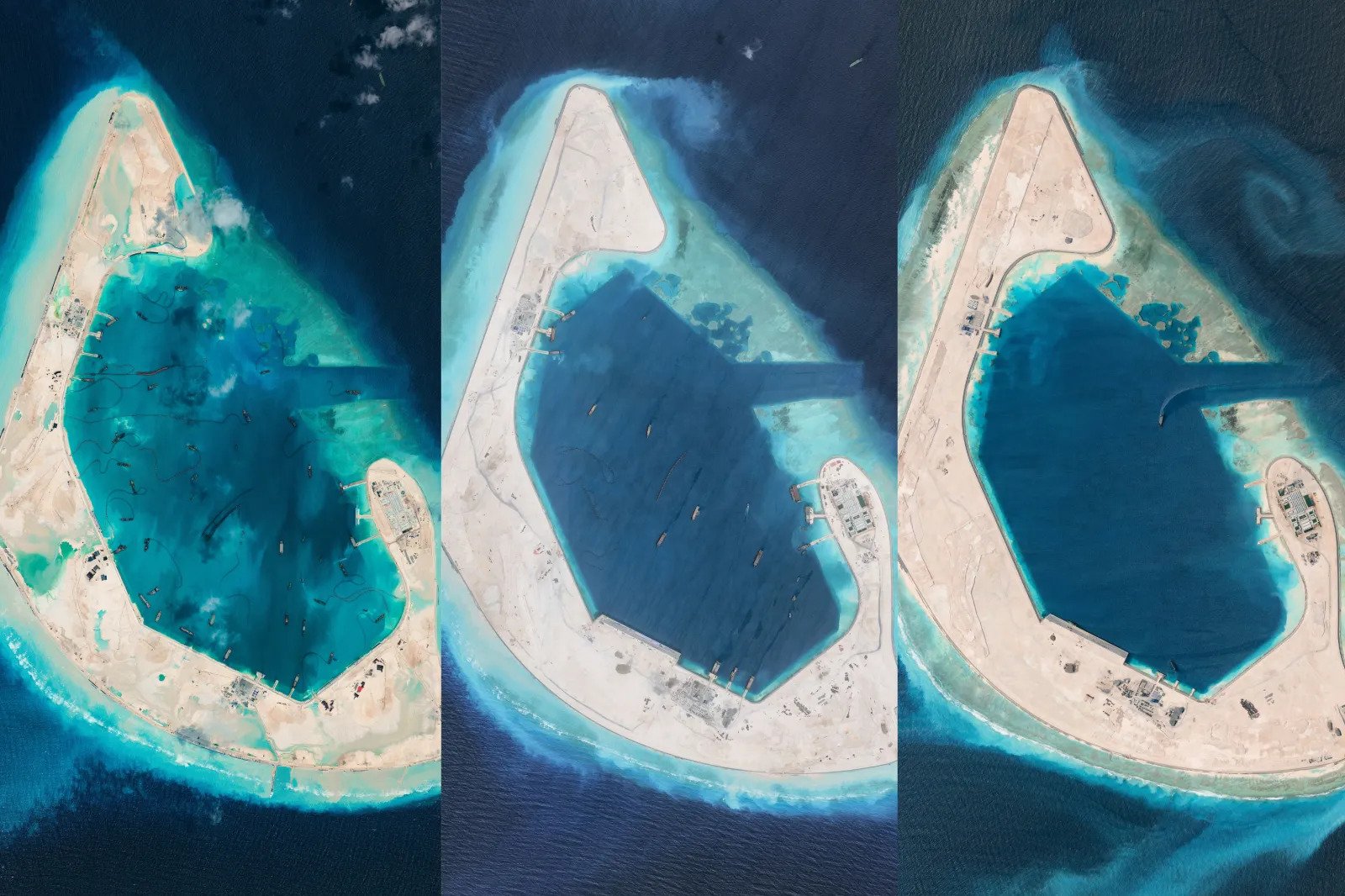
By August 2026, Antelope Reef had ceased to be an obscure speck in the western Paracels. In less than a year, China had transformed a mostly submerged reef into an artificial island nearly six kilometres long. Commercial satellite imagery showed a 680-metre wharf facing a deep-water harbour, a helicopter pad, the first buildings and earthworks consistent with the start of a long runway. The land reclamation phase appears substantially complete; the more consequential phase - installing the sensors, logistics and military infrastructure that will define the island’s function - is beginning.
Antelope matters because it can become more than another fortified outpost. Its position between Hainan and the central South China Sea gives Beijing a large, comparatively close and supportable node for surveillance, coastguard operations, aviation and naval logistics. Linked with Woody Island, Triton Island, nearby Yagong Island and mainland bases on Hainan, it could thicken China’s control of the northern approaches to the sea. In peacetime, that network would lower the cost of maintaining persistent presence and challenging other states’ activity. In a crisis over Taiwan or the South China Sea, it could complicate the movement of aircraft, surface vessels and submarines through a strategically important operating area.
Yet reclamation is not sovereignty, and a large base is not the same as assured control. Under the law of the sea, artificial construction cannot create new maritime entitlements or change the legal classification of a feature from its natural condition. Militarily, an island is fixed, observable and dependent on supply. The strategic problem is therefore not that Antelope makes the South China Sea inaccessible overnight. It is that the base can shift the everyday balance of awareness, endurance and coercion before a crisis begins. The appropriate response is an access strategy of equal persistence: continuous public monitoring, legally consistent operations, distributed logistics, stronger regional maritime capacity and crisis mechanisms that deny Beijing the ability to convert concrete into uncontested normality.
A reef becomes a strategic position
China began major dredging at Antelope Reef, known as Lingyang Jiao in China and Hai Sam Reef in Vietnam, around October 2025. The pace was striking. By March 2026, the Asia Maritime Transparency Initiative estimated that roughly 1,490 acres of artificial land had been created - almost the same area as Mischief Reef, China’s largest outpost in the Spratly Islands, and far larger than Woody Island, the established Chinese administrative and military centre in the Paracels.
The outline visible by mid-2026 suggests that size was deliberate. The reclaimed feature stretches nearly six kilometres. Its northwestern side contains a straight edge of more than three kilometres, sufficient in principle for a runway comparable to those at China’s other major South China Sea bases. In August, satellite imagery showed excavation along part of that alignment. No runway had yet been paved, and its final configuration remained uncertain, but the dimensions and location of the earthworks were consistent with preparations for an airstrip.
The maritime infrastructure is already significant. A wharf of about 680 metres fronts a deep-water harbour formed from the reef’s lagoon. Satellite imagery has shown a Chinese coastguard vessel alongside. Buildings and a helicopter pad have appeared in the southeast, while construction equipment and concrete-production facilities indicate a transition from land formation to permanent infrastructure.
This distinction is important. Dredging creates space; infrastructure creates function. A bare artificial island is a costly engineering achievement. A runway, harbour, fuel storage, communications system and sensor array can turn it into an operating base. Antelope’s military significance will therefore emerge incrementally. Analysts do not need to wait for missile launchers to appear before assessing the change, but they should also avoid presenting every planned capability as already deployed.
Beijing has not acknowledged that it is constructing a new military base. China’s foreign ministry describes work in the Paracels as construction on Chinese territory intended to improve living and working conditions and develop the local economy. Chinese commentary has also pointed to weather forecasting, fisheries protection, navigation safety and scientific research. Those functions are plausible in themselves. They are also compatible with dual-use facilities that support military and coastguard operations. A harbour can shelter rescue vessels or replenish patrol ships; a runway can carry civilian transports or combat aircraft; a meteorological station can improve public safety or feed operational planning. The strategic issue is not whether every building has a civilian explanation. It is whether the combined system gives China more persistent power at sea.
The geography of northern access
Antelope lies in the Crescent Group in the southwestern Paracels, approximately 162 nautical miles from Sanya on Hainan and 216 nautical miles from Da Nang. It is close enough to China’s southern coast to be sustained more easily than the remote Spratly bases, yet far enough south to extend Chinese surveillance and operational reach into the centre of the South China Sea. Woody Island lies roughly 90 kilometres away and already hosts a major runway, protected harbours and facilities that have supported fighter aircraft and surface-to-air missiles.
That position makes Antelope an access node. Access is often discussed as a binary question: can a navy or air force enter the South China Sea, or can China keep it out? In practice, access is a spectrum. A force may be able to enter but remain continuously tracked. It may operate but only after diverting scarce aircraft to suppress sensors. It may transit but be unable to refuel, repair or protect vulnerable support ships. It may preserve freedom of navigation in legal terms while facing growing tactical risk and political pressure.
Antelope can influence each of those conditions. A large sensor complex could improve detection and identification of air and maritime traffic approaching the Paracels. A deep-water harbour could sustain coastguard and naval presence closer to patrol areas. A long runway could support transports, maritime patrol aircraft, airborne early-warning platforms, fighters or bombers, depending on the facilities and deployments eventually chosen. Hardened storage and communications would add endurance. None of these capabilities is confirmed in full as of August 2026. The island’s dimensions, however, allow Beijing to choose among them without another major reclamation campaign.
The location also connects South China Sea competition to a Taiwan contingency. The Pentagon’s 2025 assessment describes China’s Southern Theater Command as responsible for operations in the South China Sea and for supporting the Eastern Theater Command during a Taiwan crisis. Antelope would not become the central base for such a campaign; mainland facilities are larger and more resilient. It could nevertheless provide dispersal, surveillance, recovery and logistics options on the southern flank of the theatre. It could also help China monitor forces moving north from Southeast Asia or east from the South China Sea toward the Philippine Sea.
This is why the base’s strategic value cannot be measured only by the radius of a future missile battery. Geography gives Antelope utility even in the absence of permanent high-end weapons. It places fuel, sensors, repair capacity and state vessels closer to the activity Beijing wants to observe or influence.
A base before it is armed
The most consequential period may be the one now beginning, when infrastructure remains incomplete but expectations about future use start changing behaviour.
Military bases generate effects before they are fully operational. Other states must plan against plausible capabilities, not only those visible on a particular satellite pass. A runway alignment forces consideration of combat aviation. A deep harbour raises questions about submarines and major surface vessels. Large power and communications facilities suggest sensors, electronic warfare or command functions. Hardened shelters, if built, would imply a capacity to protect mobile missiles or aircraft. Each addition expands the set of contingencies that regional planners must cover.
China’s previous outposts provide a pattern. Woody Island has hosted combat aircraft and surface-to-air missiles. China’s three largest Spratly bases - Fiery Cross, Subi and Mischief Reefs - combine airfields, harbours, radar and communications arrays, aircraft hangars, missile shelters and other defensive systems. The 2025 U.S. China Military Power Report concluded that these outposts support sustained military and paramilitary operations, shorten response times and widen Beijing’s options when confronting other claimants.
Antelope is not guaranteed to reproduce that template exactly. Its northern location, proximity to Hainan and large protected lagoon may encourage a different balance of functions. It could place greater emphasis on logistics, maritime surveillance or support for coastguard operations. Analysts have also raised the possibility that it could contribute to a protected operating area for China’s nuclear-armed ballistic-missile submarines based on Hainan. That remains an assessment, not a confirmed mission. The important point is optionality: a site of this scale allows China to add capabilities as the strategic environment changes.
Nearby construction reinforces the network interpretation. In August, new three-pronged structures appeared on Yagong Island, 14 kilometres northeast of Antelope. Analysts told Reuters that the structures resembled radar or early-warning facilities elsewhere in the South China Sea, while cautioning that it was too early to identify their purpose definitively. If the assessment proves correct, Yagong could serve as a separated sensor site supporting Antelope’s larger logistics and aviation complex. Dispersing functions among nearby features would improve coverage and make the network harder to neutralise through action against a single node.
Access is a ladder, not a switch
Antelope’s effects are best understood as a four-level access ladder. Each level builds on the previous one, and the most immediate changes occur below the threshold of armed conflict.
Level one: seeThe foundation of control is awareness. Fixed radars, passive sensors, communications intercept systems and links to aircraft, satellites and ships can build a more complete picture of movement across the northern South China Sea. Persistent detection does not prevent passage, but it removes anonymity. Aircraft and vessels that once operated with intermittent observation may be classified, shadowed and recorded from the moment they enter the area.
This information advantage has political value. Beijing can publicise selected encounters, dispatch coastguard vessels earlier and build narratives that portray foreign operations as intrusions into an established Chinese administrative space. It also has military value. In a crisis, a mature track picture reduces the time required to cue fighters, ships or missile systems.
Level two: sustainPresence depends on logistics. The ability to refuel, repair, rotate crews and shelter ships determines how long a state can remain on station. Antelope’s harbour and potential airfield would reduce the distance Chinese coastguard and military units must travel for support. This matters particularly for coastguard operations, where persistence often produces more political effect than firepower.
A vessel operating from Hainan can already reach the Paracels. A vessel supported at Antelope can spend more time patrolling and less time transiting. A helicopter or maritime-patrol aircraft able to stage through the island can revisit contacts more quickly. A base that lowers the daily cost of presence helps turn occasional enforcement into routine administration.
Level three: policeSurveillance and endurance enable selective obstruction. China could use coastguard ships, maritime militia, helicopters and aircraft to warn, shadow, redirect or delay other states’ vessels. The methods may remain below the level of armed conflict: radio challenges, close manoeuvres, exclusion notices, inspections, water cannon or the physical positioning of ships.
The objective at this level is not to close the sea to all traffic. Commercial shipping can continue while activities Beijing opposes - military surveillance, resource exploration, fishing by rival claimants or government resupply missions - face higher risk. Access becomes conditional in practice even when it remains lawful in principle.
Level four: denyIn a severe crisis or war, Antelope could support active denial. Combat aircraft, surface-to-air systems, anti-ship weapons, electronic warfare and naval forces would add overlapping threats to the existing mainland and island network. The base could provide a forward operating location, a recovery strip, a sensor relay or a logistics hub even if its most valuable weapons remained mobile or were deployed only during a crisis.
This level should not be treated as inevitable. No permanent high-end combat deployment at Antelope had been confirmed by August 2026. But the preceding levels already affect the strategic balance. Waiting for missiles to appear would miss the way surveillance, sustainment and coercive policing can narrow practical access during peacetime.
Concrete can change behaviour, not law
China, Vietnam and Taiwan claim the Paracel Islands, while China has controlled the entire archipelago since its 1974 clash with South Vietnam. Vietnam has protested the Antelope construction, stating that activities at Hai Sam Reef without Vietnamese permission are illegal and invalid. Beijing rejects the existence of a dispute and describes the Paracels as inherent Chinese territory.
Land reclamation cannot settle that sovereignty dispute. Nor can it manufacture additional maritime zones. Under the United Nations Convention on the Law of the Sea, artificial islands do not possess the status of islands and have no territorial sea of their own. The 2016 South China Sea arbitration further established that the legal status of a maritime feature must be assessed according to its natural condition before substantial human modification. The tribunal did not decide sovereignty over the Paracels, and its feature-specific findings concerned disputes brought by the Philippines. Its reasoning nevertheless underscores a central principle: engineering can alter physical geography without upgrading legal entitlement.
This creates an asymmetry between law and operations. Legally, new concrete does not enlarge the sea that China may claim. Operationally, a harbour, radar and airstrip can help Chinese forces behave as if wider control already exists. Ships may be challenged more quickly. Aircraft may be tracked more persistently. Commercial operators may avoid routes or activities that appear politically risky. Other governments may quietly reduce patrols to prevent incidents. Over time, behaviour can begin to validate a claim that the law does not.
The response cannot be legal protest alone. Statements are necessary to prevent silence from being interpreted as acceptance, but they have limited effect if regional states steadily lose the practical ability to operate. Equally, military presence without legal consistency can turn a rules-based position into a contest of force. Effective access policy must connect the two: articulate the lawful basis for navigation and overflight, then maintain the capability and coalition needed to exercise those rights safely.
The network effect: Antelope is not alone
The island should not be analysed as an isolated fortress. Its value comes from the network around it.
Hainan provides major naval, air and missile infrastructure as well as the industrial and logistical depth of the Chinese mainland. Woody Island supplies an established administrative centre, airfield and military facilities in the eastern Paracels. Triton Island, at the southwestern edge of the archipelago, has surveillance infrastructure and sits close to waters contested with Vietnam. Antelope adds space, harbour capacity and a potential second major runway in the western Crescent Group. Yagong may add another sensor node.
Together, these sites could create a denser northern layer of surveillance, aviation and maritime support. Redundancy matters. If weather, maintenance or an accident closes one runway, another may remain available. Sensors on separate features can compare tracks and cover blind spots. Ships can choose among harbours. Mobile systems can relocate, complicating an opponent’s targeting and intelligence.
The regional picture is also reciprocal. Vietnam has accelerated reclamation and infrastructure work across its Spratly outposts. By May 2026, AMTI estimated that Vietnam had created about 2,771 acres of artificial land in the Spratlys and was developing new harbours and specialised aviation infrastructure. Hanoi’s projects do not match China’s broader fleet, air and missile power, but they increase Vietnam’s ability to sustain a presence and deny easy dominance in the southern part of the sea.
Antelope may therefore represent both expansion and reaction: an effort by Beijing to secure a decisive advantage as other claimants improve their positions. That dynamic risks an infrastructure competition in which every new runway or harbour is justified as a response to someone else’s. The result is not stable balance by default. It is a denser operating environment with more sensors, more armed units and more opportunities for tactical encounters to acquire strategic meaning.
The island’s military value - and limits
Calling Antelope a future major base should not lead to treating it as an unsinkable aircraft carrier. Artificial islands have serious weaknesses.
They are fixed and transparent. Commercial satellites can observe construction, deployments and damage. Runways, fuel farms, radars, docks and power systems cannot disperse in the way mobile forces can. In a major conflict, the coordinates are already known.
They are also logistically dependent. Personnel, spare parts, fuel, ammunition, food and fresh water must arrive by sea or air. A large harbour improves sustainment in peacetime but creates a visible flow that can be monitored. Damage to a runway or port may sharply reduce usefulness until engineering teams repair it.
Finally, geography cuts both ways. Antelope is closer to Hainan than the Spratly outposts and could receive support more easily. It is also within reach of multiple regional surveillance and strike systems. Defending it would consume aircraft, missiles, ships and engineering resources that might be needed elsewhere. Its real value is therefore greatest before high-intensity war. In daily competition, a fixed base provides persistence at relatively low political risk. Coastguard ships can rotate through a harbour, sensors can operate continuously and civilian functions can legitimise a permanent presence. During crisis, the base adds options and forces an adversary to allocate attention and weapons against it. In war, it remains useful, but vulnerable. This distinction should shape policy. The challenge is not principally to prepare for a cinematic assault on an artificial island. It is to prevent that island from quietly becoming the organising centre of a new access regime.
What an access strategy should do
The United States, Southeast Asian claimants and other maritime partners need a response calibrated to the actual problem. An island-for-island building race is neither realistic nor desirable. The goal should be to preserve lawful access and prevent coercive control without making every transit a deliberate crisis.
First, monitor milestones rather than labels. Governments should publish regular, declassified assessments of runways, fuel capacity, sensors, weapons shelters and vessel use at Antelope and nearby features. The distinction between confirmed infrastructure, assessed purpose and possible future capability should be explicit. Consistent transparency makes it harder to militarise gradually under the cover of ambiguity and reduces the risk that isolated imagery will drive exaggerated conclusions.
Second, maintain routine lawful presence. Naval and coastguard operations, military overflight and civilian maritime activity should be regular, professionally conducted and grounded in a clear legal position. Spectacular one-off demonstrations can produce headlines but do little to establish durable access. Predictable multinational activity makes it harder for Beijing to isolate one state and portray normal operations as exceptional provocations.
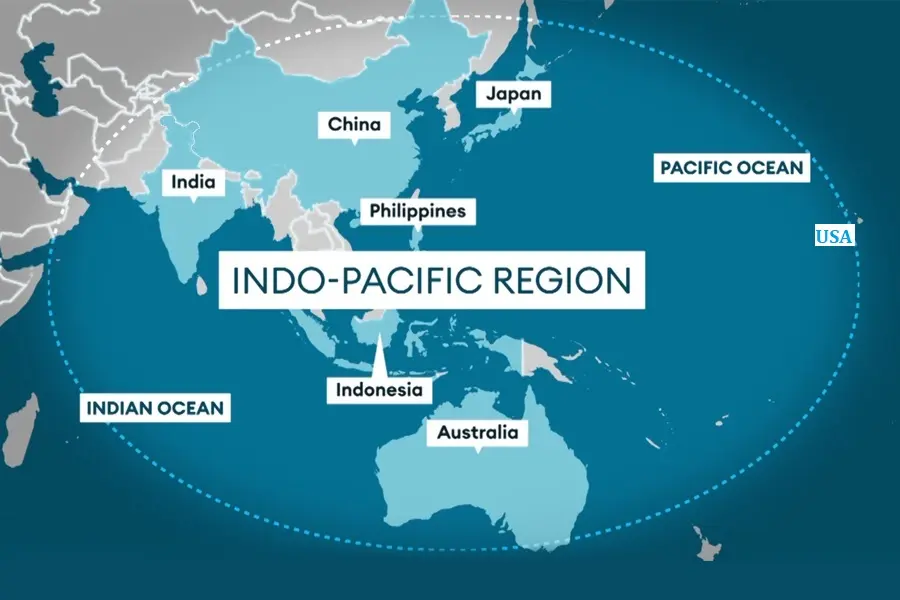
Third, distribute logistics and surveillance. Access will depend on a network of airfields, ports, repair sites, pre-positioned supplies and interoperable sensors across the wider Indo-Pacific. No single base should be indispensable. Forces that can operate from multiple locations, repair runways quickly, communicate under jamming and share a common maritime picture are harder to exclude than units concentrated at a few prominent hubs.
Fourth, strengthen regional agency. Vietnam, the Philippines, Malaysia and Indonesia have different claims, threat perceptions and relationships with Washington. A workable strategy should not demand that they adopt identical positions. It should expand practical capacity: coastguard training, secure communications, domain awareness, evidence collection, environmental monitoring and resilient resupply. The more regional states can document and manage encounters themselves, the less every incident becomes a binary China-United States confrontation.
Fifth, prepare for grey-zone obstruction. Operators need agreed procedures for radio challenges, unsafe manoeuvres, temporary exclusion notices, interference with navigation systems and attempts to board or redirect vessels. Evidence should be preserved and released quickly. Responses should be proportionate and coordinated, with a clear distinction between law-enforcement encounters and military escalation.
Sixth, keep crisis communications open. More infrastructure and more patrols will create more close encounters. Direct military and coastguard channels, notification procedures and incident protocols do not resolve the sovereignty dispute, but they can stop a collision or misidentification from setting the pace of escalation.
Finally, compete over legitimacy as well as position. Beijing will emphasise civilian services, safety and development. Other states should acknowledge genuinely public functions while rejecting the use of those functions to justify excessive control. They should also offer visible regional public goods of their own: search and rescue, hydrographic data, disaster response, fisheries science and environmental monitoring. Access is more defensible when it is connected to benefits for the states that live around the sea.
The real contest is over normality
Antelope Reef does not by itself close the South China Sea. Commercial shipping will continue, foreign militaries will retain significant capabilities and the island’s most advanced future systems will remain vulnerable in a major conflict. Measuring the project only against a wartime blockade therefore produces the wrong conclusion.
The base is designed to shape the conditions that precede war. It can help China see earlier, remain longer and respond faster. Those advantages can be used to make warnings more frequent, patrols more persistent and rival activity more difficult. If other states adjust quietly - rerouting, reducing operations or accepting Chinese permission as the price of avoiding confrontation - operational control can expand without a formal legal change or a decisive military event.
That is the battle for access. It is fought through schedules, patrol patterns, insurance decisions, sensor coverage, port calls, diplomatic language and the willingness to return after an unsafe encounter. The side that sustains a pattern of presence gains more than the side that produces the strongest communiqué.
Antelope’s rise should therefore be treated as a warning against episodic strategy. China built the island through months of continuous work. Preserving access will require the same quality of persistence from those who reject exclusive control of the sea.