Operation Lion’s Roar: The Day After in a Post-Khamenei Iran
With the confirmed death of Supreme Leader Ayatollah Ali Khamenei following the joint US-Israeli strikes of February 28, 2026, Operation Lion’s Roar has thrown the Islamic Republic into an open-ended succession crisis, radically reshaping the military, political, and regional balance of the Middle East in a single 24-hour cycle.
This is no longer a scenario about a leadership vacuum: the death of the man who has personified the clerical structure since 1989, triggered by a coordinated strike campaign codenamed Operation Lion’s Roar (Israel) and Operation Epic Fury (United States), has turned the Islamic Republic into a fracturing authority structure overnight.
What Happened on February 28
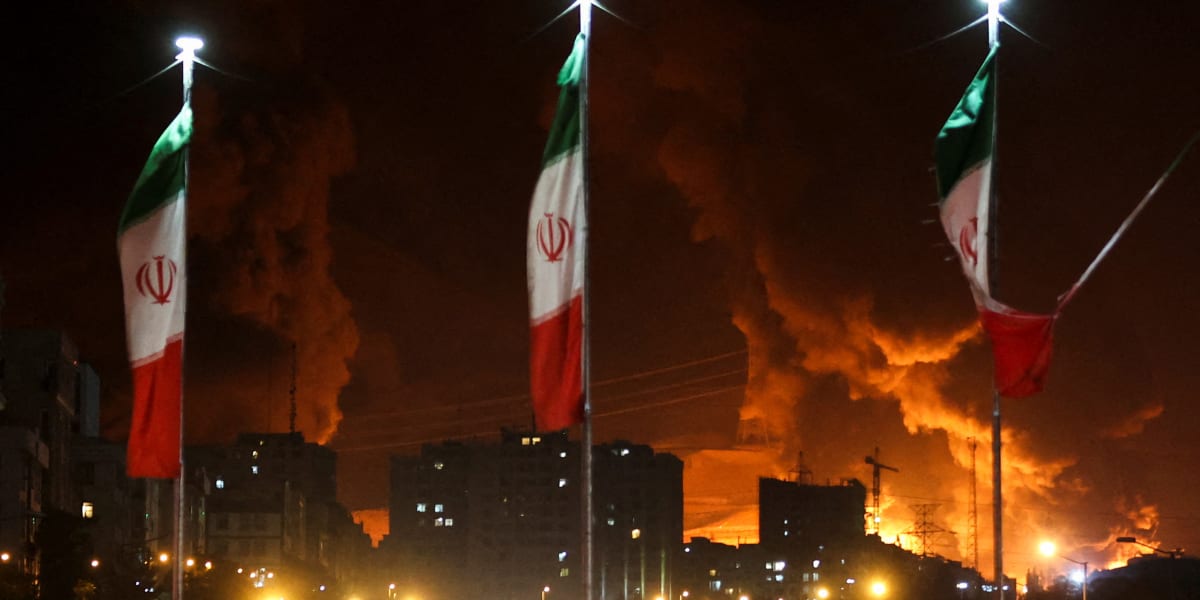
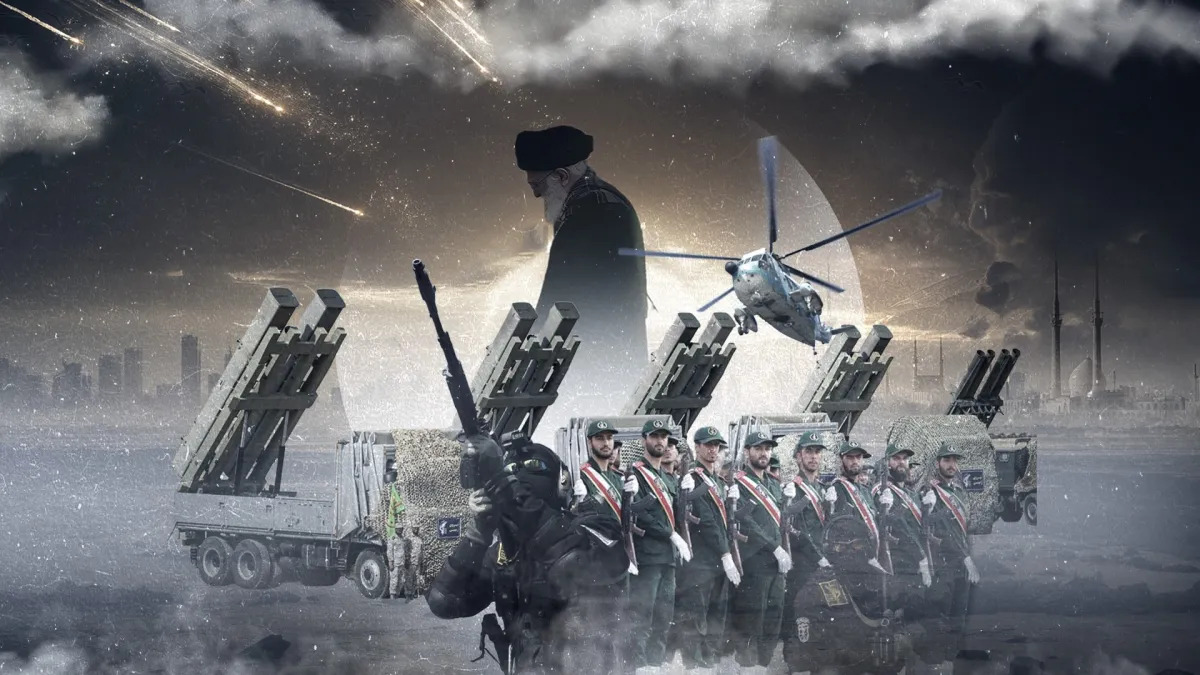
Operation Lion’s Roar: On the morning of February 28, Israel launched a large-scale, precision-guided missile and air campaign against key Iranian military and political sites in Tehran and the wider central-western corridor, explicitly targeting Iran’s missile infrastructure, IRGC command nodes, and the Khomeini-era leadership complex.
US “Epic Fury” component: The United States, operating under Operation Epic Fury, conducted long-range stand-off strikes—including carrier-based aircraft and possibly B-2s or B-52s—against missile launchers, air-defense hubs, and naval facilities in the Persian Gulf, with the declared objective of degrading Iran’s ability to retaliate and to accelerate internal pressure on the regime.
Khamenei’s compound as a key target: The Pasteur Street complex in Tehran, described as Khamenei’s residence and a nerve center for the Supreme Leader’s communications, came under at least seven direct missile or glide-bomb impacts early in the strike wave. US and Israeli officials publicly stated Khamenei had been killed; after hours of contradictory signals, Iranian state television and the Supreme Council of the Guardians confirmed his death, announcing a 40-day mourning period and a temporary collective leadership structure.
The Instantaneous Political Vacuum
Constitutional shock: Khamenei had occupied the Vali-e Faqih position for more than three decades and had been the undisputed final arbiter over the IRGC, the judiciary, and the presidency. His death in hot combat, rather than through a controlled succession, bypasses the carefully managed “transition protocols” previously rehearsed inside the Assembly of Experts.
Immediate institutional contest: The vacuum has activated three competing centers of power:The Assembly of Experts, charged with selecting a new Supreme Leader, but deeply divided along conservative-pragmatist lines;
The Guardian Council, which can veto contenders and use judicial tools to delay the process;
The IRGC high command, which now controls security, media, and key infrastructure and seeks to lock in a successor aligned with its worldview.
Sources close to Iran’s interior circles report an intensifying struggle between hardline ideologues who advocate an even more confrontational course and pragmatic clerics who want to steady the economy and avoid total war.
Regional Fallout: War, Mobilization, and Deterrence
Iran’s “Operation True Promise 4”: In response, Iran has launched a broad missile and drone campaign under the banner Operation True Promise 4, targeting Israeli military installations and US-hosting Gulf states (Bahrain, Kuwait, Qatar, UAE) with dozens of ballistic and cruise missiles, alongside swarms of loitering munitions.
Civilian-area alerts: Israeli and Gulf authorities have declared state-of-emergency alert protocols, but so far the pattern of Iranian strikes appears calibrated to signal capability and resolve rather than maximize civilian casualties, even as the psychological toll and disruption to Gulf logistics climb.
Axis-of-Resistance fragmentation: The deaths at the top and the shock of the strikes have also triggered nervous recalibrations in Tehran’s allied or client networks. Hezbollah, the Houthis, Kata’ib Hezbollah, and other groups are now weighing whether to escalate on the assumption that Iran cannot be relied on as a stable backstop, or to hunker down and preserve their own capacities.
The “Day After” Challenge
Domestic uncertainty: Inside Iran, the death of the man who has been the regime’s symbolic father-figure for a generation is generating a mix of shock, sectarian outrage, and, especially among younger urban Iranians, unprecedented questioning of the system’s survival. The 40-day mourning period may become a window for both consolidation and internal pushback, depending on how the IRGC and security forces manage public order and information control.
Strategic implications: Operation Lion’s Roar may have been conceived as a high-stakes attempt to induce internal fracture or regime collapse, but the immediate aftermath instead points to a more volatile but highly reactive Iran—less predictable than under Khamenei’s tight, though rigid, control, yet still capable of large-scale asymmetric retaliation and regional escalation.
In short, February 28, 2026, is less the end of an era than the opening of an open-ended, highly unstable new phase—one in which the Islamic Republic no longer pivots around a single, stable, aging Leader, but around a leadership vacuum that may harden into a new configuration of clerical-military authority, or into a more fragmented and combustible constellation of power centers.
Key Issues: The Internal Power Struggle Between the IRGC and the Pragmatic Remnants of the Civilian Government
Iran’s external wars in the Middle East are now deepening an internal battle of wills inside the regime itself. At the center of this friction is the growing power of the Islamic Revolutionary Guard Corps (IRGC) and the shrinking space available to the more pragmatic, technically oriented civilian-government factions, including elements around the presidency and selected ministries. This struggle is not just about policy; it is about who ultimately controls the state’s security decisions, its economic future, and its ability to manage domestic discontent.
The Rise of the IRGC as a State Within the State
The IRGC is no longer a military organization subordinate to the clerical leadership; it is a multifaceted institution with deep involvement in politics, the economy, and security. The Corps controls vast networks of companies, construction firms, and energy-sector enterprises, giving it enormous leverage over employment and patronage across Iran. It also operates its own intelligence and security apparatus, including the Quds Force, which oversees foreign operations and proxy networks in the Middle East.
Because of its role in both external security and internal repression, the IRGC has become the most powerful institution in the Islamic Republic. Even the Supreme Leader, Ayatollah Khamenei, has historically relied on the IRGC to maintain his grip on power, making the relationship between the two essentially reciprocal: the Leader legitimizes the IRGC, and the IRGC protects the regime. This dynamic has allowed the IRGC to expand its authority at the expense of civilian institutions, especially the Ministry of Foreign Affairs and the presidency, which have limited control over major security and military decisions.
The Pragmatic Civilian Faction and Its Limits
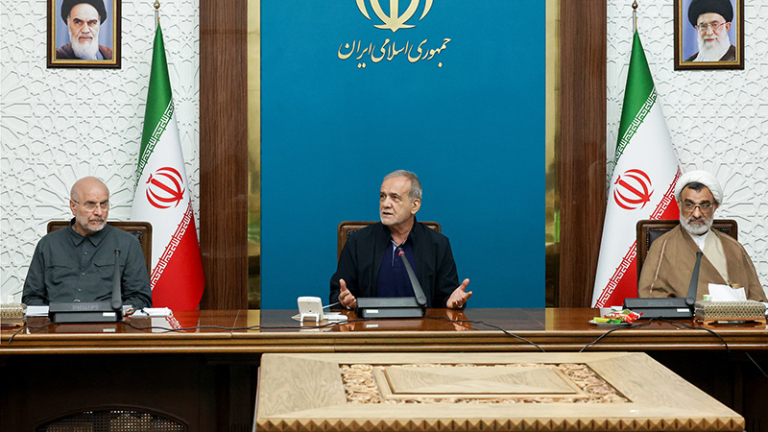
In contrast to the IRGC’s hard-line, ideologically driven posture, the pragmatic civilian faction seeks to balance realism with regime survival. This group includes President Masoud Pezeshkian and his allies, as well as some economists and technocrats in the cabinet who argue that Iran must prioritize economic stabilization, foreign-policy constraints, and social peace over revolutionary adventurism. They recognize that the war economy has brought short-term windfalls—such as higher oil prices and a surge in regional attention—but at the cost of rapidly deteriorating living standards, rising inflation, and a deepening social crisis.
This civilian faction has tried to push back against the IRGC’s most aggressive plans, including calls for further regional escalation and increased military spending, arguing that the state’s fragile economy cannot sustain higher levels of conflict without triggering a deeper domestic crisis. However, their influence is limited by the IRGC’s dominance over security and by the Supreme Leader’s dependence on the Corps for domestic control. Even when the president publicly criticizes elements of the IRGC’s strategy, his authority over operational decisions is minimal.
The 2025–2026 Rift and Public Cracks
The internal rift has become increasingly visible in 2025 and 2026, as the regime grapples with the fallout of its wars and domestic unrest. A bitter feud erupted within the ruling elite, exposing deep divisions between the IRGC and the hard-line “Steadfastness Front” (Jebhe Paydari), which includes loyalists of former president Ebrahim Raisi. The conflict, catalyzed by a 12-day war in 2025 and a controversial interview by President Pezeshkian, has exposed a deeper fracture at the heart of the regime.
The IRGC’s mouthpiece, the newspaper Javan, has launched scathing attacks on the Steadfastness Front, accusing its members of undermining the regime’s stability and criticizing their hard-line rhetoric. The IRGC has even likened these critics to “political rumormongers worse than foreign mercenaries,” signaling a profound split within the regime’s own camp. At the same time, President Pezeshkian has clashed openly with IRGC chief Ahmad Vahidi, warning that continued military escalation could collapse the economy and deepen social unrest.
These tensions reveal a regime in disarray, even as it continues to project an image of unity. The IRGC, emboldened by its control over security and regional power, is increasingly willing to challenge the very hard-liners who once championed the regime’s revolutionary legacy. The civilian faction, in turn, struggles to assert itself, aware that any attempt to curtail the IRGC’s power could provoke a direct confrontation with the most powerful institution in the state.
The Strategic Implications for Iran
The internal power struggle has several important implications for Iran’s future trajectory. The IRGC’s dominance suggests that the regime will likely continue its aggressive foreign-policy posture, driven by a desire to maintain regional influence and justify its own institutional authority at home. This may come at the cost of long-term economic stability, as the state channels resources into the military instead of addressing the country’s deepening social and economic crisis.
The 2025–2026 rift also raises the risk of a more fragmented and less cohesive regime, in which different factions pursue competing interests. This could lead to policy inconsistency, with the IRGC pushing for escalation while the civilian government seeks to manage the fallout and preserve social order. The result would be a weaker state overall, less capable of responding to external challenges and less able to maintain internal stability.
Ultimately, the struggle between the IRGC and the pragmatic civilian government is a defining feature of Iran’s political landscape. The IRGC’s rise has transformed the Islamic Republic into a state where the military and security apparatus wields more power than the civilian institutions of governance. The future of the regime may depend on the outcome of this internal contest, as the balance of power between the IRGC and the presidency will shape Iran’s ability to manage both its wars abroad and its crises at home.
The Spillover: How the “Axis of Resistance” Is Operating without a Central Command in Tehran
The “Axis of Resistance”—the network of Iran-aligned groups including Hezbollah, the Houthis, Iraqi militias, and assorted regional proxies—once functioned as a relatively centralized chain of command, with the IRGC Quds Force at its core. Today, that model is fraying. With Tehran under direct military pressure, key Quds Force leaders dead or sidelined, and conventional Iranian infrastructure damaged, the network increasingly operates on a decentralized, “confederated” model: semi-autonomous nodes sharing broad objectives but coordinating more with each other than with a single command center in Tehran.
From Centralized Command to Distributed Resilience
The 2025–2026 Iran–Israel–US war cycle has shattered the old command-and-control architecture. The Quds Force, once the IRGC unit that planned, financed, and directed operations across the region, has suffered heavy losses of senior handlers, communication hubs, and forward offices. As a result, Hezbollah, the Iraqi Popular Mobilization Forces (PMF), Kata’ib Hezbollah, other Iraqi militias, and the Houthi movement in Yemen no longer wait for detailed, real-time instructions from Iran for every strike.
Analysts now describe the Axis as resembling a confederation of semi-autonomous groups under a shared deterrence umbrella. These groups still coordinate with Iran on broad strategy— especially regarding retaliation against Israel and the United States, and on the timing of missile and drone launches—but they also communicate directly among themselves, sharing intelligence, logistics, and even technical know-how. This distributed structure makes the network more resilient because degrading one link does not collapse the whole system.
Operational Autonomy in the FieldEach Axis member today exercises a high degree of local operational autonomy, shaped by its own domestic constraints:
Hezbollah: In Lebanon, Hezbollah has long been both a militia and a political party embedded in the state. The 2025–2026 fighting in the north of Israel has forced it to balance its war against Israel with the need to avoid total state collapse in Beirut. As a result, Hezbollah commanders make decisions on the intensity and tempo of operations based on local risk assessments, supply lines, and the political mood in the country, sometimes outpacing or diverging from Tehran’s preferences.
Iraqi militias: The PMF and affiliated groups such as Kata’ib Hezbollah operate under the formal umbrella of Iraq’s state security apparatus, but they retain substantial freedom of action. They have been conducting strikes against US forces in Iraq without direct public authorization from Tehran, tailoring their operations to Iraqi domestic politics and the mood of the Iraqi public. The Quds Force supplies weapons, money, and strategic guidance, but the Iraqi groups now act as first-order decision-makers, not mere subordinates.
Houthis in Yemen: In Yemen, the Houthis are effectively governing the parts of the country they control. The Iran-linked network has supported them with drones and missile technology, and there is still a strong ideological alignment with Tehran. However, the Houthis choose their own targets, design their own campaigns, and calibrate their operations to Yemeni conditions. They may consult with Iran, but they do not seek permission for every operation.
This decentralized model allows the Axis to adapt to setbacks and even to survive if the core in Tehran is degraded. It also creates a risk of misalignment—of groups acting in ways that Tehran may not want but cannot easily control.
The Strategic ImplicationsThe shift toward decentralization has several implications for the region and the wider war:
Resilience: The Axis can now withstand targeted strikes against its Iranian backbone much more effectively than before. Even if Tehran loses key command nodes, the network can continue to function.
Controllability: The Iranian state’s ability to dictate the Axis’s behavior is decreasing. Groups may act in ways that escalate or de-escalate conflicts for their own reasons, sometimes against the broader interests of the regime.
Legitimacy: Local groups are increasingly seen as national actors rather than mere Iranian proxies. This can strengthen their legitimacy at home but also reduce their dependence on Tehran.
In effect, the “Axis of Resistance” is evolving from a top-down alliance into a more horizontal, networked structure. This is good for its survival in the short term but may undermine the very centralized control that Iran once prized.
Global Impact: The Strait of Hormuz and the “Just-in-Time” Global Economy
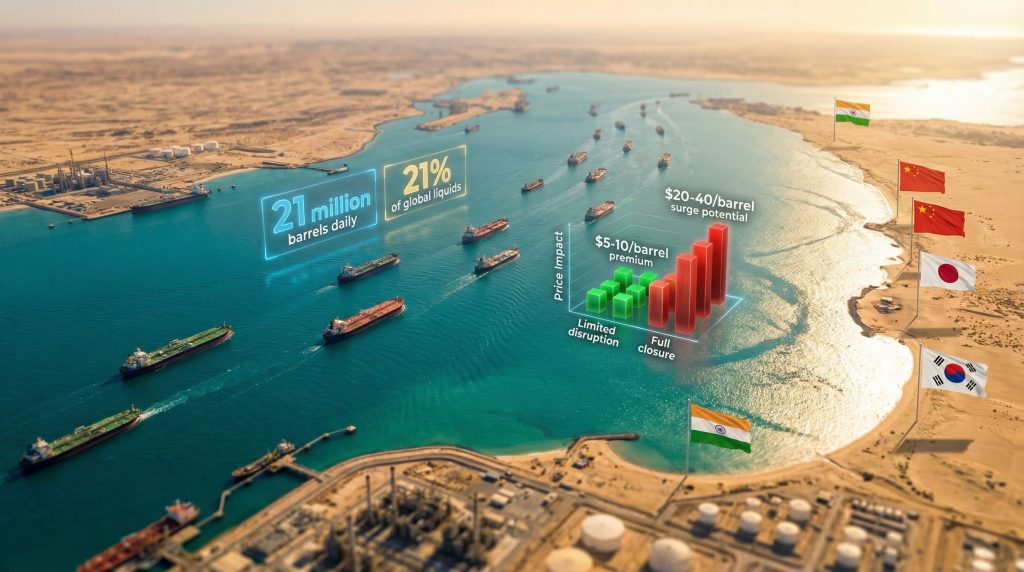
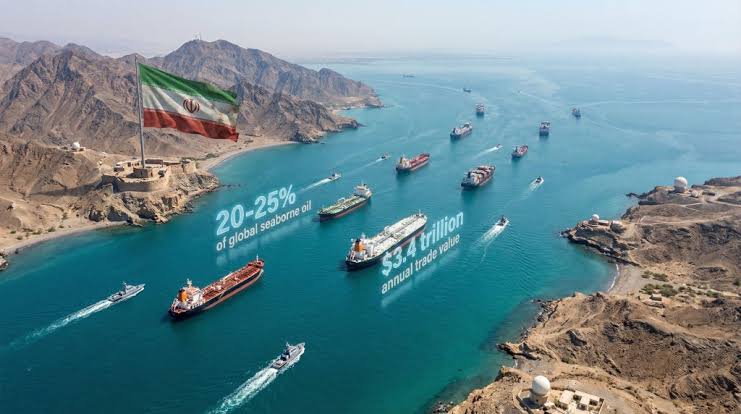
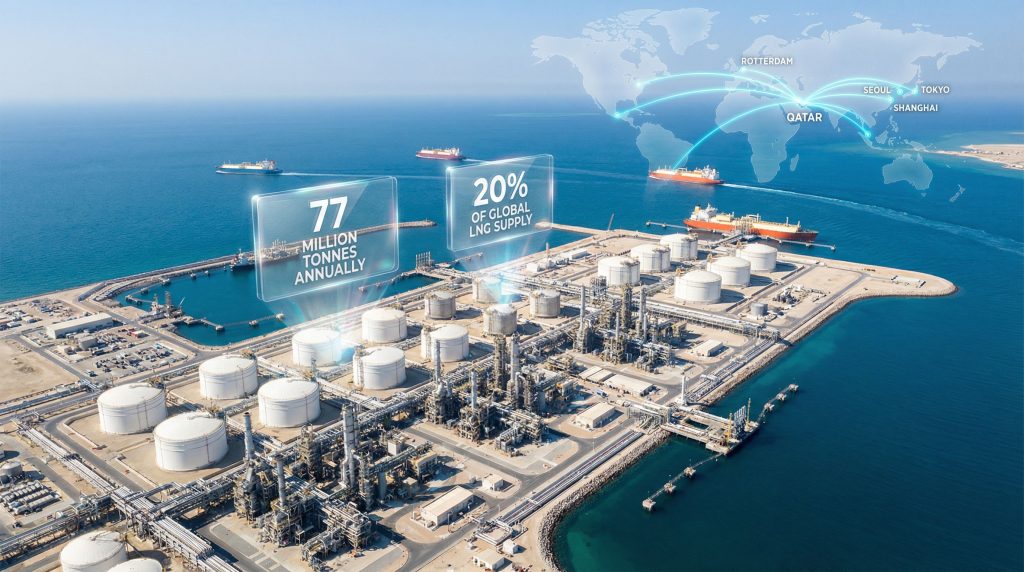
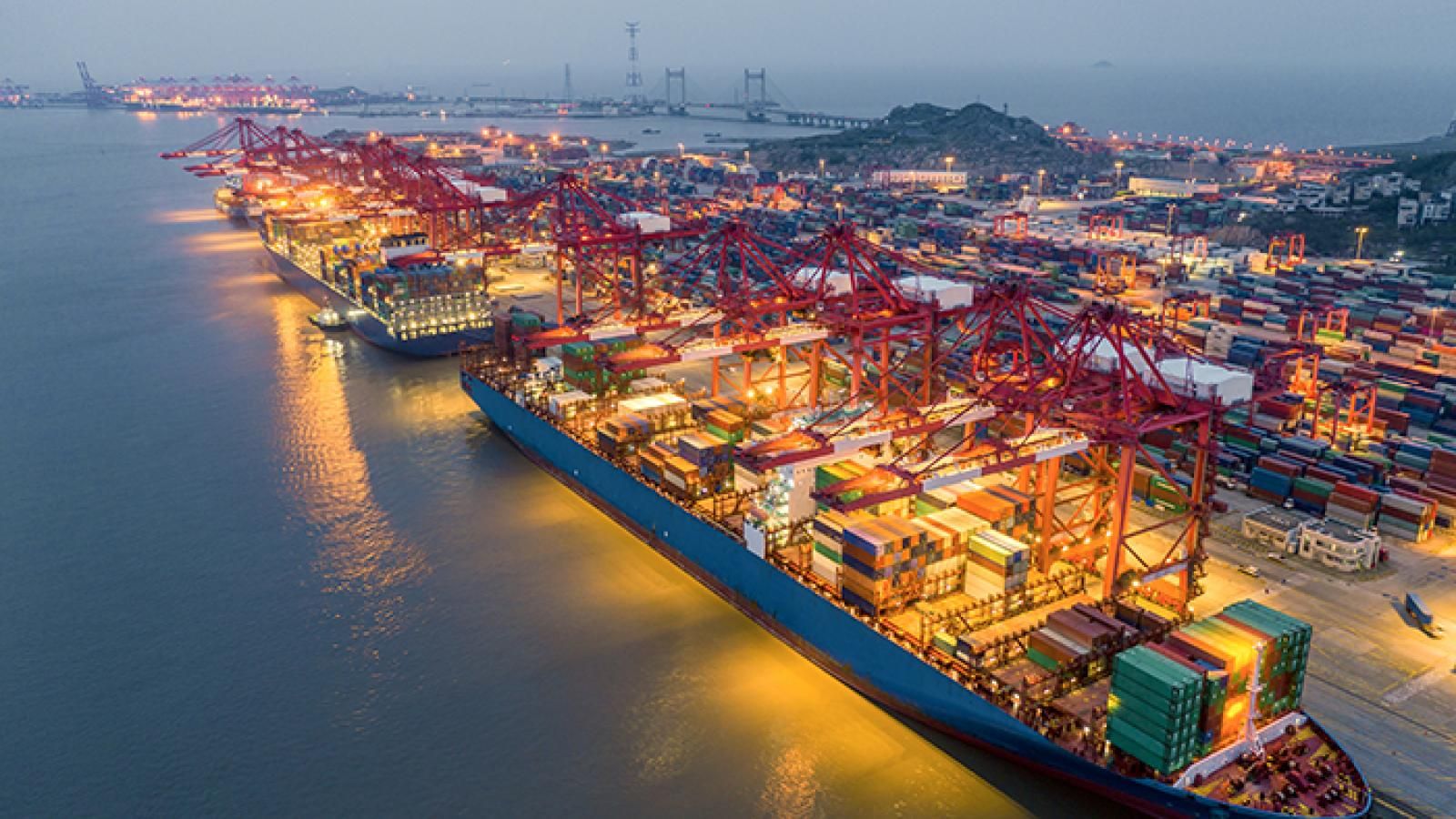
The Strait of Hormuz, a narrow channel of water between Iran and the Arabian Peninsula, is one of the world’s most critical maritime chokepoints. It handles roughly 20% of global seaborne oil trade, and a significant share of global liquefied natural gas (LNG) and fertilizer shipments. The disruption of traffic through the Strait in 2026 is not just a regional crisis; it is a global economic shock that threatens the very foundations of the “just-in-time” global supply chain system.