Refineries Under Fire: Can Ukraine Turn Russia’s Energy Strength into a Wartime Liability?
Ukraine's long-range campaign against Russian oil refineries has moved beyond symbolic retaliation. By late August 2026, repeated drone attacks had helped push Russian refinery runs to their lowest level in more than two decades, forced several major plants offline, widened domestic fuel deficits and contributed to sweeping restrictions on gasoline, diesel and jet-fuel exports. At the end of the month, Russian gasoline production was covering only about 70 percent of domestic demand. Moscow was importing fuel from Belarus and farther afield while prioritising essential users at home.
This is evidence of genuine pressure, but not yet proof that Russia's energy system is approaching collapse. Refining is only one layer of Russian oil power. When domestic plants process less crude, more oil can remain available for export. The state can protect military supply, draw on stocks, increase imports, redirect production and accelerate repairs. If strikes lift global oil and product prices, Russia may also recover part of the loss through higher earnings on the barrels it still sells.
The strategic question is therefore not how many refineries Ukraine can set on fire. It is whether Kyiv can convert recurring physical disruption into a durable reduction in product output, export revenue, fiscal capacity and wartime logistics - without creating a market shock that strengthens the Kremlin's crude revenues or alienates partners. The answer is conditional. Russia's refining network is a vulnerable concentration of fixed, complex and sanctions-constrained assets. It can become a wartime liability, but only through a persistent campaign tied to sanctions enforcement, export interdiction and disciplined target selection.
August made the vulnerability visible
Russia entered the summer driving, harvesting and military-logistics season with less refining margin than its status as an oil superpower might suggest. A new wave of Ukrainian strikes then exposed the gap between owning abundant crude and reliably turning it into the fuels required by a continental war economy.
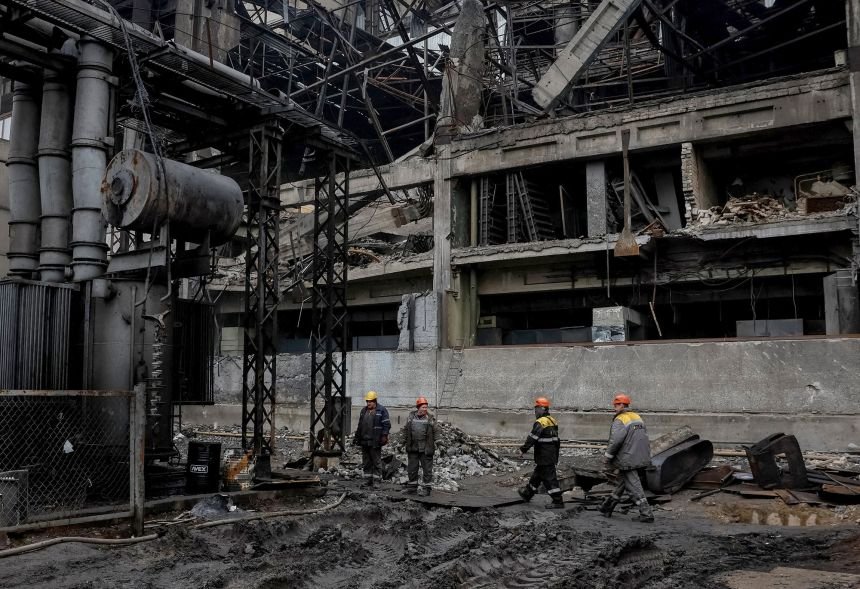
The targets were geographically dispersed and operationally significant. The Yaroslavl refinery, with annual capacity of roughly 15 million tonnes, was hit on 6 August. The Orsk refinery near Kazakhstan, capable of processing about 6 million tonnes a year, was shut completely after an attack damaged equipment that regional authorities said could take as long as six months to replace. Other outages affected the Perm, Nizhny Novgorod and Afipsky refineries, while Ukraine reported strikes against facilities including TANECO, the Taman oil terminal and Gazprom Neftekhim Salavat. The latter lies roughly 1,300 kilometres from Ukrainian-controlled territory, illustrating how the campaign's reach now extends deep into Russia's industrial interior.
No single attack produced a decisive result. The significance lay in accumulation. Kpler estimated Russian refinery runs at about 3.8 million barrels per day in July, their lowest level in more than 20 years. It assessed that attacked capacity and planned or unplanned downtime together amounted to roughly 4.3 million barrels per day, with 1.5 to 2 million barrels per day effectively offline. The International Energy Agency subsequently reduced its estimate for global third-quarter refinery runs by a further 370,000 barrels per day, in part because of attacks on Russian plants.
By late August, the effects were visible to Russian consumers. Gasoline production had fallen to about 80,000 tonnes per day against demand of approximately 115,000 tonnes. Average August output covered only around four-fifths of summer demand, and late-month production covered about 70 percent. Moscow extended its gasoline export ban to the end of January 2027, prolonged restrictions on diesel and other middle-distillate exports through September and banned jet-fuel exports through November. Russia was expected to receive around 270,000 tonnes of seaborne petroleum-product imports from Asia during August, alongside approximately 150,000 tonnes of gasoline from Belarus. These were not the actions of an energy system operating normally.
Refining is the soft underbelly of oil power
Russia's crude reserves, wellheads and pipelines are widely distributed. Its ability to transform crude into useful products is much more concentrated. Refineries are large, fixed installations containing a sequence of specialised units. Crude distillation begins the process, but secondary units - catalytic crackers, hydrocrackers, reformers and hydrotreaters - determine how much high-value gasoline, diesel and aviation fuel a plant can produce and whether those products meet required specifications.
That complexity creates an asymmetric opportunity. A drone does not need to destroy an entire refinery. Damage to a critical processing unit, control system, substation, compressor or transfer link can reduce throughput or product quality across a much larger installation. A visually dramatic storage-tank fire may be repaired quickly or have little effect on sustained output; a less visible strike on a unique conversion unit can create a prolonged bottleneck.
Russia can fabricate tanks, pipes and many conventional components. It has more difficulty replacing some imported compressors, catalysts, control electronics and specialised refining equipment under sanctions. Regional officials said the Orsk repair timeline could extend to six months specifically because imported equipment had been damaged. The constraint is not absolute - Russian engineers have repeatedly restored facilities faster than early outside estimates - but sanctions increase the time, cost and uncertainty of each repair cycle.
Refineries also present a finite target set. Unlike mobile launchers or dispersed formations, they cannot relocate. Their layouts, pipelines and essential units are observable. Air defences assigned to protect them are consequently unavailable elsewhere, and Russia cannot provide equal protection to every refinery, terminal, port, airfield, industrial plant and city across its vast territory. Even intercepted drones impose a cost through defensive missiles, disrupted operations and falling debris.
This is where energy strength can become liability. A large refining system gives Russia scale and redundancy, but it also creates a map of immovable assets that must be defended, repaired and supplied. The larger the territory, the more difficult comprehensive protection becomes.
The pressure chain: from damaged units to strategic effect
For refinery strikes to matter strategically, effects must travel through a chain rather than end at the target fence.
The first link is physical disruption. A unit stops, throughput falls or the product mix deteriorates. The second is a product deficit. Less gasoline, diesel or jet fuel reaches the domestic market, compelling the state to release stocks, ration supply or import fuel. The third is export compression. Barrels previously sold abroad are retained at home, reducing foreign-currency earnings and tax receipts. The fourth is fiscal and logistical strain. Repairs, air defence, subsidies, imports and longer transport routes absorb resources while military and civilian users compete for reliable delivery. The final link is political or military consequence: rising regional shortages, weaker revenue, disrupted mobility or diminished operational endurance.
Ukraine has now produced evidence across the first four links. Plants have stopped; production has fallen; imports and export bans have expanded; and regional authorities have prioritised emergency and official vehicles. The fifth link remains harder to demonstrate. Russian battlefield operations have not halted for lack of fuel, and the Kremlin can shield the armed forces longer than ordinary motorists or commercial users. A diesel shortage in a distant region may impose social and economic costs without immediately reducing the fuel available to a front-line formation.
The campaign should therefore be evaluated as coercive attrition, not as a single route to battlefield paralysis. Its value lies in forcing repeated choices. Moscow can preserve domestic supply by sacrificing exports. It can protect military allocations by allowing civilian shortages. It can accelerate repairs by paying more for scarce parts. It can defend refineries by moving air-defence assets away from other targets. Each adaptation is possible, but each consumes money, equipment, transport capacity or political tolerance.
What the numbers do - and do not - prove
Public discussion of the campaign often conflates four different measures: nameplate capacity at a facility that was hit, capacity undergoing maintenance or repair, actual throughput lost and capacity physically destroyed. They are not interchangeable.
If a 300,000-barrel-per-day refinery is struck, it does not follow that 300,000 barrels per day have disappeared from Russian output. One train may continue operating, inventories may sustain deliveries and another plant may run harder. Conversely, a relatively small piece of damaged equipment can suppress the yield of valuable products even if crude intake resumes. Satellite imagery showing a fire confirms an event; it does not by itself quantify the economic effect.
Ukrainian President Volodymyr Zelensky described the effort in June as imposing "long-range sanctions" and said almost 40 percent of Russia's primary refining capacity had been offline in May. That formulation captures Kyiv's strategic intent, but it should be treated as a Ukrainian assessment rather than a measure of permanently destroyed capability. Kpler's estimate that 1.5 to 2 million barrels per day was effectively offline during the summer offers a narrower indicator of operational loss, while its estimate of 4.3 million barrels per day combined attacked capacity with other downtime.
Better measures are sustained weekly refinery runs, yields of gasoline and middle distillates, days of unplanned outage, product-export volumes, regional wholesale prices, import requirements and the interval between a strike and restored output. These indicators distinguish a transient fire from persistent degradation. They also reveal whether restrikes are arriving faster than repairs can be completed.
The late-August gasoline deficit is especially important because it connects physical outages to market behaviour. Yet even that statistic should not be mistaken for national exhaustion. Demand is seasonal, stocks are not fully visible and Moscow can impose administrative controls. The data demonstrate tightening resilience, not imminent systemic failure.
Russia is adapting - and adaptation matters
Russia has spent more than two years learning how to absorb long-range attacks. It disperses inventories, erects protective structures, deploys electronic warfare and short-range air defence, reorganises repair teams and shifts crude runs among plants. Facilities that appear severely damaged sometimes return to partial service within weeks. Operators can bypass units, accept lower-quality output or prioritise the products most urgently required.
Trade is another buffer. Belarus supplied Russia with record volumes of gasoline and diesel in July 2026. Gasoline deliveries reached about 212,000 tonnes, while diesel shipments doubled from June to roughly 162,000 tonnes. Over the first seven months of the year, Belarusian gasoline shipments were about 25 times the previous year's level and diesel shipments were almost seven times higher. Russia also sourced gasoline from India, Kazakhstan and Morocco and expanded seaborne imports from Asia.
Russia also has scale. Dozens of refineries and a large pipeline and rail network provide redundancy that smaller producers lack. A campaign that would cripple a compact system may only reduce the efficiency of Russia's. The relevant contest is therefore between the tempo of Ukrainian strikes and the speed of Russian substitution, repair and defence. If attacks are episodic and geographically scattered, Russia can recover between waves. If critical units are repeatedly disabled before full repair, downtime compounds.
The crude escape valve
The most important limitation is the distinction between refining and crude production. When a refinery processes less oil, the crude does not necessarily disappear. Subject to pipeline, port, shipping and sanctions constraints, Russia can export part of the surplus. A campaign that sharply reduces product exports may therefore increase crude availability abroad.
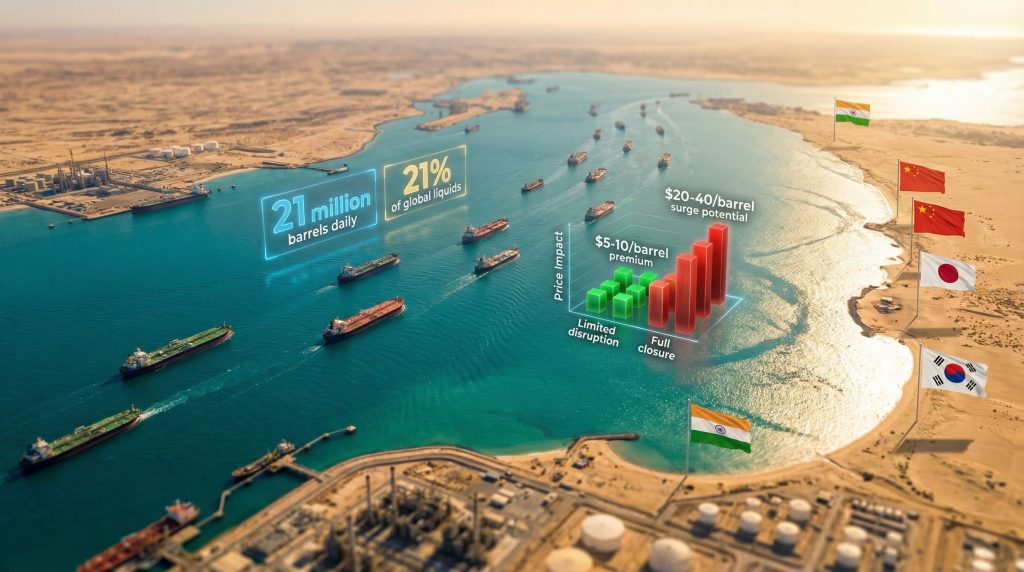
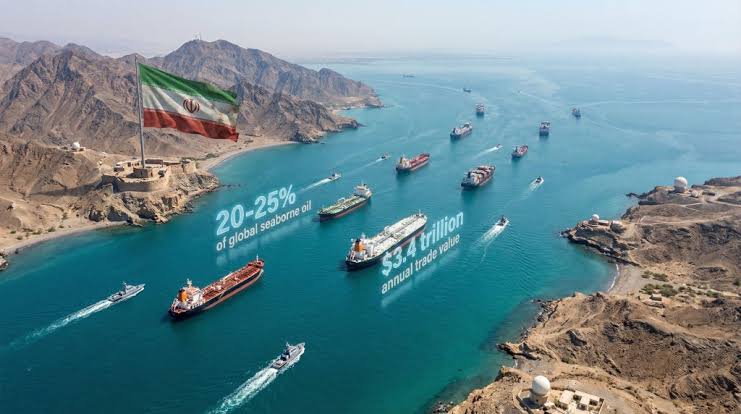
This creates a revenue paradox. Refined products normally capture additional value and product-export restrictions can reduce tax receipts. But if disrupted supply lifts international crude or fuel prices, the Kremlin may earn more on each remaining export barrel. The risk is elevated in 2026 because the global refining system is already tight. European low-sulphur gasoil margins reached extraordinary levels during the summer, and the IEA reported that global refinery throughput in July was almost 5 million barrels per day below the previous year. Conflict involving Iran and disruption around the Strait of Hormuz further constrained supply and created a price windfall for exporters.
KSE Institute estimated that the Iran-war price shock helped lift Russia's monthly oil-export earnings from about $10.4 billion in January-February to $20.5 billion in March-May. That does not negate the refinery campaign, but it shows why physical damage cannot be separated from market context. A strike that removes Russian diesel from an undersupplied market can hurt Russia's product sales while increasing the value of Russian crude exports.
Nor is every export barrel equally vulnerable. Sanctions, price caps and the shadow fleet raise costs but have not eliminated trade. As long as Russia can redirect crude through tolerant intermediaries and opaque shipping networks, refinery outages alone will not shut the principal revenue channel.
The campaign works best when the crude escape valve is narrowed at the same time. Stronger enforcement against sanctioned tankers, service providers and transshipment networks; pressure on buyers and refiners that facilitate evasion; and credible price-cap enforcement can prevent displaced crude from fully compensating for lost products. Without this external layer, Ukraine may change the form of Russian exports more than their total value.
Military effect is not the same as economic effect
Diesel is central to Russian road and rail logistics, agriculture, construction and military mobility. Jet fuel sustains air operations; gasoline supports civilian transport and parts of the security apparatus. That makes refining a legitimate component of the war economy. It does not mean every domestic shortage translates directly into an operational shortage at the front.
The armed forces receive priority access and can maintain dedicated stocks. Russia's defence logistics also relies heavily on rail, while battlefield consumption represents only part of national product demand. The first visible consequences of tightening supply are therefore likely to be higher prices, regional rationing, delayed civilian deliveries and reduced exports rather than immobilised combat units.
These civilian effects are strategically relevant but politically ambiguous. Fuel shortages challenge the Kremlin's promise that the war can remain distant from everyday Russian life. They can expose the unequal distribution of sacrifice between Moscow and the regions and compel unpopular interventions. Yet authoritarian systems can suppress information, blame Ukraine and transfer costs to households and private firms. Civilian pain does not automatically produce policy change; it may also harden public attitudes or justify escalation.
Ukraine's strongest case is not that refinery strikes will suddenly empty Russian military fuel depots. It is that sustained disruption reduces the margin available to support all priorities simultaneously. A system with abundant surplus can wage war, export for revenue and reassure consumers. A system operating near domestic demand must choose among them. Strategic pressure grows as that choice becomes recurring, nationwide and expensive.
Turning raids into strategy
The next phase should be judged by accumulated output loss rather than the number of reported strikes. Five principles follow.
First, target selection must privilege bottlenecks. High-conversion units, unique components, power supply and essential transfer infrastructure can impose longer outages than easily replaced tanks. The aim is not the largest flame but the largest sustained loss of saleable product per weapon employed. Intelligence should distinguish redundant components from single points of failure and account for the likely availability of substitutes.
Second, persistence matters more than novelty. Russia's repair system becomes a vulnerability only when damaged facilities are restruck or new bottlenecks fail before earlier ones recover. A campaign paced around repair cycles can force operators to keep plants below optimal throughput, hold larger inventories of spare parts and accept inefficient configurations. This is industrial suppression rather than one-off destruction.
Third, physical action should be integrated with economic pressure. Sanctions on specialised refining equipment, catalysts, control systems and the intermediaries that procure them can lengthen outages. Enforcement against product traders and shadow-fleet networks can reduce the ability to convert surplus crude into compensating revenue. The battlefield and sanctions campaign should reinforce the same bottlenecks.
Fourth, effects must be measured honestly. Ukraine and its partners should track lost throughput, product yields, export volumes, repair duration, imports, regional supply gaps and fiscal consequences. Inflated claims based on nameplate capacity may deliver a temporary communications gain but obscure what is working. Credible assessment also allows targeting to adapt as Russia changes defences and trade routes.
Fifth, escalation and market spillovers require discipline. The global economy cannot easily absorb simultaneous disruptions in Russia, the Middle East and other refining centres. Kyiv's partners will become less supportive if attacks are perceived as driving a broad energy shock. Focusing on facilities most connected to Russia's war effort and export earnings, while avoiding indiscriminate pressure on civilian supply, strengthens both strategic logic and coalition legitimacy.
This does not eliminate risk. Russian refineries are dual-use installations, and strikes can cause casualties, pollution and regional shortages. Russia can retaliate against Ukrainian power and fuel infrastructure, as it has throughout the war. The campaign should therefore be nested within a wider resilience plan for Ukraine's own energy system and a clear diplomatic explanation of objectives.