The Natuna Stand: Indonesia’s High-Stakes Choice in the South China Sea
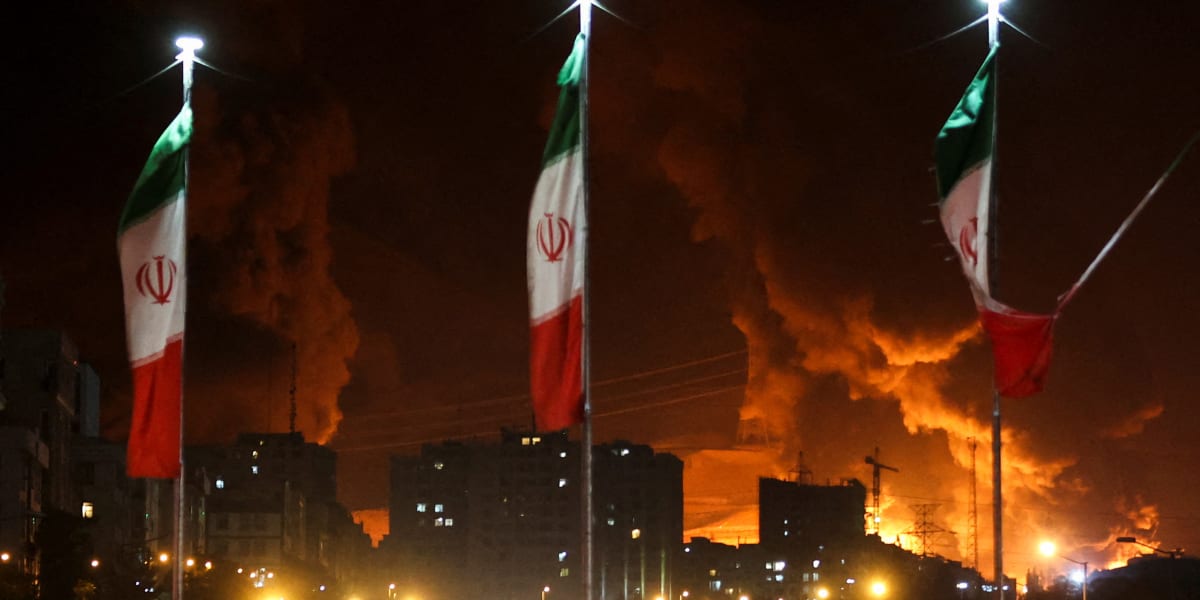
While NATO confronts an escalating Iran-Israel war, Beijing is quietly tightening the screws in the South China Sea, with March 2026 bringing a record wave of Chinese maritime militia and coast-guard confrontations off Indonesia’s Natuna Islands. Jakarta now faces a defining strategic choice: whether to double down on its traditional non-aligned posture or quietly tilt toward a more explicit security partnership with Western powers, including the United States.
The Stakes in the North Natuna Sea
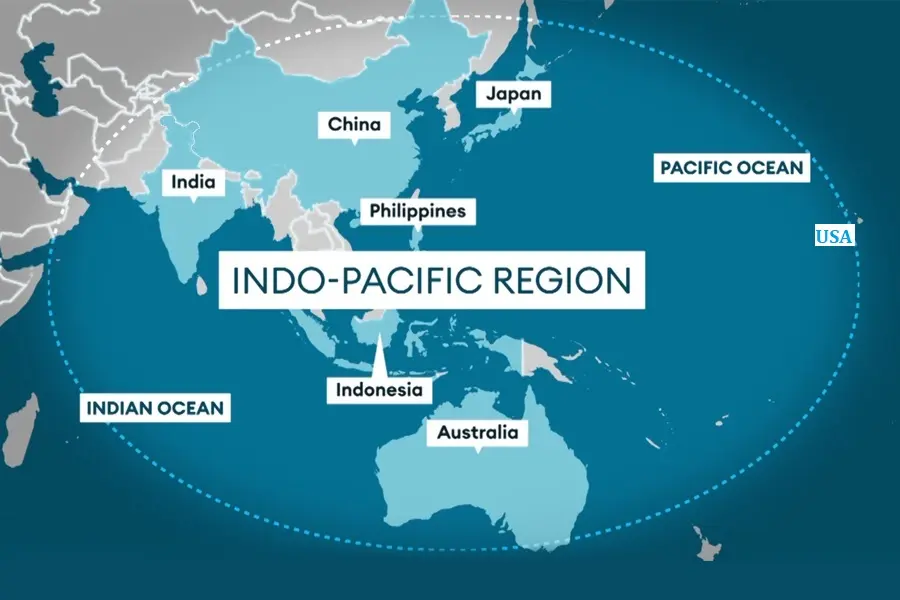
The North Natuna Sea sits on the outer edge of Indonesia’s 200-nautical-mile exclusive economic zone, overlapping with Beijing’s expansive “nine-dash line” claims. Chinese vessels have repeatedly intruded into waters Indonesia considers its sovereign space, citing the 2016 arbitral ruling that Beijing has consistently rejected. Jakarta frames the Natuna maritime space as vital for fisheries, hydrocarbon resources, and regional stability. In 2025 and early 2026, satellite and AIS data show a surge in Chinese coast-guard and militia boats shadowing Indonesian patrol vessels, especially around the 191 nautical-mile demarcation line with Malaysia, where Indonesia insists on full EEZ control.
Indonesia’s economic stakes are high. The Natuna basin could hold several trillion cubic feet of natural gas, and the waters sustain one of the world’s richest tuna fisheries. Losing effective control, even incrementally, would not only deprive Indonesia of revenue but also weaken its claim to regional leadership in the Indo-Pacific.
China’s “Grey-Zone” Playbook
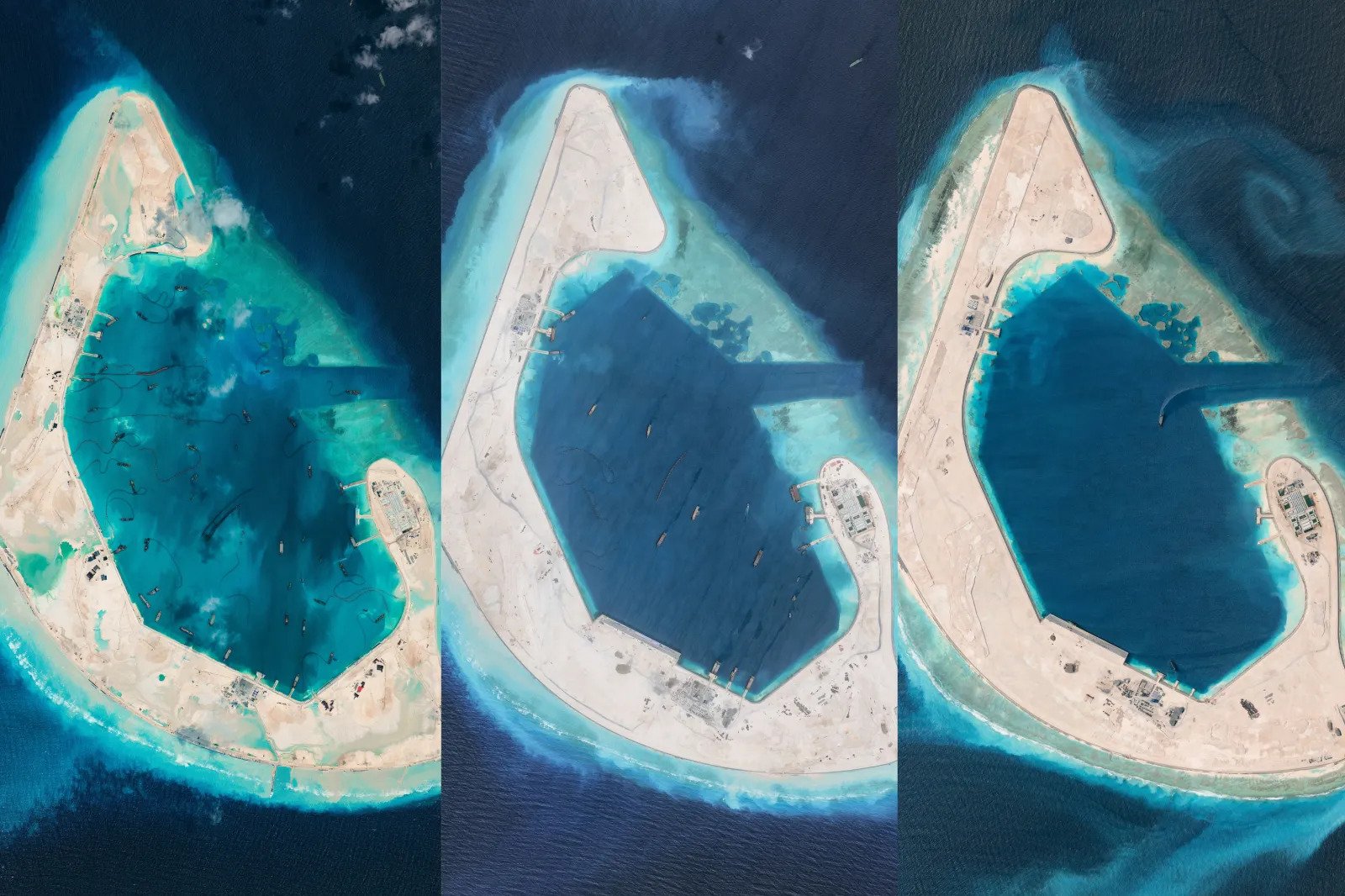
Beijing’s strategy in the North Natuna Sea is a textbook case of grey-zone warfare: using a mix of coast-guard cutters, white-hulled fisheries enforcement vessels, and organized maritime militia boats to challenge Jakarta without crossing into open armed conflict. In March 2026, Indonesian authorities recorded multiple episodes of Chinese vessels operating in what it describes as its EEZ, sometimes within 12 nautical miles of the Natuna Islands, accompanied by aggressive radio communications and “show of force” maneuvers such as circling Indonesian patrol boats.
China’s legal narrative leans on its expansive historical claims, often invoking the 2016 arbitral ruling as a contested political outcome rather than a binding legal precedent. Jakarta, in turn, emphasizes the 1982 UN Convention on the Law of the Sea and bilateral arrangements with neighboring states, including ongoing talks with Beijing to finalize maritime delimitation. The gap between these two legal frameworks leaves the North Natuna Sea in a diplomatic gray zone where physical presence and deterrence matter more than paper maps.
Jakarta’s Strategic Crossroads
For decades, Indonesia has anchored its foreign policy in “non-aligned” principles, emphasizing regional multilateralism through ASEAN and avoiding formal security blocs. Jakarta has consciously steered clear of appearing as a U.S. proxy against Beijing, even as it has quietly welcomed greater U.S. and allied naval presence in the region. The 2025-26 surge in Chinese maritime pressure is now testing this balance.
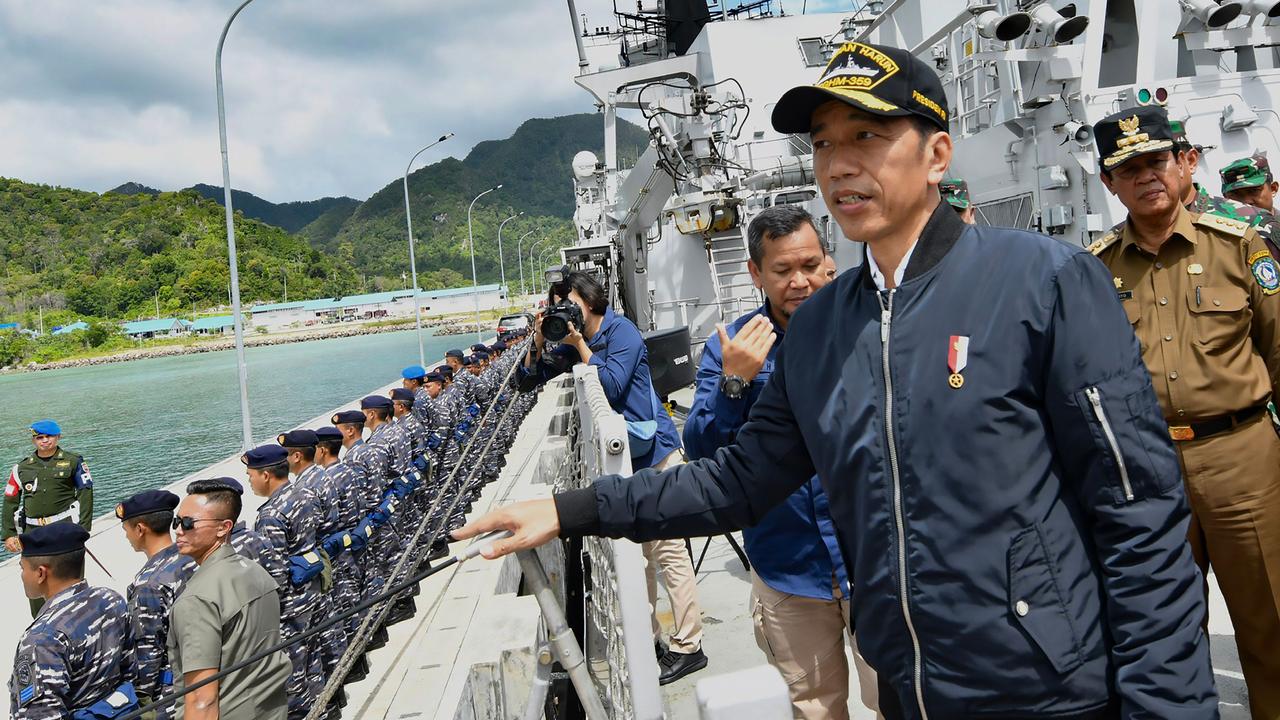
Indonesia’s armed forces have mounted more visible and assertive responses to Chinese intrusions. The Indonesian Navy and air force have conducted joint tactical exercises near the Natunas, improved domain awareness with radar and aerial surveillance, and upgraded infrastructure on the islands themselves. Jakarta has also signaled a willingness to strengthen defense cooperation with the United States, Australia, and some European partners, including intelligence sharing and logistical access, without formal alliance language.
The Risk of Escalation and Miscalculation
Despite the buildup, both sides have incentives to avoid outright conflict. A clash between Indonesian and Chinese forces in the North Natuna Sea would instantly destabilize trade and energy flows across the South China Sea, drawing in global markets and raising the risk of a broader regional crisis. Indonesian leaders, especially, are wary of being drawn into a U.S.-China confrontation while they still rely heavily on Beijing as a trading partner and investor in domestic projects.
China’s calculus is similarly complex. Beijing needs to maintain its reputation as a “responsible” power and does not wish to isolate Jakarta in ASEAN. At the same time, Xi Jinping’s domestic base for stability depends on visible successes in asserting China’s maritime claims. The North Natuna incursions thus represent a calibrated gamble: testing Indonesia’s resolve without provoking a point-of-no-return confrontation.
Indonesia’s Choice: Non-Alignment or Quiet Realignment
The deeper question is whether Indonesia’s “non-aligned” label still fits the realities of 2026. Jakarta may find that genuine strategic autonomy in the Indo-Pacific now depends on closer alignment with Western-minded democracies and defense partners, at least in the maritime domain. Formalizing access arrangements, sharing more intelligence data, and allowing greater joint training around the Natunas could signal a subtle but real shift without tearing up the non-aligned mantle.
Indonesia’s outcome in the North Natuna Sea will reverberate beyond its own shores. If Jakarta stands firm and Beijing is deterred from sustained encroachments, it would strengthen the rules based order in the South China Sea and reinforce ASEAN’s centrality in regional security. If Jakarta, however, bends too far to Beijing’s economic weight, it risks eroding its standing as a responsible regional power and encouraging further Chinese adventurism.
The Natuna confrontation thus represents more than a local sovereignty dispute; it is a test of Indonesia’s ability to navigate the great-power contest in the Indo-Pacific without either surrendering agency to Beijing or impulsively leaping into a U.S.-led security bloc. Indonesia’s choice in 2026 may not come in the form of a formal alliance treaty but in the quiet, cumulative decisions to allow more U.S. presence, deny Chinese claims, and strengthen domestic deterrence. The Natuna Stand is not yet a hot front of war, but it is already shaping the next decade of Indo Pacific security.
Key Issues: The Failure of "Diplomatic Ambiguity" as Chinese Vessels Ignore Indonesia’s EEZ Claims
Indonesia has long relied on a strategy of “diplomatic ambiguity,” balancing strong language about sovereignty with relatively restrained actions in the South China Sea, hoping to avoid direct confrontation with Beijing. In 2025 and especially March 2026, that approach has begun to fray, as Chinese coast-guard, maritime militia, and fishing vessels repeatedly operate inside Indonesia’s self-declared exclusive economic zone around the Natuna Islands, signaling a clear decision by Beijing not to accept Jakarta’s maritime boundaries.
China’s Rejection of Indonesia’s EEZ Narrative
Jakarta treats the waters around the Natunas as unambiguously within its 200-nautical-mile EEZ, rooted in the 1982 UN Convention on the Law of the Sea and reinforced by its 1996-2000 bilateral maritime-boundary agreements with Malaysia. Chinese officials and official statements, however, continue to characterize the entire area as falling under Beijing’s expansive “nine-dash line” or as “China’s historical waters,” effectively erasing Indonesia’s EEZ in their legal-political calculus.
Satellite and AIS tracking in early 2026 recorded multiple incidents where Chinese vessels operated within 12 nautical miles of the Natuna Islands, well inside Indonesia’s claimed EEZ, and at times shadowed Indonesian patrol boats without identifying themselves clearly. Indonesian authorities reported not only physical presence but also aggressive radio behavior, including verbal challenges and attempts to direct Indonesian ships away from the area.
The Limits of Reactive Diplomacy
Indonesia has responded with démarches, summoning the Chinese ambassador, and public statements reaffirming its EEZ claims, but these measures have not deterred Beijing. Jakarta’s traditional playbook assumes that Beijing will moderate its behavior once the risk of escalation becomes visible. Instead, China has treated Indonesian diplomatic protests as low-cost noise, consistent with its broader South China Sea strategy of de-escalating at the political level while continuing incremental pressure at sea.
The failure of diplomatic ambiguity is now visible in Indonesia’s shifting stance. Jakarta has begun to pair its verbal protests with more visible reactions: more frequent Indonesian Navy and air force patrols, improved surveillance assets, and the strengthening of facilities on the Natuna Islands. Indonesian leaders have also started signaling openness to more structured security cooperation with Western partners, particularly the United States, Australia, and France, in ways that would have been politically sensitive even a few years ago.
The Erosion of Legal Norms
By refusing to acknowledge the practical meaning of Indonesia’s EEZ, Chinese vessels are not only challenging Jakarta’s sovereignty but also weakening the broader rules-based maritime order. The UN Convention on the Law of the Sea is meant to provide predictable, mutually recognized rights; when a major state treats foreign EEZs as effectively open to its vessels because of “historical” or “strategic” arguments, it undermines the credibility of the entire system.
Indonesia’s experience in the North Natuna Sea mirrors what other Southeast Asian states have gone through: well-drafted legal arguments and diplomatic protests are no longer sufficient to deter gray-zone incursions. The result is a creeping normalization of Beijing’s behavior, with Jakarta increasingly forced to choose between passive acceptance and a more assertive posture backed by tangible deterrence.
The Psychological and Strategic Impact on Jakarta
The failure of diplomatic ambiguity has begun to shift Indonesia’s strategic thinking. Jakarta’s elite, including the foreign policy and defense establishments, are increasingly aware that continued ambiguity can be read by Beijing as a green light rather than a pause. The 2025-26 wave of Chinese intrusions has therefore helped narrow the political space for purely rhetorical responses, creating momentum for incremental adjustments in defense posture and, quietly, regional partnerships.
The failure of diplomatic ambiguity has begun to shift Indonesia’s strategic thinking. Jakarta’s elite, including the foreign policy and defense establishments, are increasingly aware that continued ambiguity can be read by Beijing as a green light rather than a pause. The 2025-26 wave of Chinese intrusions has therefore helped narrow the political space for purely rhetorical responses, creating momentum for incremental adjustments in defense posture and, quietly, regional partnerships.
The Path Forward
The Natuna confrontation is pushing Jakarta toward a more explicit maritime-security narrative. This could include: more publicized joint exercises with Western partners, clearer rules of engagement for the Indonesian Navy in the EEZ, and efforts to codify an understanding within ASEAN that grey-zone incursions around the Natunas are not merely bilateral but regional concerns.
In practical terms, diplomatic ambiguity as a standalone strategy is no longer serving Indonesia’s interests. The 2026 pattern of Chinese vessel behavior has shown that Beijing is willing to ignore Jakarta’s EEZ claims until Indonesia signals it is prepared to defend them with more than words. The fundamental shift will not be a sudden alignment with a bloc, but a steady hardening of Indonesia’s maritime posture, paired with smarter legal and diplomatic moves that make it harder for Beijing to operate inside the Natuna EEZ without paying higher costs.
The Modernization Push: President Prabowo’s Rapid Acquisition of French and Australian Naval Tech to Counter “Salami-Slicing” Tactics
Under President Prabowo Subianto, Indonesia has launched an accelerated naval modernization campaign aimed squarely at countering Beijing’s “salami-slicing” tactics in the South China Sea and the North Natuna Sea. The centerpiece of this push is a string of high-value procurements from France and Australia, including advanced frigates, submarines, and maritime surveillance systems, all designed to give Jakarta more persistent, layered presence in contested waters.
French Naval Cooperation: Frigates, Submarines, and Air Power
Prabowo has repeatedly singled out France as Indonesia’s “main partner” in weapons-system modernization. During his tenure as defense minister and into the presidency, Jakarta has approved:
The purchase of multiple Scorpène-class submarines from Naval Group, including the “Evolved” model equipped with full lithium-ion battery propulsion, enabling longer submerged endurance and quieter operations around the Natunas and along key chokepoints.
The acquisition of Rafale multirole fighter jets to bolster maritime-air surveillance and standoff-strike capabilities, giving the Indonesian Air Force the ability to respond more rapidly when Chinese or other intrusive vessels appear in Indonesian-claimed waters.
These deals are not just about hardware; they come with industrial-base and technology-transfer clauses, including construction and integration at state-owned shipyard PT PAL and joint training frameworks. This strengthens Indonesia’s long-term capacity to sustain and upgrade its own fleet, rather than relying on short-term foreign-manned deployments.
Australian Maritime and Patrol Enhancements
In parallel, Indonesia has deepened its defense and maritime-security ties with Australia, especially around the Natunas and the wider eastern Indo-Pacific corridor. Key elements of this cooperation include:
Coordinated maritime patrols and information-sharing arrangements that allow both countries to track Chinese coast-guard and militia vessels using shared radar, satellite, and AIS feeds.
Training and exercises focused on gray-zone deterrence, including the use of non-lethal crowd-control systems, boarding procedures, and “presence-intensive” operations tailored to counter Beijing’s incremental pressure while avoiding war-sparking clashes.
Australia’s location makes it a natural hub for intelligence fusion, maintenance, and logistics support for Indonesian naval and air assets operating in the Timor and Natuna areas, effectively extending the range and endurance of Indonesia’s sensors and platforms.
Targeting China’s “Salami-Slicing”
Beijing’s “salami-slicing” strategy relies on small, incremental moves—repeated intrusions, short-lived but aggressive maneuvers, and the slow normalization of its presence—that avoid triggering a full-scale military response. Prabowo’s modernization push aims to reverse this dynamic by:
Increasing the frequency and visibility of Indonesian naval and air patrols in the EEZ, making it harder for Chinese vessels to operate unchallenged.
Improving detection and reaction time, so that Jakarta can respond within hours, not days, to incursions, backing its diplomatic protests with tangible presence.
Strengthening Indonesia’s credible deterrence through a mix of submarines, long-range maritime patrol aircraft, and shore-based anti-ship systems, all backed by interoperability with French and Australian partners.
In effect, Jakarta is shifting from a posture based mainly on legal-diplomatic signaling toward one grounded in persistent, modern, and coalition-enabled deterrence.