Advance Deterrence: France’s Nuclear Gamble for Europe
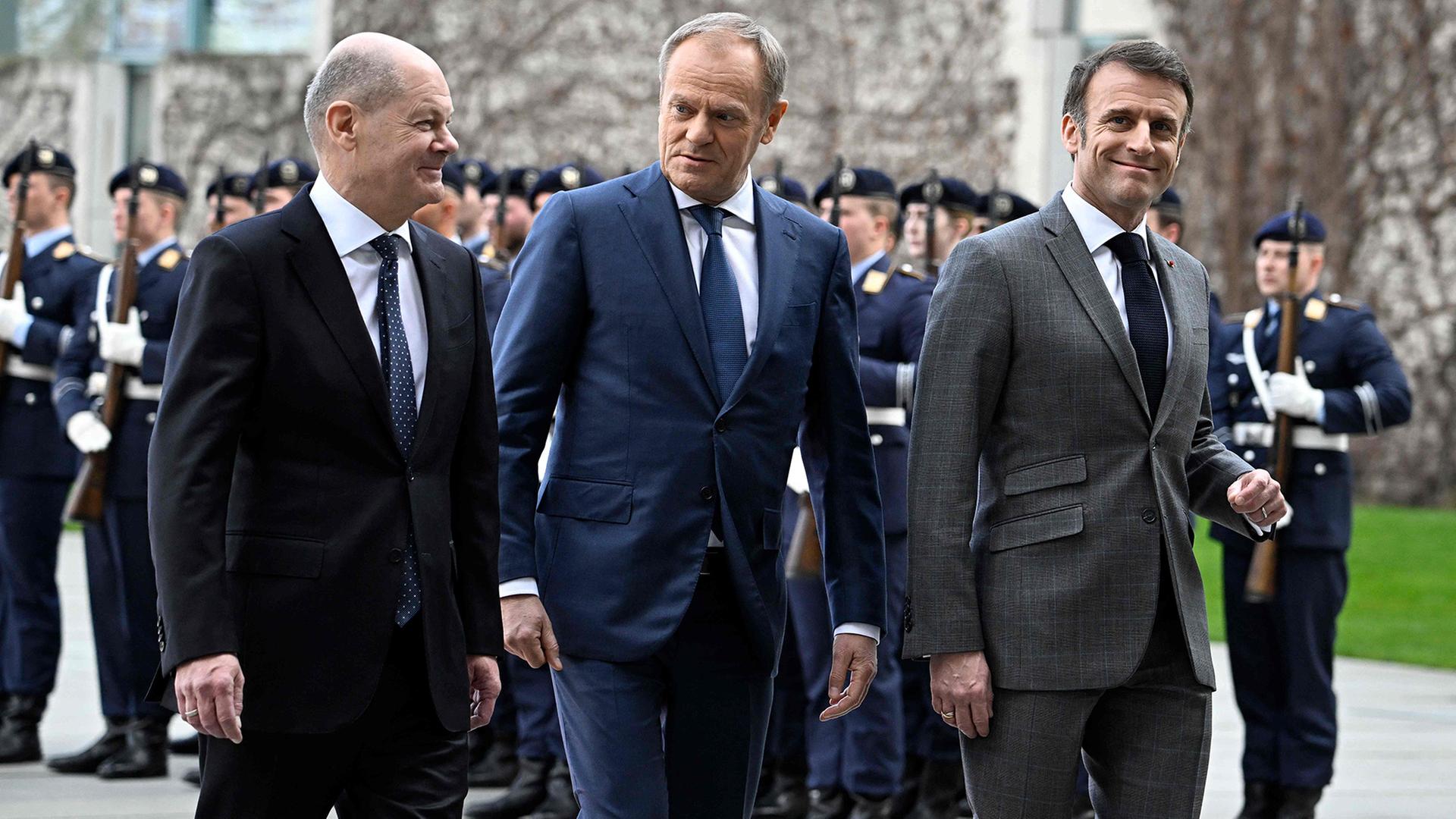
President Emmanuel Macron’s March 2nd speech has pushed the idea of “European strategic autonomy” into a new, more dangerous domain. By declaring that France’s nuclear arsenal must be used to protect “the whole of Europe” and no longer rely on the US nuclear umbrella, Macron is effectively proposing that Paris assume the role of Europe’s ultimate nuclear guarantor, even if Washington objects. This is less a technical shift than a political earthquake: it redefines the balance of power inside NATO and raises the risk of a transatlantic rift at the very moment the alliance is confronting Iran, Russia, and China at once.
Macron’s “Europe as Its Own Shield” Doctrine
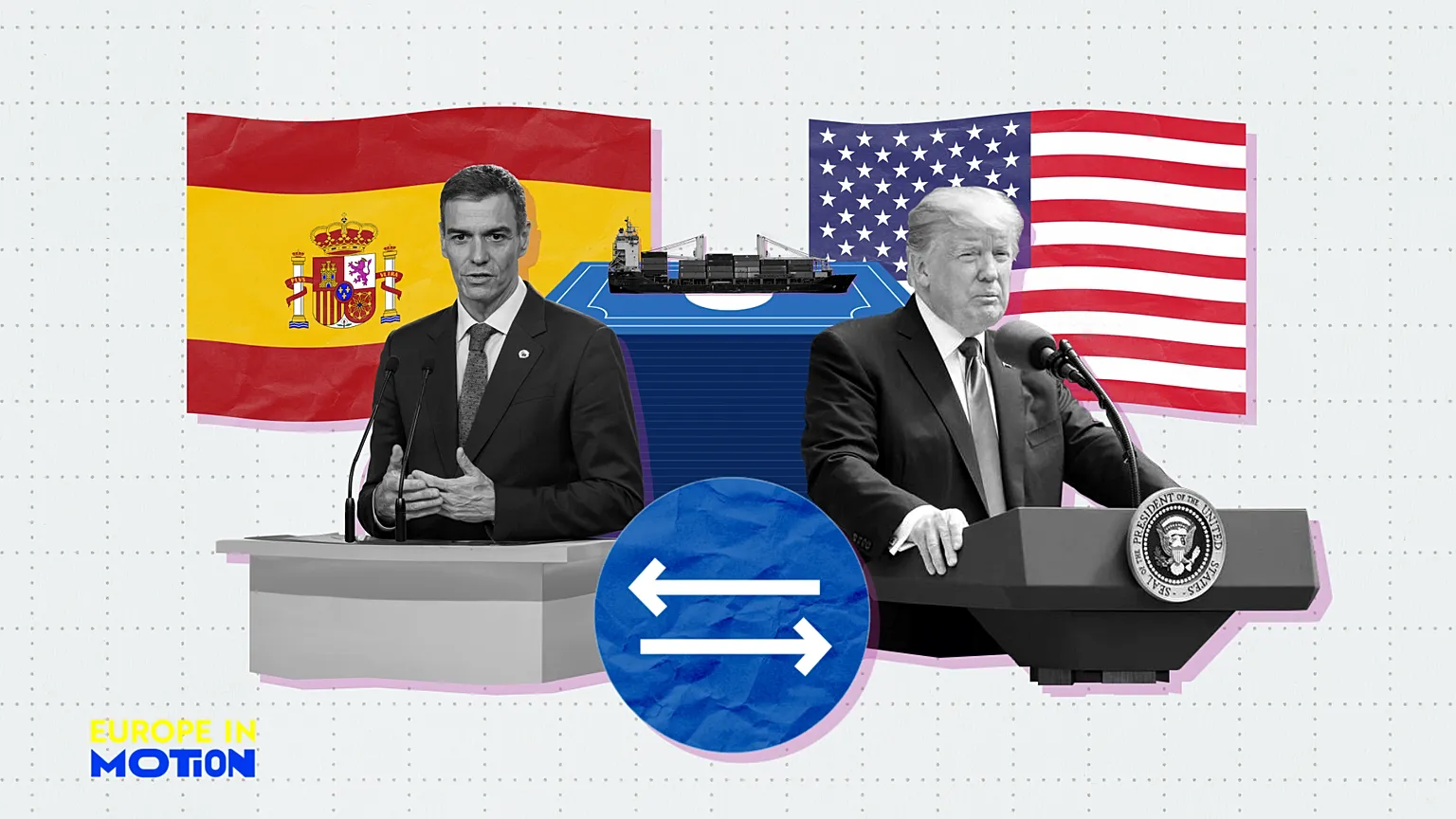
Macron’s core argument is that Europe can no longer assume Washington will automatically risk its own cities to defend the continent. The US habit of tailoring its nuclear posture to American interests, and its willingness to weaponize trade and security access against allies like Spain, has convinced Paris that Europe must have its own independent nuclear deterrent.
In his March 2nd address, Macron framed the move as a defensive upgrade, not a confrontation with the United States. He stressed that France would remain within NATO structures and that the change would be strictly for deterrence: preventing nuclear blackmail by Russia, conventional escalation by Beijing, and strategic coercion by any power that seeks to exploit Europe’s dependence on the US. The true novelty is that France would now treat all of Europe’s territory— not just French soil and immediate neighbors—as falling under the same nuclear “red line” that Paris has traditionally reserved for itself.
From National Umbrella to Regional Deterrence
France currently operates a triad of nuclear forces: submarine-launched ballistic missiles (M-51 SLBMs), air-launched missiles carried by Rafale-D fighters, and a small stockpile of nuclear gravity bombs. The French doctrine has long been vague about precisely where and how it would retaliate if attacked, emphasizing that any nuclear strike on French interests “would be met with the full force” of the arsenal.
Macron’s proposal quietly broadens that “interests” clause to include the security of key European states and regions. In practice, this means:Extending the perceived consequences of attacking any NATO member on the European mainland;
Signaling to Moscow and Beijing that an escalation against, say, Poland, Romania, or the Baltics could trigger a French nuclear response, even if Washington hesitates;
Ncreasing the costs for any adversary that seeks to use conventional or hybrid warfare to divide Europe while assuming US nuclear hesitancy.
The move does not automatically change targeting plans, but it does reframe the political message: France is no longer a “small” nuclear state limiting its own exposure; it is positioning itself as Europe’s nuclear backbone, even if it continues to call the US alliance “irreplaceable.”
The Internal and Transatlantic Pushback
The speech has already triggered backlash in two directions: from within Europe and from the United States.
On the European side, Germany and Central-European states worry that Macron’s language may unilaterally raise the nuclear threshold without consensus. Some fear that an explicit “France protects Europe” posture could encourage Moscow to test the limits, betting that Paris will not risk a full-scale nuclear exchange over, say, a Baltic or Black-Sea contingency. Others, especially in the Baltics and Poland, welcome the idea but insist that any such doctrine must be co-developed through NATO, not unilaterally declared by Paris.
In Washington, officials see the move as a veiled challenge to American primacy in nuclear deterrence. US strategic culture is deeply resistant to the idea that a European power, however close, should assume de facto responsibility for the continent’s nuclear security. The US has long relied on a “nuclear primacy” model in Europe, where its own arsenal and extended-deterrence guarantees shape the behavior of adversaries. The concern is that a French-centric umbrella could create parallel, competing red lines, muddying the clarity of deterrence at the worst possible moment.
The Risks of a “Multi-Umbrella” Europe
The real danger of Macron’s gamble is that it could create a “multi-umbrella” Europe, where different nuclear powers imply different levels of resolve. In this scenario:
The United States still guarantees some states directly under existing nuclear-sharing arrangements.
France privately or semi-publicly signals that it will cover others, especially in the eastern and central regions.
Russia and China begin to probe the seams between these overlapping guarantees, searching for gaps where they believe one nuclear power may not support the other.
Such a configuration could make crisis stability more fragile, not less. If Moscow misjudges the interaction between American and French nuclear will, it could miscalculate and escalate toward a nuclear threshold that neither Paris nor Washington ever intended to cross.
The Signal to Moscow and Beijing
For Moscow, the Macron doctrine is a message that the European flank of NATO is becoming more autonomous in its nuclear posture, which could blunt some of Russia’s coercive options. If Russia believes that a conventional strike in the Baltics or the Black Sea carries a realistic risk of French nuclear escalation, it may think twice before initiating such a campaign.
For Beijing, the message is subtler but still clear: Europe, led by France, is willing to separate its nuclear posture from the United States, even as it seeks to avoid a full breach with Washington. This gives Beijing more space to exploit transatlantic divisions, especially if it believes that European and American nuclear wills can diverge.
The Long-Term Strategic Bet
Macron’s nuclear gamble is ultimately a long-term bet on Europe’s sovereignty. He assumes that Europe must be prepared to defend itself in a world where US reliability is uncertain and where Washington is willing to use economic and military leverage against its own allies. By making France the explicit nuclear guarantor of Europe, he is trying to ensure that:NATO retains its core deterrent, even if the US steps back in some contingencies;
Europe gains more weight in global strategic discussions, not as a junior partner but as a power with its own independent nuclear posture;
European capitals stop treating nuclear deterrence as an American monopoly and start thinking about how their own security would hold up in the absence of Washington.
The success of this move will depend on several factors:Whether Paris can coordinate with Berlin, Washington, and other NATO members to avoid dangerous ambiguities;
whether Moscow and Beijing interpret the French doctrine as a credible deterrent rather than a bluff;
And whether the rest of Europe is willing to accept the immense responsibility that comes with becoming a nuclear-shielded continent, even if the bomb is in French hands, not theirs.
In the end, Macron’s March 2nd speech is not just about France; it is about trying to redefine Europe’s place in the nuclear order. The gamble is that a more autonomous French nuclear posture can strengthen Europe’s security without fracturing the alliance. The risk is that it could do the opposite—turning Europe into a contested nuclear frontier between an independent-minded France and a reluctant Washington.
Key Issues: The Concept of "Advance Deterrence"—Moving beyond Traditional NATO Structures to Create a French-Led Security Core
The heart of Macron’s March 2nd speech is a new doctrine he is quietly institutionalizing: “Advance Deterrence.” Under this concept, Europe’s security will no longer rely on a single, US-centered nuclear-deterrence model, but on a French-led security core that operates alongside NATO rather than simply inside it. The goal is to move Europe from a position of nuclear dependence on Washington toward a de facto partition of deterrence responsibilities, with France assuming the role of Europe’s autonomous nuclear backbone.
Redefining Deterrence Inside NATO
Traditional NATO deterrence has long rested on the idea that the United States will bring its nuclear arsenal to the defense of Europe under the nuclear-sharing framework. Conventional conflicts in Europe are supposed to be “coupled” to US nuclear guarantees, making escalation too risky for Moscow or Beijing.
Advance Deterrence shifts that logic by implying that France, too, will treat attacks on the broader European continent as a direct threat to its own security. This does not formally replace the US umbrella, but it introduces a second layer of nuclear signaling that complicates any adversary’s calculus. Under Advance Deterrence, an attack on a NATO member—especially in the Baltics, the Black Sea, or Eastern Europe—could be interpreted in Paris as a challenge to the integrity of Europe as a whole, not just to a distant ally.
The French-Led Security Core
The proposal effectively creates a French-led security core within Europe, even if it is not framed that way in official language. In practice, this means:France explicitly assumes responsibility for deterring nuclear-related threats to the continent, supplementing or, in some scenarios, partially substituting for US guarantees.
Paris begins to shape its nuclear posture—targeting doctrines, deployment patterns, and signaling—in a way that reflects the security of the European mainland, not only national French interests.
Other NATO members, especially those skeptical of Washington’s reliability, may begin to see France as their “alternative” nuclear guarantor, even if they still attend NATO nuclear-planning sessions.
This is not a hard separation from the United States, but it is a soft one: France is positioning itself as a sovereign nuclear anchor that can hold the line if American resolve falters.
The Institutional and Political Challenges
The Advance Deterrence doctrine faces three major hurdles.
First, institutional resistance within NATO. The US has long treated the question of extended nuclear deterrence as a monogamous, Washington-centric decision. A French attempt to build a parallel nuclear logic risks being seen in Washington as a form of “nuclear freelancing,” which could provoke a crisis in alliance cohesion. There is also a risk that some NATO members will feel that Paris is taking on a role they never explicitly invited it to assume.
Second, internal European skepticism. Germany, in particular, has long been ambivalent about expanding Europe’s nuclear role. Berlin worries that an explicit French nuclear guarantee could raise the risk of a nuclear exchange, especially if Moscow misreads the message. Other European states may feel uncomfortable being “protected” by French nuclear weapons without having a say in the doctrine that governs them.
How It Started: First High Profile CasesThird, the credibility of the doctrine. For Advance Deterrence to work, adversaries must believe that France would actually use its nuclear arsenal to defend the continent, even if the United States hesitates. This is a difficult credibility threshold to meet, because nuclear deterrence is ultimately about the enemy’s perception of resolve, not just the physical presence of weapons.
The Impact on Moscow, Beijing, and Washington
The doctrine is designed to signal strength to Moscow and Beijing while simultaneously asserting autonomy from Washington.
For Moscow, the message is that Europe is no longer a single-layered nuclear target; it is now a multi-layered deterrence environment, where both France and the United States could respond in different ways. This could either deter Moscow from escalation or, if misinterpreted, embolden it to test the seams between the two nuclear powers.
For Beijing, Advance Deterrence reinforces the idea that Europe is becoming a more autonomous geopolitical actor, less willing to rely on Washington to assume the full burden of security. This could open space for Chinese diplomacy and also encourage Beijing to test whether European and American nuclear wills can diverge.
For Washington, the doctrine is a direct challenge to its primacy in European nuclear strategy. The US has long treated the nuclear dimension of NATO as its own domain; Macron is now proposing to share that domain, even if it insists that France remains within the alliance.
The Long-Term Strategic Bet
The essence of Advance Deterrence is a strategic bet about Europe’s future. Macron is betting that:
Europe can develop a credible autonomous nuclear posture without fully breaking with the United States.
A French-led security core will make the continent more resilient in an era of US retrenchment and global multipolarity.
The risks of misperception and miscalculation are manageable if the doctrine is clearly communicated and carefully coordinated with NATO allies.
If the doctrine succeeds, it could transform Europe into a more balanced transatlantic partner, with a nuclear posture that reflects its own interests rather than Washington’s. If it fails, it could fracture the alliance, weaken deterrence, and increase the risk of nuclear conflict. The stakes of Advance Deterrence are therefore not just about weapons or doctrine; they are about the future of Europe’s security in an age of great-power rivalry.
The Friction: Why Eastern European Nations Are Hesitant to Trust a Parisian “Umbrella”
For Poland, Lithuania, Latvia, and Estonia, security has always been a binary calculus: the United States either guarantees them or it does not. The US nuclear umbrella, backed by thousands of troops, pre-positioned equipment, and integrated command structures, has been the bedrock of their deterrence posture since the end of the Cold War. Macron’s “Advance Deterrence” doctrine, which positions France’s nuclear arsenal as a supplemental or even alternative shield for Europe, introduces a new and uncomfortable ambiguity.
Eastern Europeans are deeply skeptical of a Paris-centric guarantee for several reasons. First, France is geographically distant from the front lines. A Russian convoy or hybrid operation in the Baltics would reach the playing field long before any French military response could stabilize the situation. Second, Paris has a long-standing tradition of strategic autonomy, including flirtations with détente-style policies toward Moscow, which Warsaw and Riga still remember from the 1980s and 1990s. Third, France has never formally committed its nuclear weapons to the defense of the Baltics in the way the United States has.
The result is that Eastern European leaders see the French “umbrella” as a rhetorical enhancement, not a hard replacement for the US guarantee. They worry that relying on a French-led core might encourage Washington to further reduce its commitments in Europe, under the mistaken belief that Paris will pick up the slack. At the same time, they fear that a divided deterrence posture—where some nuclear guarantees come from Washington and others from Paris—could create a muddled deterrence environment that Moscow might exploit.
The 5% Challenge: Macron’s Vision in the NATO Spending Context
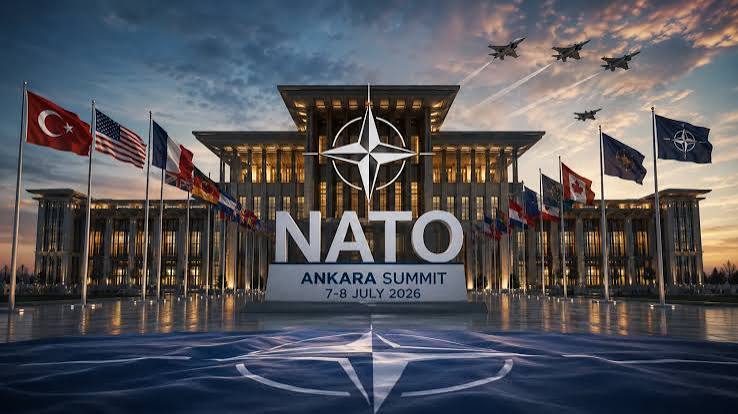
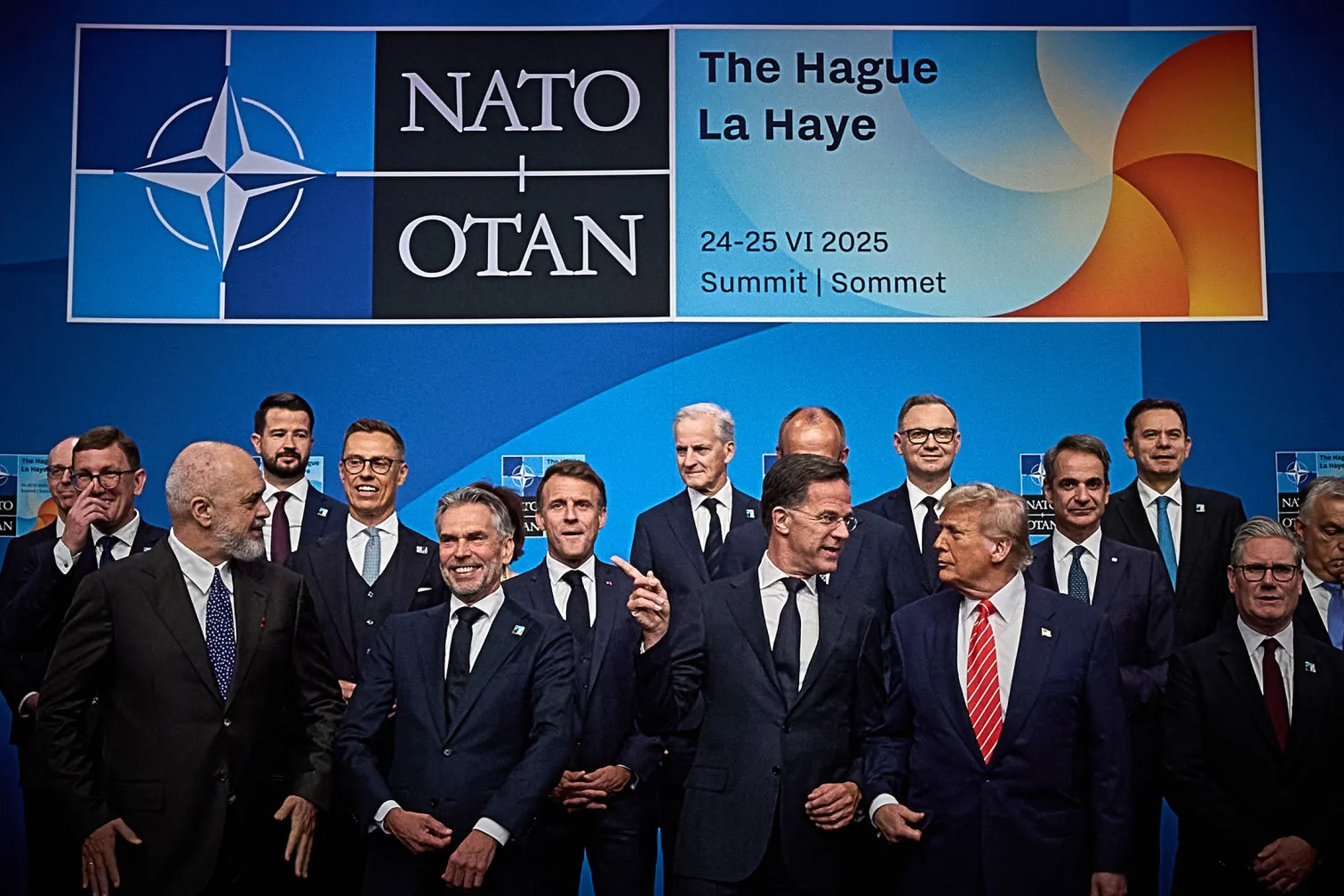
The upcoming NATO summit in 2026 is set to demand a massive leap in defense spending, with member states pressured to increase their defense budgets to 5% of GDP by 2030. This is a daunting target, especially for Eastern European nations that already allocate a significant share of their budgets to defense. The United States, Germany, and France are all pushing for a unified approach that combines higher spending with deeper technological integration, but the challenge is to ensure that this new spending is not just a mechanical exercise in budgeting, but a strategic recalibration of Europe’s defense posture.
Macron’s Advance Deterrence doctrine fits into this context in two key ways. First, it is a symbolic gesture that Europe is taking its own security seriously, even as it seeks to strengthen its alliance with the United States. By proposing that France’s nuclear arsenal protect the entire continent, Macron is signaling that Europe is prepared to assume a greater share of the burden of deterrence. This is particularly important for countries like Poland and the Baltics, which have long argued that Europe must do more to defend itself without relying solely on Washington.
Second, the doctrine is a practical recalibration of Europe’s nuclear posture. If the United States is perceived as less reliable in the long term, then Europe must develop its own nuclear capabilities, even if it continues to cooperate with Washington. The 5% Challenge is therefore not just about spending more money on conventional forces; it is also about investing in the technologies and doctrines that underpin a credible nuclear deterrent. This includes advanced missile defense systems, extended-range strike capabilities, and robust command-and-control infrastructure that can coordinate a French-led nuclear posture without undermining NATO cohesion.
The Tension Between Trust and Autonomy
The real challenge for Macron’s vision is to reconcile the tension between trust in the United States and autonomy in Europe. Eastern Europeans want to maintain their reliance on Washington while still encouraging Europe to take on a greater share of the burden. Paris, on the other hand, is trying to build a more autonomous European security core that can stand on its own feet if the US ever decides to step back.
This tension is likely to shape the upcoming NATO summit. Some Eastern European states may push for a hybrid approach, where the United States remains the primary nuclear guarantor, while France plays a complementary role. Others may argue for a more explicitly European nuclear posture, with France at the center. The outcome will depend on how the alliance balances the need for deterrence with the desire to maintain unity.
In the end, the 5% Challenge and Macron’s Advance Deterrence doctrine are two sides of the same coin. The 5% Challenge is about making Europe more responsible for its own security, while the Advance Deterrence doctrine is about redefining how that security is guaranteed. The question is whether Europe can build a credible autonomous nuclear posture without fracturing the alliance that has protected it for decades.